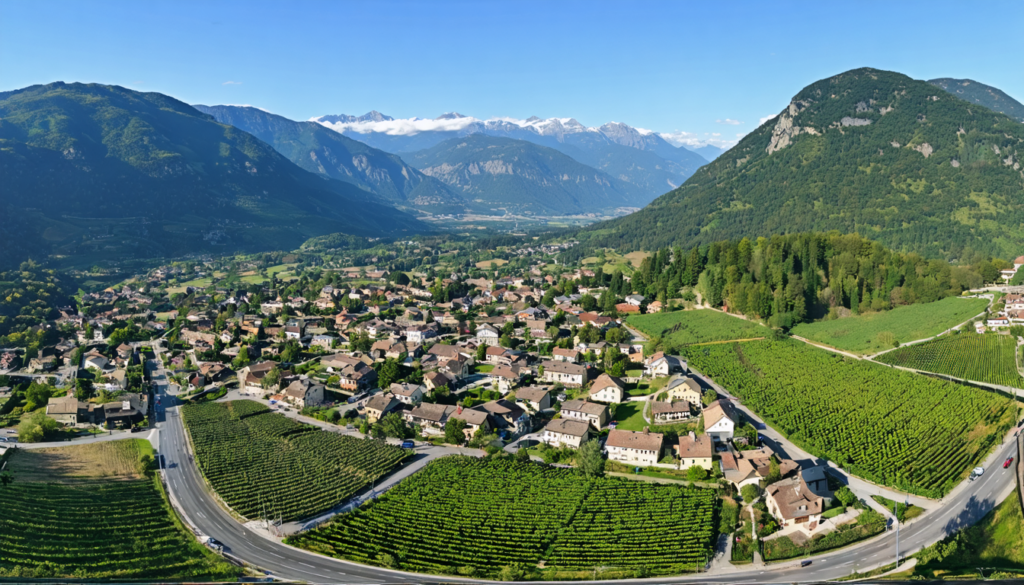
Located just about ten kilometers from the heart of Grenoble, the municipality of Biviers embodies a little-known yet deeply influential reality within the socio-economic landscape of the region. Often nicknamed, sometimes ironically, the “16th district of Grenoble,” this small locality with a peaceful appearance hides a notable fiscal and social complexity. With its 2,380 inhabitants, Biviers mainly attracts a wealthy population, mixing executives, liberal professions, and entrepreneurs, who bear a particularly high local tax burden. This fiscal reality, far from being a hindrance, actually constitutes a central pillar of communal life, shaping its urban planning, public policies, and economic development. This detailed portrait of Biviers sheds light on the challenges of a municipality where investment, heritage, and living standards combine in a sometimes paradoxical balance, illustrating a unique management model near Grenoble.
Through this focus, the aim is to better understand how local taxation is at the heart of Biviers’ strategic choices, influencing demographics, public services, and the territory’s attractiveness. Grenoble, as a regional engine and central city, closely observes this dynamic, aware that it contributes to reshaping the economic and social identity of its periphery.
Biviers, a municipality taxed with a particularly high local fiscality
Biviers ranks among the most heavily taxed municipalities in the Grenoble area. This high level of taxation, far from being a mere coincidence, results from an atypical trajectory that closely links local taxation to communal development. Unlike some urban areas where tax reductions shelter the middle class, Biviers plays the card of high taxation to build an economic model consistent with its target population.
The municipality favors substantial fiscal revenue through significant local taxes and property taxes that fund a budget allowing it to offer superior quality public services. According to recent figures, the property tax rate in Biviers reaches 34.1%, well above the 27.5% recorded in downtown Grenoble and the national average of around 25.7%. This data is accompanied by an average fiscal income per household of nearly 16,536 euros, well above the 13,200 euros average observed in the central city.
The real estate boom, closely linked to this taxation, influences the socio-economic atmosphere of the village. For example, this fiscal pressure generates a virtuous circle: high tax rates finance modern and well-maintained infrastructures, which in turn attract more investors able to bear these levels. The result is predominantly composed of high-end primary residences and a stable population density, reinforcing the exclusive character of the municipality.
To understand how this taxation feeds local management and the economy, let us examine a comparative table of the main fiscal indicators between Biviers, downtown Grenoble, and the national average:
| Criterion | Biviers | Grenoble (center) | National average |
|---|---|---|---|
| Average fiscal income (€) | 16,536 | 13,200 | 12,500 |
| Property tax rate (%) | 34.1 | 27.5 | 25.7 |
| Annual communal equipment expenditure (€ / inhabitant) | 2,000 | 1,480 | 1,000 |
This table highlights the central role of local taxation in maintaining a high standard of living in Biviers, albeit at the cost of high financial demands for residents.

Real estate in Biviers: a selective market shaped by demanding taxation
The urban landscape of Biviers presents a remarkable architectural homogeneity, combining elegance and sobriety. The express concern of local authorities is to preserve this privileged and exclusive setting, which notably involves strict rules regarding urban planning and densification. This rigor, linked to the high taxation, directly affects real estate market prices, which remain well above the averages observed in the Grenoble urban area.
To illustrate, let us take the example of Laurent, a young Grenoble business leader who wishes to settle his family in this village: he will have to deal with prices per square meter above the peri-urban average, as well as strong competition among buyers. The scarcity of available properties leads to increased selectivity. This trend therefore does not target the typical family audience, but rather a clientele with a solid savings capacity, valuing real estate heritage as a long-term investment.
Here is a comparative table of prices for different types of properties between Biviers, downtown Grenoble, and Échirolles:
| Typology | Price Biviers (€) | Price Grenoble center (€) | Price Échirolles (€) |
|---|---|---|---|
| Detached house 120m² | 480,000 | 350,000 | 270,000 |
| Apartment 80m² | 315,000 | 245,000 | 187,000 |
| Building plot (600m²) | 210,000 | 135,000 | 88,000 |
Beyond the numbers, this real estate market comes with notable advantages: Biviers offers privileged access to quality schools, modern sports facilities, as well as an exceptional natural environment at the foot of the Chartreuse mountain range. This context favors long-term life projects, making this municipality a sought-after place of settlement despite the fiscal pressure.
Another key aspect supported by local taxation is demographic stability. Biviers maintains a nearly constant population, mainly composed of families and qualified professionals, all attracted by a healthy living environment and rigorous local management. The scarcity of properties thus helps to reinforce this homogeneous profile.
Management of public services in Biviers: results and paradoxes of high taxation
With such substantial local taxes, the municipality invests intensively in its infrastructures and public services. Biviers allocates on average 2,000 euros per inhabitant annually to communal facilities, an effort largely superior to the 1,000 euros observed elsewhere in France. These expenses are directly aimed at improving the quality of life of inhabitants, with regular investments in schools, roads, green spaces, and cultural facilities.
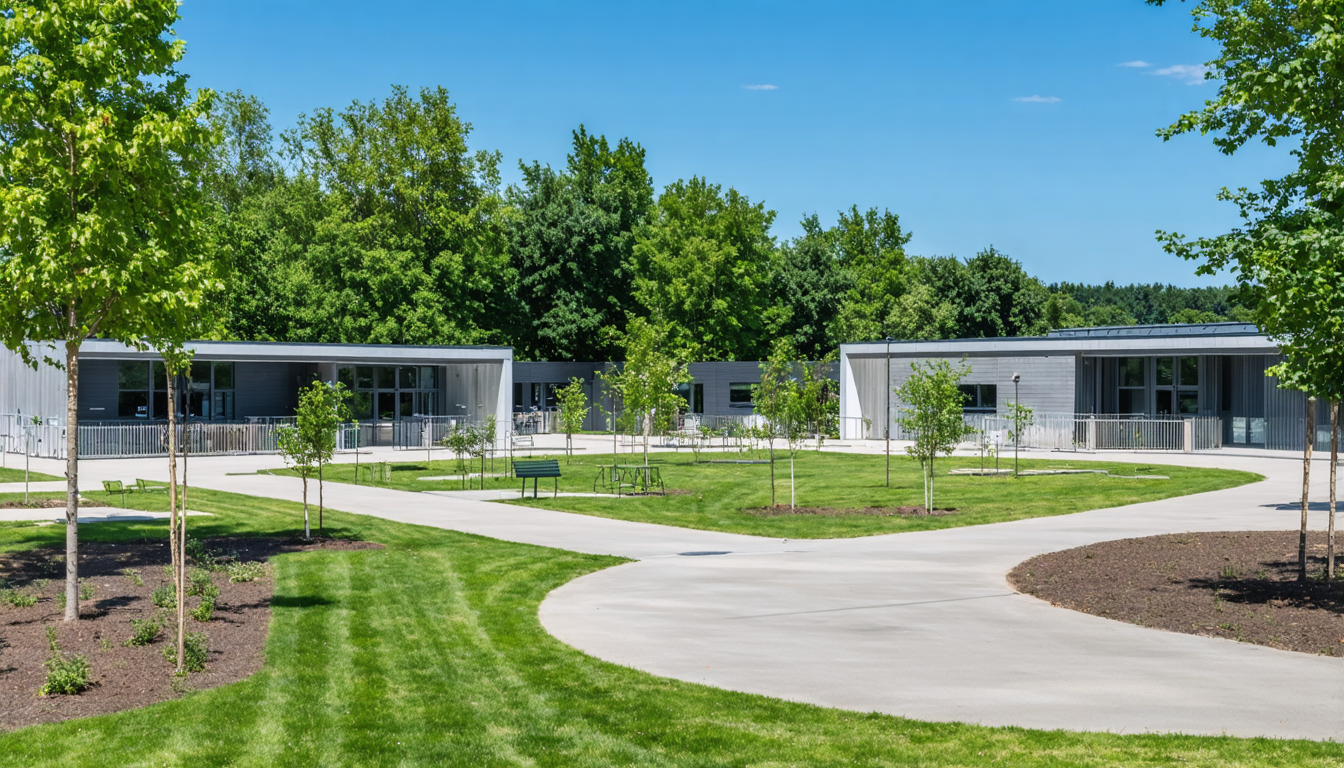
For example, the municipality recently rehabilitated its schools, offering innovative learning conditions adapted to new pedagogical expectations. Initiatives in soft mobility – such as bike lanes and an adapted transport network – are particularly advanced, reflecting a desire to reconcile urban development and ecological considerations.
Despite this generosity in public management, Biviers nurtures a certain code of silence regarding the lives of its inhabitants, especially those whose heritage and incomes are particularly high. This benevolent secrecy is an integral part of local culture, created to preserve tranquility and avoid social tensions. However, discretion around individual fortunes does not prevent the municipality from actively supporting associative and cultural life, with several initiatives throughout the year.
| Public service | Annual investment Biviers (€ per inhabitant) | National average (€ per inhabitant) |
|---|---|---|
| Education | 520 | 360 |
| Roads and green spaces | 320 | 210 |
| Culture & sport | 280 | 170 |
This dual dynamic, between displayed wealth in the service of the collective and discretion, forges an original model, sometimes difficult to reconcile with the challenges of social diversity and democratic transparency. It nevertheless gives Biviers a form of resilience, allowing it to combine economic prosperity and high quality of life.
The “16th district of Grenoble”: a unique model in the agglomeration
This humorous nickname given to Biviers highlights the ambivalent integration of this municipality within the Grenoble area. More than a simple mockery, this appellation reveals a complex socio-fiscal reality: Biviers acts as a privileged extension of the metropolis, with its elite economic profile and extraordinary taxation.
Situated in the Grésivaudan Valley, Biviers benefits from a strategic location just 10 kilometers from downtown Grenoble, facilitating travel to the major economic and cultural centers of the region. The municipality has capitalized on this proximity by strengthening its transport infrastructures and services, which rival those of denser urban centers.
A final table highlights some key indicators of this particular relationship:
| Indicator | Biviers | Other peripheral municipalities |
|---|---|---|
| Distance to Grenoble (km) | 10 | 12-18 |
| Share of executives/liberal professions residents (%) | 54 | 22 |
| Energy transition projects underway | 5 | 2 |
| Festival participations per year | 3 | 1 |
This dynamic transforms Biviers into a social laboratory where unprecedented combinations between rurality, taxation, and economic development are experimented with. Grenoble’s view of this “elitist” municipality suggests that heated discussions regarding local taxation and new frameworks for territorial integration can be expected in the coming years. Meanwhile, Biviers continues its path between rigorous discretion and sustained communal ambition.
Situated in the Grésivaudan Valley, Biviers benefits from a strategic location just 10 kilometers from downtown Grenoble, facilitating travel to the major economic and cultural centers of the region. The municipality has capitalized on this proximity by strengthening its transport infrastructures and services, which rival those of denser urban centers.
A final table highlights some key indicators of this particular relationship:
| Indicator | Biviers | Other peripheral municipalities |
|---|---|---|
| Distance to Grenoble (km) | 10 | 12-18 |
| Share of executives/liberal professions residents (%) | 54 | 22 |
| Energy transition projects underway | 5 | 2 |
| Festival participations per year | 3 | 1 |
This dynamic transforms Biviers into a social laboratory where unprecedented combinations between rurality, taxation, and economic development are experimented with. Grenoble’s view of this “elitist” municipality suggests that heated discussions regarding local taxation and new frameworks for territorial integration can be expected in the coming years. Meanwhile, Biviers continues its path between rigorous discretion and sustained communal ambition.