Michael Burry, famous for having brilliantly anticipated the 2008 subprime crisis, is making headlines again in 2025 with a striking warning about a new phenomenon: the financial bubble of artificial intelligence. This visionary investor denounces the irrational exuberance surrounding the AI stock market, particularly pointing the finger at Nvidia, an emblematic figure of the sector. Burry sees in this euphoria a worrying reflection of past mistakes, where inflated valuations masked major underlying risks. He bets over one billion dollars on the fall of certain AI giants, ready to capitalize on a reversal that could profoundly disrupt global finance. Through a detailed analysis of current dynamics, this risk strategist questions the very foundations of this technological craze and urges investors to exercise caution.
- 1 Michael Burry, the investor with exceptional insight facing the AI bubble
- 2 Detailed analysis: the financial bubble of artificial intelligence according to Michael Burry
- 3 Michael Burry’s investment strategies: bold bet against Nvidia and Palantir
- 4 Nvidia at the heart of controversy: arguments for and against the sustainability of its technologies
- 5 The vicious circle of circular financing: an overlooked risk of the AI bubble
- 6 Implications for investors: what lessons to learn from the AI bubble?
- 7 Michael Burry, caution in the face of novelty in a boiling market
- 7.1 Who is Michael Burry and why is he important in the world of finance?
- 7.2 Why does Michael Burry believe the AI bubble could burst?
- 7.3 What investment strategy does Michael Burry adopt in response to this bubble?
- 7.4 What recommendations are there for investors in this context?
- 7.5 What lessons can be learned from Michael Burry’s example?
Michael Burry, the investor with exceptional insight facing the AI bubble
Michael Burry is not an ordinary investor. His name is closely linked to the 2008 subprime crisis, which he anticipated while few analysts foresaw the storm. Having inspired a character in the hit film The Big Short, he is respected for his sharp financial analysis and his ability to detect financial bubbles before they burst. Today, he is sounding a new alarm regarding the artificial intelligence sector.
To Burry, the spectacular boom surrounding AI is not simply a technological revolution; it is a “glorious folly” dangerously resembling the late 1990s Internet bubble. Numerous companies are rushing into innovations at a frantic pace, but this frantic race also generates a multiplication of excessive valuations, disconnected from real fundamentals.
Michael Burry insists on the US market’s ability to foster limitless creativity and innovation, but he warns against speculative euphoria cycles. The path taken by current AI giants resembles that of the tech behemoths of the 90s, notably Cisco, whose fall triggered a domino effect across the entire sector.
The parallel is striking: like Cisco, Nvidia is today valued at 5 trillion dollars despite persistent questions about the sustainability of its technologies and its capacity to meet long-term demand. This context alerts the market to risks that could materialize abruptly, instilling intense volatility in the stock market.
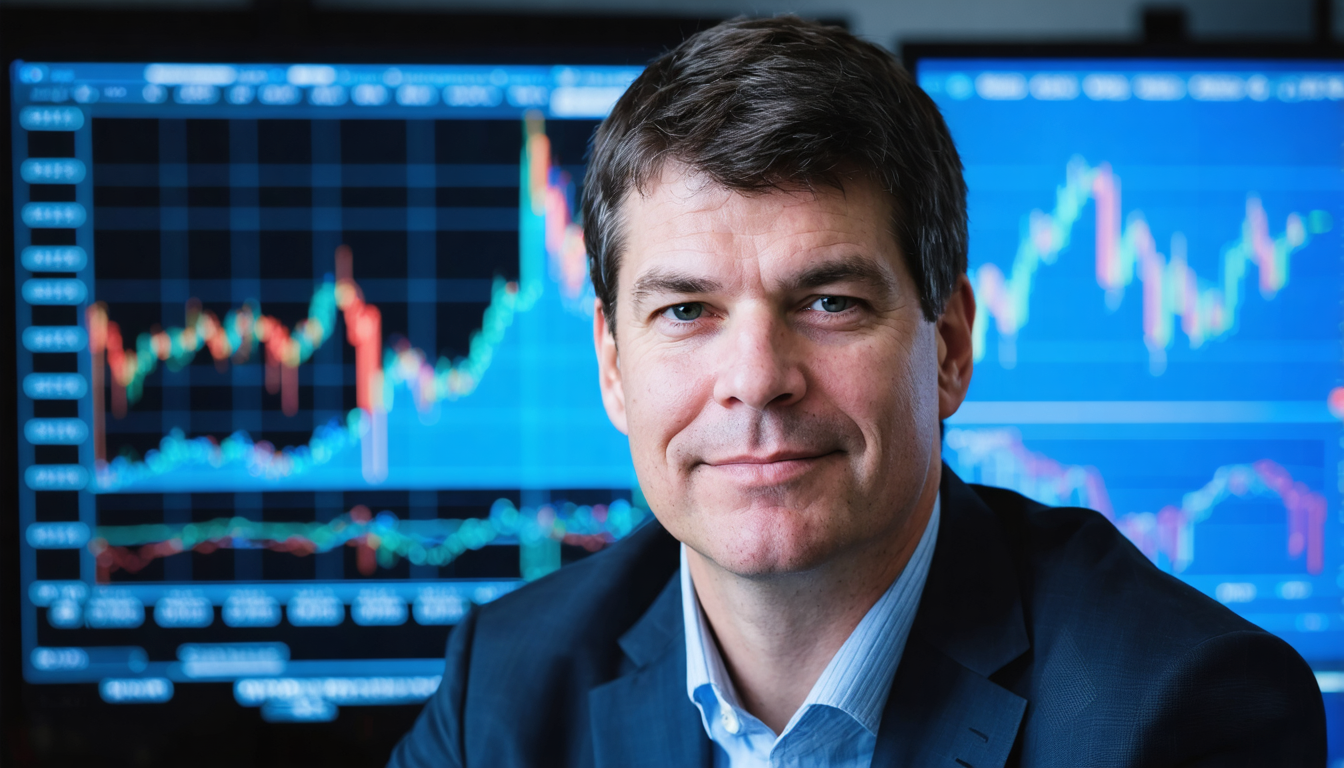
Detailed analysis: the financial bubble of artificial intelligence according to Michael Burry
Michael Burry describes the AI bubble as an extreme concentration of capital in often still experimental fields. The sector handles billions, notably thanks to giants like Microsoft, Google, Meta, Amazon, Oracle, and especially Nvidia. These companies have developed impressive capabilities, but the stock market valuation far exceeds what their current economic performance would justify.
In his analysis, Burry explains that this bubble is fueled by a circular financing phenomenon. For example, Nvidia invests in startups like OpenAI and Anthropic, which, in turn, reinvest in Microsoft Azure cloud services, which depend heavily on Nvidia chips. This loop of financial interdependence among major players creates a fragile balance that could collapse if a fault occurs.
This situation recalls the mechanisms observed in the Internet bubble, where incessant valuations created a self-perpetuating ecosystem but disconnected from the reality of profits and concrete innovations. The risk is that the fall of a link like Nvidia triggers a contagion effect, with serious repercussions across the entire tech-related stock market.
Comparative valuation table: Internet bubble vs AI bubble
| Criterion | 1990s (Internet Bubble) | Year 2025 (AI Bubble) |
|---|---|---|
| Flagship company | Cisco | Nvidia |
| Maximum valuation | +3800% on the stock before collapse | +5 trillion dollars |
| Evolution after burst | 80% loss in value | Upcoming, according to Burry |
| Market structure | 4 dominant giants (Microsoft, Intel, Dell, Cisco) | 5 dominant giants (Microsoft, Google, Meta, Amazon, Oracle) |
Michael Burry’s investment strategies: bold bet against Nvidia and Palantir
Known for taking risky but thoughtful positions, Michael Burry has wagered over one billion dollars through put options against Nvidia and Palantir, two pillars of the artificial intelligence and technology sector in general. This investment alliance aims to profit from a potentially brutal reversal of these stocks in the stock market.
The choice of Palantir, less mentioned but equally revealing, highlights Burry’s caution regarding the entire AI ecosystem. Palantir, although specialized in data analysis, also indirectly benefits from this bubble, and its valuation remains exposed to the financial uncertainties of the sector.
Through this strategy, Burry is not content with a simple bet on the decline: he anticipates a systemic phenomenon, a bubble burst. His fund, Scion Asset Management, has quietly closed its doors to outside investors, possibly signaling a desire to focus on very high-risk operations at a time when AI markets are under high pressure.
This approach perfectly illustrates Burry’s vision: rigorous risk management based on detailed financial analysis, avoiding collective euphoria, often a source of significant losses for unseasoned investors.
Nvidia at the heart of controversy: arguments for and against the sustainability of its technologies
Nvidia is under attack from all sides, accused by Michael Burry of representing the epicenter of a bubble that could burst at any moment. Most criticisms focus on the real sustainability of its graphics processing units (GPUs) and the company’s ability to maintain its innovation pace amid constantly evolving demand.
However, Nvidia does not remain silent. CFO Colette Kress highlights the CUDA technology, which, according to her, ensures increased GPU durability by opening the way to a broad range of applications, particularly in AI. The company’s goal is clear: to go beyond simple hardware to become a key player in global IT infrastructure.
Jensen Huang, founder and CEO of Nvidia, dismisses concerns by recalling that the company has not yet paid dividends to its partners and that their investments remain marginal compared to the company’s colossal revenues. According to him, Nvidia is in the process of reinventing global computing, underlining the profound transformation the firm brings to the technology sector.
It remains to be seen whether this vision will withstand market pressures and inevitable adjustments that will follow, especially if the AI bubble bursts as Michael Burry anticipates.

The vicious circle of circular financing: an overlooked risk of the AI bubble
One of the specificities of the AI bubble identified by Michael Burry and relayed by experts like Lisa Shalett of Morgan Stanley lies in a highly integrated circular financing model. This model involves financial and strategic interdependence between market players, where investments continuously reinject into the heart of the ecosystem.
This system works as follows:
- Nvidia invests in AI startups like OpenAI and Anthropic.
- These startups reinvest in Microsoft Azure, mostly powered by Nvidia GPUs.
- Microsoft then benefits from Nvidia’s work to strengthen its cloud infrastructures;
- This circle will create opportunities but also financial fragilities if a player were to experience a major problem.
The stakes of this complex mechanism make the market particularly vulnerable to shocks that could quickly amplify. This virtuous circle could thus turn into a downward spiral if confidence were to falter.
Financial analysts are doubling their attention as these tangled links complicate the assessment of the real risk borne by each actor, making forecasts all the more uncertain.
Implications for investors: what lessons to learn from the AI bubble?
Faced with these complex dynamics, all investors, whether individual or institutional, are urged to redouble their vigilance. Michael Burry shows that rigorous financial analysis must prevail over media hype and the promises of quick gains offered by the AI bubble.
Investing in this sector requires a deep understanding of the underlying mechanisms, risks of opaque valuation, and a possible harsh correction. Here are some key recommendations:
- Assess the sustainability of technologies. Do not rely solely on innovation announcements without solid economic evidence.
- Analyze financial interconnections between companies. Avoid excessive exposure to fragile circular financing loops.
- Diversify investments. Do not concentrate investments solely in the technology or AI sector.
- Follow financial experts’ warning signals. Take into account cautions such as those from Michael Burry to adjust strategies.
- Prepare an exit strategy. Anticipate volatility and set sales thresholds to limit potential losses.
This pragmatic approach will allow everyone to better navigate this market that is both innovative and risky, capable of generating fortunes as well as colossal losses depending on the scenario that unfolds.

Michael Burry, caution in the face of novelty in a boiling market
Michael Burry perfectly illustrates the role of a pragmatic investor in a world where finance and technology increasingly intertwine. His story embodies the need for constant critical analysis in the face of strong trends and disruptive promises of innovations.
The artificial intelligence market, although extremely promising, is also saturated with uncertainties. The excitement related to rapid innovations and massive investments can mask deep flaws. Burry places rigorous risk management at the heart of his strategy, demonstrating that seeking to build a fortune also involves mastering potential storms.
The case of Nvidia and its peers illustrates the complexity of this financial bubble where astronomical valuations and financial interdependencies risk destabilizing market stability. Lessons drawn from recent history show that vigilance and questioning are essential to avoid repeating past mistakes.
Ultimately, Michael Burry offers a valuable example of clear financial analysis, meticulous investments, and proactive risk anticipation in a world in perpetual motion.
Who is Michael Burry and why is he important in the world of finance?
Michael Burry is an American investor known for having anticipated the 2008 subprime crisis, which earned him worldwide fame and a reputation as an expert in financial analysis and risk management.
Why does Michael Burry believe the AI bubble could burst?
He believes that the stock market valuations of artificial intelligence companies, notably Nvidia, are excessive and disconnected from fundamentals, reminiscent of the conditions preceding the bursting of the Internet bubble.
What investment strategy does Michael Burry adopt in response to this bubble?
Burry bets on the fall of giants like Nvidia and Palantir via put options, wagering on a market turnaround that could generate significant profits.
What recommendations are there for investors in this context?
It is advised to assess technological sustainability, analyze financial interconnections, diversify investments, follow expert warnings, and prepare an exit strategy to limit potential losses.
What lessons can be learned from Michael Burry’s example?
His journey highlights the importance of caution, rigor in financial analysis, and proactive risk management to navigate markets subject to strong fluctuations and uncertainties.