
In an economic universe where the speed and relevance of decisions determine competitiveness, mastering data becomes an essential strategic weapon. Business Intelligence, also known as BI, establishes itself as the foundation that allows businesses to exploit vast volumes of data generated in order to enlighten choices at every hierarchical level. This discipline, undergoing significant change with the increasing integration of artificial intelligence and cloud technologies, now goes beyond simple report delivery to offer predictive, prescriptive, and augmented analysis. This radically transforms the way organizations anticipate market changes and optimize their operational processes.
At the dawn of 2025, Business Intelligence democratizes its access through accessible tools such as Microsoft Power BI, Tableau, or Google Data Studio, where non-technical users can create their own dashboards and reports thanks to self-service BI. This movement fosters a data-driven culture, where data becomes the key to more agile and precise decision-making. Whether one is a large corporation or an SME, understanding the fundamentals of Business Intelligence and the essential tools to implement it has become a priority to support growth and innovation.
Let’s dive together into the world of BI, its basic concepts, the evolution of its tools, as well as the practices that make it a crucial strategic lever for any organization concerned about its future.
- 1 The essential foundations of Business Intelligence to optimize decision-making
- 2 The evolution of BI tools: from traditional reporting to augmented real-time analysis
- 3 The key tools of Business Intelligence and their role in the decision-making ecosystem
- 4 How companies leverage Business Intelligence to transform their performance in 2025
- 5 Challenges and issues to address for successful Business Intelligence strategy
The essential foundations of Business Intelligence to optimize decision-making
Business Intelligence, or BI, is based on a structured set of processes, technologies, and practices aimed at transforming large amounts of raw data into actionable information. Originally, BI’s main function was the production of analytical reports to give decision-makers an overview of their past performances. However, today it also includes data collection, cleaning, advanced analysis, and data visualization.
The key BI process relies on what is called the decision chain, which breaks down into four major steps. First steps: data collection (Extract, Transform, Load – ETL) involving extracting data from various sources, transforming it into standardized formats, and loading it into dedicated infrastructures. For example, a company can extract data from its ERP, CRM, or social networks to feed its decision system.
The second step is storage in the form of a Data Warehouse or Data Mart. These specialized databases are designed to facilitate complex, aggregated queries, thus providing a reliable base for analysis. The importance of the data warehouse is crucial: it is a secure place where structured data is consolidated, ready to be queried efficiently.
Third comes the phase of restitution or reporting. Thanks to Business Intelligence tools, information is presented in the form of interactive dashboards, customized reports, and graphical visualizations. These supports facilitate reading and understanding data within the company. This is how the sales director can visualize real-time revenue by region via a dashboard, or how the marketing manager monitors the performance of a digital campaign.
Finally, the last step is the advanced exploitation of data: multidimensional analysis with OLAP cubes, data mining to identify hidden trends, as well as predictive and prescriptive analytics. These tools allow end users to go beyond simple observation to anticipate and influence future decisions. For example, a predictive model can help a store forecast a demand surge for certain products before a high-sales season.
The richness of these BI foundations highlights why Business Intelligence is much more than simple reporting: it is a complete ecosystem for enhancing data that fuels corporate strategy.
The evolution of BI tools: from traditional reporting to augmented real-time analysis
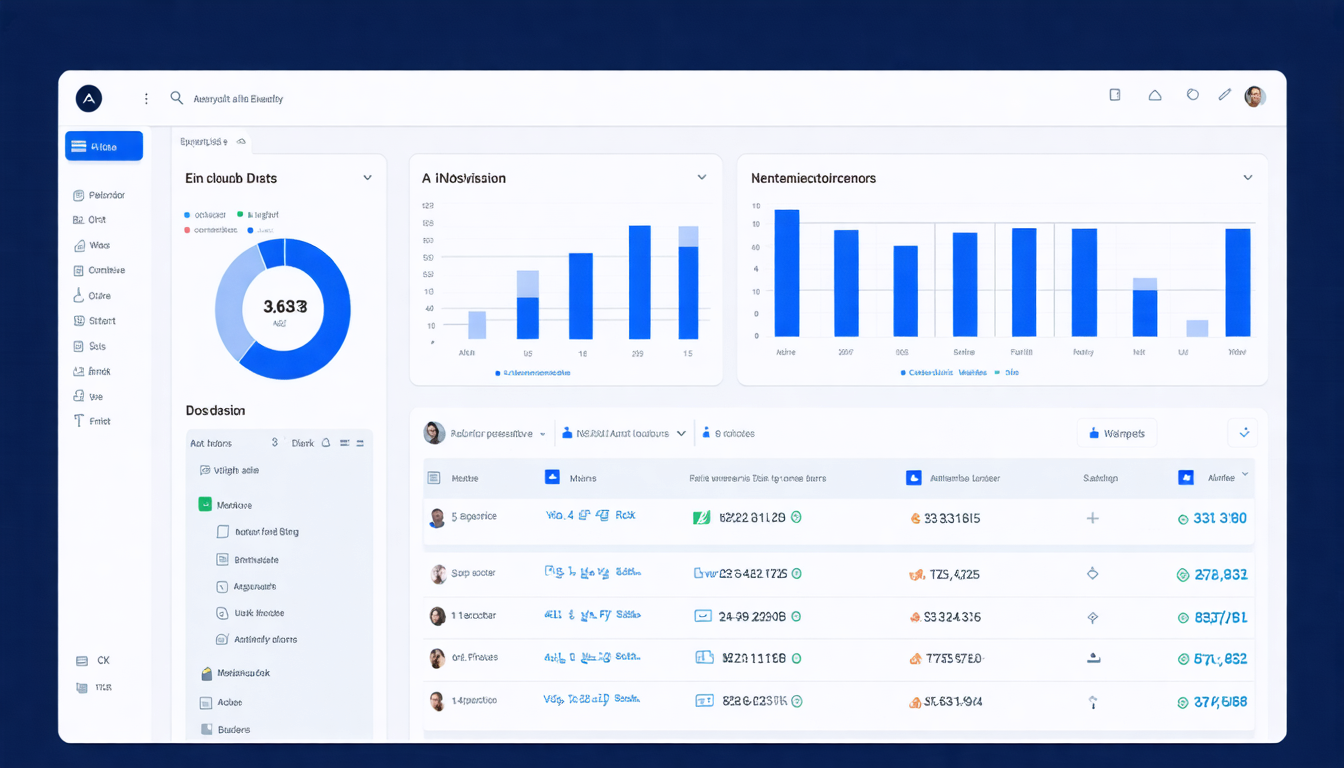
Since the first rudimentary applications of Business Intelligence, the world of BI tools has experienced a major technological revolution. In the past, only a few specialized analysts had access to complex software, often with results that were not very agile. Today, modern BI relies on powerful, intuitive solutions accessible to a wide range of users, called self-service BI tools.
Platforms like Microsoft Power BI, Tableau or Google Data Studio have democratized the creation and exploitation of dashboards. An SME can now, without having a dedicated team, create a synthetic dashboard integrating key indicators such as conversion rate, stock tracking, or customer performance. These tools include connectors to a multitude of data sources and allow real-time updating, ensuring increased responsiveness to market developments.
The incorporation of artificial intelligence dramatically transforms traditional Business Intelligence. Through what is called augmented analytics, data preparation is automated, analysis becomes predictive and prescriptive, and insights are generated automatically. Thus, BI tools no longer just show what happened, they now suggest concrete actions to undertake.
For example, an AI-enriched dashboard can detect an anomaly in a product’s sales and recommend adjustments in marketing strategy, or even anticipate stock shortages based on historical and external trends. IoT data and real-time APIs also make it possible to integrate new information flows, offering an ever-more precise operational vision.
This modernization pushes companies to rethink how they work with BI, notably by integrating Agile BI methodologies, promoting rapid deployment of features and continuous adaptation to business requirements. Employee training efforts intensify thanks to tutorials and tailored learning paths, making BI more user-friendly and effective than ever.
A list of major advantages of current BI tools:
- Accessibility: simple interfaces that cater to all profiles.
- Real-time: instant updating of data and reports.
- Advanced analytics: integration of AI-based predictive and prescriptive functions.
- Flexibility: adaptation to all types of organizations and sectors.
- Collaboration: easy sharing of dashboards and reports to encourage collective decision-making.

The key tools of Business Intelligence and their role in the decision-making ecosystem
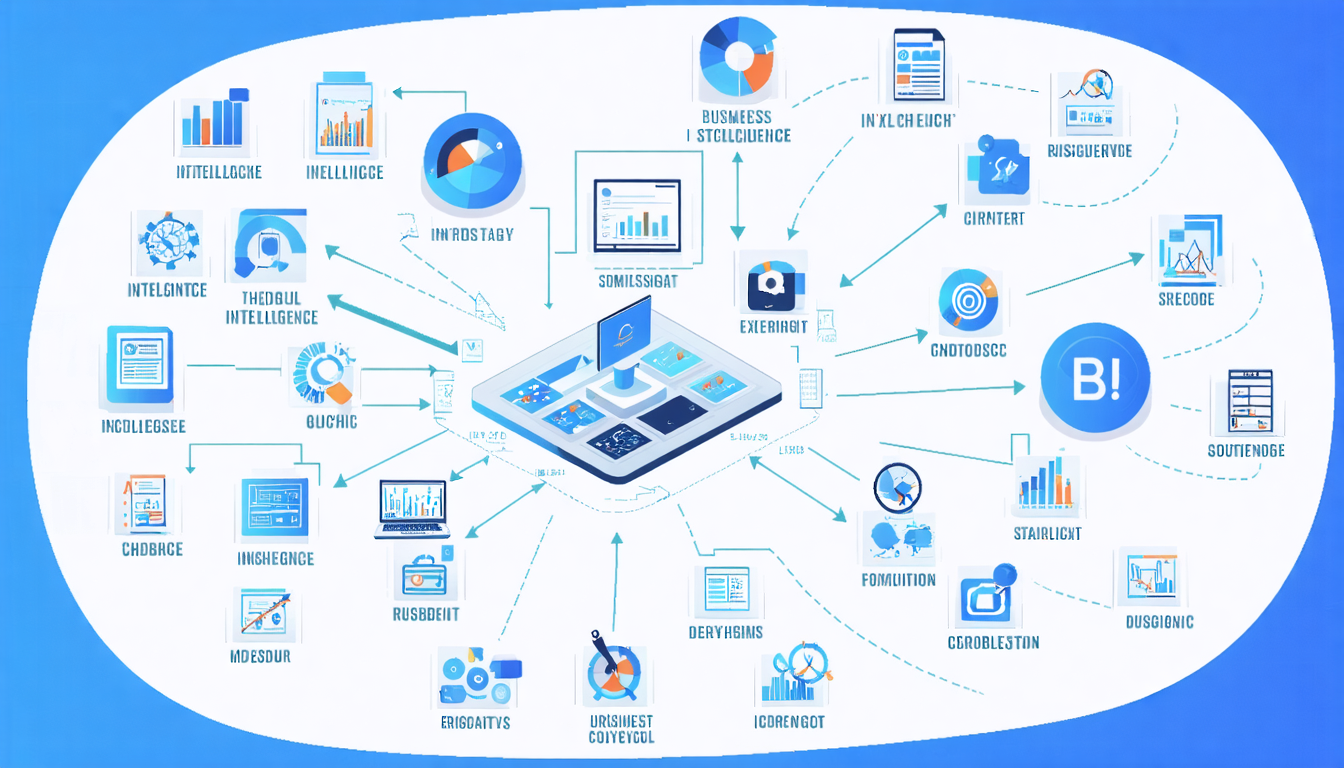
The richness of Business Intelligence stems as much from the technologies as from the diversity of the tools it comprises, each with a specific role within the decision chain. These solutions cover several domains and address different business challenges.
The main BI tools and their functions
- ETL (Extract, Transform, Load): essential for extracting data from different sources, transforming it to be consistent and reliable, then loading it into a data warehouse. Talend, SSIS, and Informatica are some examples of powerful tools.
- Data Warehouse and Data Marts: central storage infrastructure that allows fast queries and structured access to data. Hadoop is prominent in Big Data environments for managing unstructured data.
- Reporting and visualization tools: they enable the restitution of data in an understandable form, often via interactive dashboards. Microsoft Power BI, Tableau, QlikSense are global leaders.
- OLAP (Online Analytical Processing): these multidimensional cubes facilitate analyses of complex scenarios and cross-variable comparisons for better data understanding.
- Advanced analytics and data mining: used to identify hidden trends, make predictions, or explore complex statistical correlations.
- Mobile and real-time BI: now accompanies users even during their movements with powerful mobile applications and continuously updated data.
BI tools for expense management
BI solutions diversify by integrating specific modules, such as expense report management. These systems automate expense entry, ensure compliance with company policies, and facilitate budget tracking. This improves not only financial transparency but also the quality of data used for strategic analyses.
| BI Tool | Main function | Use case | Specific advantage |
|---|---|---|---|
| Microsoft Power BI | Data visualization and dashboard creation | Tracking commercial performance indicators | Easy integration with Microsoft 365 and user-friendly interface |
| Talend | ETL process and data integration | Cleaning and consolidating multi-source data | Open Source with great customization capabilities |
| Tableau | Interactive visualization and advanced analytics | Analysis of customer segments for targeted campaigns | Powerful and intuitive graphic visualizations |
| Hadoop | Big Data storage and processing | Log analysis and unstructured data | Efficient management of very large data volumes |
How companies leverage Business Intelligence to transform their performance in 2025
At the heart of digitalization, Business Intelligence makes it possible to convert data into tangible competitive advantage. Use cases vary by sector and objectives but all share the goal of optimizing decision-making and improving operational visibility.
In industry, BI is widely used for real-time workshop management and production planning. An automobile manufacturer can track key performance indicators (KPIs) of assembly lines, anticipate breakdowns, and optimize spare parts inventory management to avoid shortages.
Retail sectors use BI to manage their stocks precisely, recalibrate marketing campaigns, or analyze purchasing behavior. With precise dashboards, a store manager can easily detect high-potential products and adjust promotions accordingly.
Airlines and hotel chains exploit BI to maximize occupancy and adjust prices in real time according to demand and seasons. These organizations also plan staff management to respond optimally to customer flows.
In healthcare, BI contributes to diagnosis and disease prevention by cross-referencing patient data and analyzing epidemiological trends. This system helps better allocate resources and personalize care.
Finally, universities analyze student performance to better adjust educational pathways and support learners toward success.
Here is a list summarizing BI application areas within companies:
- Risk analysis and financial management.
- Optimization of marketing campaigns and customer segmentation.
- Monitoring industrial operations and improving quality.
- Human resource management and workforce planning.
- Performance control and supply chain monitoring.
This wide range demonstrates why mastering BI fundamentals, properly applying BI tools, and knowing how to interpret analyses is an essential lever for any organization focused on efficiency and innovation.
Challenges and issues to address for successful Business Intelligence strategy
Despite its many benefits, implementing Business Intelligence also comes with significant challenges, both technical and human. One major obstacle remains the cultural resistance of employees. Some staff fear increased surveillance or complication of their tasks. This apprehension often slows the adoption of BI tools, which is crucial for a successful data-driven strategy.
Another crucial challenge is data quality. Effective BI relies on reliable, consistent, and relevant data. The massive accumulation of information from multiple sources can generate significant “noise.” That is why standardization, cleaning, and governance of data are indispensable steps. Without these, decisions made risk being biased or erroneous, sometimes with serious consequences.
Moreover, although BI tools aim to be increasingly intuitive, they still require specific skills, particularly to configure flows, model data, or interpret analytical results. It is common for teams to need training, or for BI specialists, data architects, and data analysts to be mobilized to support the entire process.
Finally, it is imperative that the BI strategy is well aligned with business objectives. A company must target key processes where BI will bring real value rather than scatter efforts on low-impact analyses. Business Intelligence Managers play a crucial role here by bridging business needs and technical capabilities.
To illustrate, here is a table summarizing the main challenges and methods to overcome them:
| Challenge | Description | Solution |
|---|---|---|
| Cultural resistance | Fears related to change and increased performance monitoring | Clear communication, training, and team involvement from the start |
| Data quality | Inconsistent, missing, or outdated data | Implementation of rigorous ETL processes and data governance |
| Tool complexity | Need for specific skills for modeling and analysis | Appropriate training and use of BI experts |
| Business alignment | Risk of irrelevant or low-impact BI projects | Clear definition of business objectives and priorities by Business Intelligence Managers |
Overcoming these challenges is key to turning Business Intelligence into a true driver of competitive advantages.
{“@context”:”https://schema.org”,”@type”:”FAQPage”,”mainEntity”:[{“@type”:”Question”,”name”:”What is Business Intelligence with Artificial Intelligence?”,”acceptedAnswer”:{“@type”:”Answer”,”text”:”BI with AI combines traditional data analysis techniques with artificial intelligence to automatically generate insights by identifying trends, automating reports, and recommending actions, thus facilitating rapid and precise decision-making.”}},{“@type”:”Question”,”name”:”What are the main benefits of BI for SMEs?”,”acceptedAnswer”:{“@type”:”Answer”,”text”:”SMEs benefit from BI thanks to the availability of low-cost cloud tools, such as Power BI or Google Data Studio, which allow them to access advanced analyses, optimize their processes, marketing, and customer relationships without heavy infrastructure investments.”}},{“@type”:”Question”,”name”:”Does Business Intelligence completely replace human expertise?”,”acceptedAnswer”:{“@type”:”Answer”,”text”:”No, BI complements human expertise by automating repetitive tasks and providing recommendations, but analysts remain indispensable for interpreting insights, contextualizing results, and making strategic decisions.”}},{“@type”:”Question”,”name”:”How is BI different from Big Data?”,”acceptedAnswer”:{“@type”:”Answer”,”text”:”BI encompasses processes and tools for analyzing structured data aimed at decision-making, while Big Data deals with very large volumes of often unstructured data. Big Data often serves as a data source used within BI.”}},{“@type”:”Question”,”name”:”What are the risks linked to poor data quality in a BI strategy?”,”acceptedAnswer”:{“@type”:”Answer”,”text”:”Poor data quality can lead to false, biased, or even dangerous analyses, resulting in erroneous decisions that can severely impact company performance and credibility.”}}]}What is Business Intelligence with Artificial Intelligence?
BI with AI combines traditional data analysis techniques with artificial intelligence to automatically generate insights by identifying trends, automating reports, and recommending actions, thus facilitating rapid and precise decision-making.
What are the main benefits of BI for SMEs?
SMEs benefit from BI thanks to the availability of low-cost cloud tools, such as Power BI or Google Data Studio, which allow them to access advanced analyses, optimize their processes, marketing, and customer relationships without heavy infrastructure investments.
Does Business Intelligence completely replace human expertise?
No, BI complements human expertise by automating repetitive tasks and providing recommendations, but analysts remain indispensable for interpreting insights, contextualizing results, and making strategic decisions.
How is BI different from Big Data?
BI encompasses processes and tools for analyzing structured data aimed at decision-making, while Big Data deals with very large volumes of often unstructured data. Big Data often serves as a data source used within BI.
What are the risks linked to poor data quality in a BI strategy?
Poor data quality can lead to false, biased, or even dangerous analyses, resulting in erroneous decisions that can severely impact company performance and credibility.