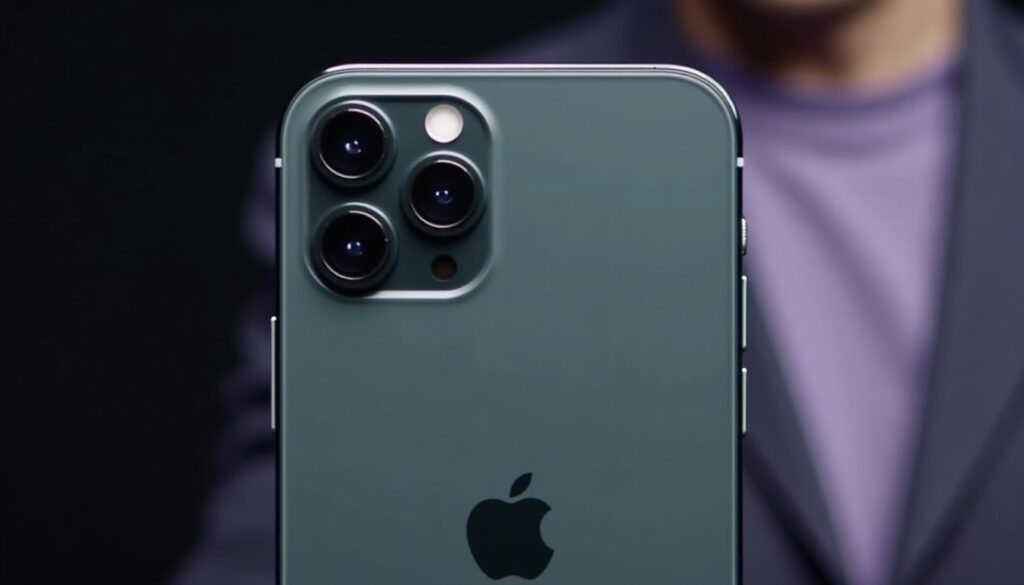
Apple is about to disrupt the high-end smartphone world with the announcement of the iPhone 18 Pro, particularly thanks to the introduction of its C2 chip, a cellular modem entirely designed in-house. This decision marks a significant break with Qualcomm, a long-standing historic supplier, and illustrates the determination of the California firm to control all the mobile technology integrated into its devices. By freeing itself from this dependency, Apple will not only improve the performance and battery life of its smartphones but also strengthen data privacy, a major issue at the heart of its marketing strategy. This innovation paves the way for unprecedented optimization between the processor, modem, and operating system, promising a smoother, more responsive, and more secure user experience. The iPhone 18 Pro thus promises to be an emblematic model of the technological revolution initiated by Apple.
- 1 iPhone 18 Pro: Apple bets on the C2 chip for a high-performance in-house 5G modem
- 2 Improved battery life: the C2 chip, a key factor for longevity under heavy use
- 3 Enhanced privacy: Apple’s C2 modem serving personal data protection
- 4 Improved network performance: managing congestion and optimizing data exchanges
- 5 The iPhone 18 Pro and the first A20 chip etched at 2 nm: a revolution for mobile technology
- 6 A strategic break with Qualcomm: understanding Apple’s challenges in 2026
- 7 A technological revolution for the user: what the C2 chip changes daily
- 8 Expected innovations in 2026 with the C2 chip and the iPhone 18 Pro
iPhone 18 Pro: Apple bets on the C2 chip for a high-performance in-house 5G modem
For several years, Apple’s goal has been to gradually free itself from third-party suppliers to integrate its own components. After the transition from Intel processors to Apple Silicon, the company is now tackling modems, which were mainly supplied by Qualcomm until now. The C2 chip represents this major evolution: a 5G modem developed by Apple, specially designed to support mmWave frequencies as well as sub-6 GHz bands, essential for optimal 5G network coverage. This design autonomy not only ensures better hardware integration but also advanced software optimization.
By mastering the entire chain, Apple can refine data flow management, reduce latency, and improve network stability, especially in dense environments where saturation is frequent. For example, during large public events such as concerts or packed stadiums, the intelligent data priority management enabled by the C2 chip should guarantee superior quality of service. Moreover, the tight integration strategy between the main processor and the modem fosters a more efficient exchange of information, thus enhancing the overall smartphone performance.
This approach is part of a constant innovation logic that distinguishes Apple in the mobile sector. The C2 chip thus complements a range of in-house modems that began with the C1 and C1X models, deployed on devices such as the iPhone 16, the iPhone Air, and the iPad Pro M5. The qualitative leap anticipated with the C2 therefore promises a considerable technological jump, positioning the iPhone 18 Pro at the forefront of high-performance 5G smartphones.
Improved battery life: the C2 chip, a key factor for longevity under heavy use
One of the most directly noticeable strengths of the C2 chip is its positive impact on the energy autonomy of the iPhone 18 Pro. Cellular modems are traditionally heavy energy consumers because they maintain a constant connection with mobile networks. Optimizing their operation is therefore essential to extend the daily usage time of a smartphone, especially with the increasing use of high-speed data-intensive applications.
Apple benefits here from a significant strategic advantage by designing both the modem, the processor, and the operating system. This full control offers the possibility to precisely adapt data exchanges and activity cycles according to actual needs, notably by limiting unnecessary power-hungry processes. For example, the chip can better manage network inactivity periods or adjust transmission power, thus reducing energy waste.
The effects of this optimization are all the more visible since, simultaneously, Apple has considered slightly increasing the battery capacity of the iPhone 18 Pro. This combination of an energy-efficient C2 chip and a larger battery could therefore provide several additional hours of autonomy compared to the iPhone 17 Pro, a significant advantage for heavy users and mobile professionals.
Concrete situations illustrate these benefits, such as during long days of use with demanding applications, continuous video calls, or uninterrupted 5G browsing. The extended endurance of the phone also contributes to increased comfort, as it reduces the need for frequent recharges and decreases dependence on external devices such as portable batteries.
Enhanced privacy: Apple’s C2 modem serving personal data protection
Privacy protection remains a top priority for Apple, consistently highlighted in its communications. The development of the C2 chip fits perfectly within this dynamic because it allows the implementation of more advanced privacy mechanisms than those available via third-party modems. This latest generation of the chip notably offers an innovative function called “Limit Exact Location Tracking.” This option, integrated into iOS 26.3, aims to reduce the accuracy of location information accessible to mobile operators.
In a traditional context, cellular networks estimate a smartphone’s location by monitoring the antennas to which it is connected, which can provide a relatively precise location, sometimes even within a meter. By enabling this function, the data transmitted is limited to a broader area, such as a neighborhood or an urban zone, thus minimizing risks related to precise tracking and potentially intrusive uses.
Apple assures that this limitation does not compromise reception quality or overall network performance, a crucial point to meet the expectations of users accustomed to fast and stable connections. The C2 chip, by natively integrating this technology, extends this level of privacy to the most advanced models, notably the iPhone 18 Pro, thereby strengthening users’ trust regarding the protection of their sensitive data.
Furthermore, this feature is currently accessible on a few models such as the iPhone Air, iPhone 16, iPhone 17, and iPad Pro M5, marking steady progress towards a device fleet where Apple’s internal control translates into tangible consumer benefits. This strategy also highlights the brand’s willingness to stay ahead of regulations concerning personal data, a major issue in today’s public and political debate.
Improved network performance: managing congestion and optimizing data exchanges
Network performance often constitutes a decisive criterion in the user experience of a smartphone, especially in environments with high connection density. The C2 chip promises a significant advance in network congestion management. This innovation essentially relies on the capability of the Apple Silicon processor and the modem to closely cooperate to prioritize data according to urgency and importance.
Imagine a situation where a stadium is packed to capacity, with thousands of spectators simultaneously using their smartphones to share videos, send messages, or perform other online operations. Mobile network saturation can then cause slowdowns, disconnections, or poor audio quality for calls.
The iPhone 18 Pro innovates by giving the processor the possibility to transmit management priorities to the modem, for example by favoring time-sensitive communications such as emergency calls or critical messages over large file downloads. This intelligent process improves network fluidity and efficiency, thus solving recurrent problems related to temporary overload.
Early feedback suggests that this interaction between the C2 modem and the A20 processor, etched at 2 nm, offers an unprecedented technical synergy. Although testing is still ongoing, analysts anticipate a clear improvement in latency times and increased stability under heavy load, which represents a considerable asset for professional and hobbyist users faced with these demanding conditions.
The iPhone 18 Pro and the first A20 chip etched at 2 nm: a revolution for mobile technology
Alongside the C2 chip, the iPhone 18 Pro also integrates the A20 processor, the first Apple chip manufactured with 2-nanometer etching. This manufacturing refinement marks a major step in the miniaturization of electronic components, offering notable gains in performance and energy efficiency. Coupled with the mastery of the modem, this advancement represents an unprecedented double innovation in the smartphone industry.
The shift to 2 nm technology increases transistor density while reducing their electrical consumption. Result: a faster processor, capable of handling complex tasks with multiplied fluidity, while limiting heating and consuming less energy. This device is fundamental for implementing the advanced functionalities promised by the C2 chip, notably in terms of 5G management and privacy.
It should be noted that the A20 chip is also designed to optimize graphics processing, augmented reality, and embedded artificial intelligence applications. These capabilities open many perspectives for innovative uses, from enhanced photography to immersive video games, as well as increasingly intelligent personal assistants.
| Characteristics | A20 Chip (2 nm) | C2 Modem |
|---|---|---|
| Etching technology | 2 nanometers | N/A (cellular modem) |
| Main function | Main processor | 5G Modem (mmWave & sub-6 GHz) |
| Energy consumption | Optimized for low consumption | Advanced energy optimization |
| Integration | Coupled with iOS system | Developed in-house for iOS |
| Key advantage | Increased performance and efficiency | Privacy and intelligent network management |
This pairing between A20 and C2 chip symbolizes a major technological revolution for Apple, placing the iPhone 18 Pro in pole position in the race for ultra-high-performance next-generation smartphones.
A strategic break with Qualcomm: understanding Apple’s challenges in 2026
For about fifteen years, Qualcomm has been an essential supplier for Apple, offering performant and reliable 5G modems. However, this relationship has gradually evolved into a less symmetrical partnership, where Apple felt an increasing need to regain its technological independence. The shift to the in-house C2 modem perfectly illustrates this turning point.
This strategic decision aims at several objectives: first, technical optimization by offering hardware whose software is precisely calibrated for the entire Apple ecosystem. But also an economic advantage, by reducing financial dependence on Qualcomm, and finally greater control over data and privacy, a theme that has become central in the competition between digital giants.
Breaking free from Qualcomm gives Apple the freedom to innovate faster without being limited by the development cycles of a third-party supplier. This move is also part of a broader desire to assert its role as a major player capable of mastering all key technologies, from smartphone to network.
Finally, this rupture signals a shift in the power dynamics in the technology supply chain, where manufacturers are turning towards internal development to gain agility and differentiation amid the ever fiercer competition from Android manufacturers oriented towards fragmented approaches.
A technological revolution for the user: what the C2 chip changes daily
The arrival of the C2 modem is not limited to an internal technical advance at Apple. For the end user, this innovation translates into a series of tangible improvements that change the daily smartphone experience. First, better battery life allows for longer use of the iPhone 18 Pro without recharging, especially when on the move or during intensive days.
Then, enhanced privacy reassures users keen to protect their personal data, a topic that has become unavoidable in modern society. The “Limit Exact Location Tracking” feature reflects the brand’s concrete commitment to offering safer mobile navigation.
Moreover, the improved network fluidity and responsiveness ensure seamless communication, even in dense or saturated areas, thus eliminating one of the biggest irritants currently faced by users. This optimization also benefits professional applications, notably for enterprise use where video calls and file transfers require minimal latency.
Finally, this technology opens the door to future developments, such as more advanced satellite 5G support or the integration of unprecedented connectivity features, which should gradually enrich future iPhone models.
Expected innovations in 2026 with the C2 chip and the iPhone 18 Pro
Beyond the technical features already mentioned, the iPhone 18 Pro paired with the C2 chip introduces a whole set of innovations that should redefine the standard in the 2026 smartphone landscape. Here is a list of the major expected advancements:
- Intelligent energy consumption management: minimizing energy expenditure thanks to perfect coordination between processor and modem.
- Enhanced privacy: implementation of the “Limit Exact Location Tracking” mode to strengthen privacy without sacrificing connectivity.
- Network quality optimization: prioritization of urgent communications in saturated environments to maintain a smooth connection.
- Expanded support for 5G mmWave bands: improved coverage and speeds in dense urban areas.
- Synergy between A20 and C2: accelerated data processing and reduced latency for complex applications and advanced video games.
- Improved satellite connectivity: first foundations laid for a hybrid 5G integrating satellite communication.
These innovations reflect well the scale of the technological revolution carried by Apple with this new generation of devices. The iPhone 18 Pro presents itself as a pioneer of an increasingly integrated and high-performance mobile ecosystem.