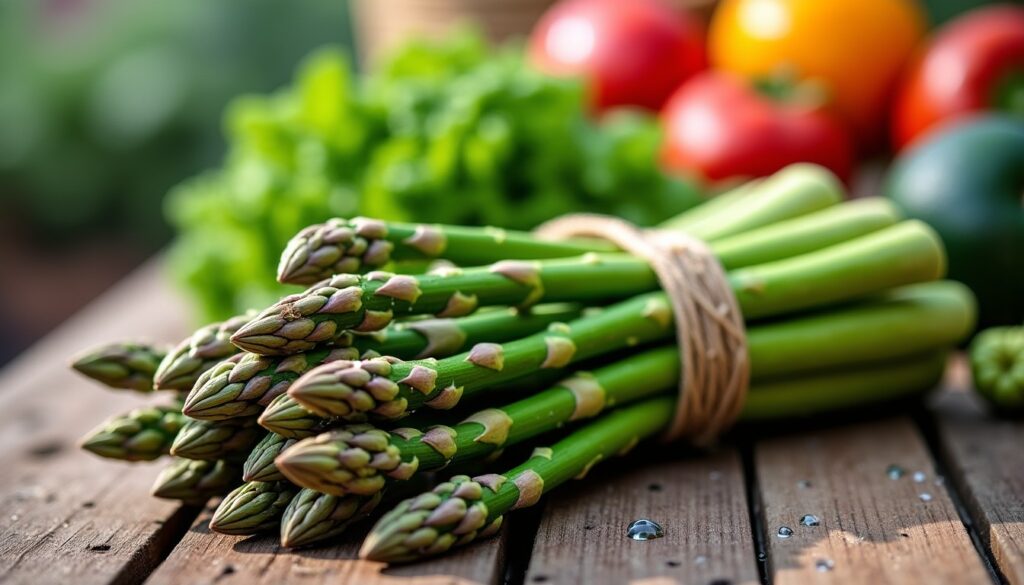
As spring slowly spreads its colors across the stalls, a discreet yet indispensable star catches the eye and often causes a sigh among consumers: the asparagus. This refined vegetable, emblematic of seasonal pleasures, regularly appears at a high price, frequently flirting with the 20-euro-per-kilo mark. An amount that can discourage impulsive purchases, but finds its justifications through a series of complex elements related to its cultivation, harvesting, and market position. Behind this modest value lies a mix of agricultural constraints, ancestral know-how, and economic dynamics that explain why asparagus remains a luxury product for many enthusiasts. Understanding the ins and outs of this cost means diving into a world where patience, manual labor, and unpredictable nature impose their rules on each bundle offered. By closely examining this sector, we discover that asparagus is not simply a vegetable, but embodies a story, a terroir, and a constant challenge within the agricultural market.
The high price of asparagus is often a surprise to consumers who are unaware of the multiple intertwined factors that impose such a tariff. Between climatic hazards, intensive harvesting labor, long production delays, and quality requirements, each step contributes to increasing the bill. Demand, which is also fluctuating, adds additional pressure. This combination makes asparagus an exceptional vegetable, where every euro spent reveals a bit more the real value of an often underestimated agricultural investment. By breaking down these reasons, it becomes easier to understand this delicate product, both a symbol of indulgence and a subject of considered economy. Let us look in detail at the multiple factors explaining why this spring vegetable is by far one of the most expensive in 2026.
- 1 Historical origins and agricultural requirements that determine the high price of asparagus
- 2 Manual harvesting methods explain the high cost of asparagus on the market
- 3 Climatic factors and their decisive impact on the high price of asparagus
- 4 How the diversity of varieties and label exclusivity explain the high price for asparagus
- 5 Production costs, logistics, and growing demand: the drivers of the high price of asparagus
Historical origins and agricultural requirements that determine the high price of asparagus
Asparagus is not an ordinary vegetable. Its cultivation dates back to Antiquity, often cited among the first vegetables grown by the Romans and Egyptians, who revered it for its culinary and medicinal virtues. This long tradition has continued to this day, with a strong presence in Europe, notably in France, Germany, and Spain, where cultivation ranks among the finest and most demanding agricultural productions.
This requirement begins at planting. Asparagus requires rigorous soil preparation, generally sandy and well-drained, to ensure good root development. This type of soil demands a significant initial investment from the producer, as it often requires land development and ensuring it is free of diseases. But the major constraint comes from time. Before any harvest, an average of two to three years of silent growth passes, during which the plant develops without the farmer being able to derive any tangible income.
This pre-production phase directly impacts initial costs, as it includes fixed charges (soil work, plants, irrigation) with no immediate return. Especially since asparagus cultivation is a long-term venture: an asparagus field can produce consumable stems for fifteen to twenty years, balancing investments made over the seasons. However, this profitability delay demands patience, rigor, and precise know-how.
Asparagus production also requires vigilance and regular maintenance. Risks of fungal diseases, which can compromise an entire harvest, demand constant monitoring as well as the use of appropriate treatments, whether organic or conventional. This ongoing care affects the final quality of the vegetable and, consequently, its price positioning.
In summary, far from being a fast or industrial-consumption product, asparagus is the result of excellent agricultural work, marked by soil requirements, long delays before production, and meticulous monitoring. This rigor opens the door to recognized gustatory quality, but also to production costs that inevitably affect the market price displayed.
Manual harvesting methods explain the high cost of asparagus on the market
One of the main factors maintaining asparagus among the most expensive vegetables is the very nature of its harvest. Unlike many mechanized agricultural productions, asparagus demands intensive and repeated human intervention.
Harvesting generally takes place between mid-April and late June, a relatively narrow period that starts with the emergence of the first stems and ends when the plant enters dormancy once the season is over. Each stem must be cut manually at the base, which is a meticulous and physically demanding task. To preserve the quality of the vegetable, the cut must be swift and precise, often in difficult conditions (cool weather, morning humidity, awkward postures).
This harvesting method greatly limits productivity and requires effective coordination of seasonal teams. Producers usually make two passes per day in the fields to pick asparagus before the stems become too long or fibrous, making the operation both laborious and time-consuming. This rhythm imposes high labor costs, reinforced in recent years by legal increases in the minimum wage, directly impacting the final price.
Do not underestimate the logistics following this manual harvest either. Asparagus must be packaged and transported very quickly to markets or supermarkets to preserve their freshness and organoleptic qualities. The cold chain must be strictly maintained, which entails significant additional costs related to refrigerated transport and specific packaging. Every step, from cutting in the field to shelving, involves fixed and variable costs borne by the final consumer.
Moreover, the harvest remains highly dependent on weather conditions. A late frost or excessive rain can drastically reduce the volume harvested, while accelerated growth due to heat can quickly degrade stem quality. These hazards force producers to anticipate safety margins, amplifying price volatility in the market.
Asparagus is therefore far from being a standardized industrial product. Its manual harvesting method, short season, and particularly demanding conservation conditions largely explain its premium vegetable status and consequential price. Intensive labor and the quick pace required in the logistics chain contribute to driving up production costs and maintaining market rates at high levels.
Climatic factors and their decisive impact on the high price of asparagus
The seasonal nature and sensitivity to weather conditions define another major reason for the high price of asparagus. Cultivated mainly in spring, a season marked by great temperature variability, asparagus is exposed to major risks that can disrupt production and, directly, the market cost.
A late frost represents the most feared threat. If it occurs after asparagus emergence, it can destroy several weeks of work and a large part of the harvest, depriving the producer of essential income. Controlling and anticipating these frosts requires specific investments (occasional heating, protective covers) rarely scalable on a large scale, which increases production costs variably depending on the farms.
Conversely, early and intense heat can hasten stem maturity, causing them to go to seed too quickly and become inedible. This phenomenon rapidly reduces marketable volumes, creating an imbalance between supply and demand that pushes the price upward. Conversely, excessive rainfall promotes the development of fungal diseases that cause root rot and limit the lifespan of the plantation.
It is thus understood that weather acts as a key, even determining factor, on asparagus yield. Climatic fluctuations generate constant instability in volumes offered to the market, hence upward price pressure when supply becomes scarce. This variability also forces producers to include a financial “buffer” in their calculations to absorb more difficult years.
The table below summarizes the main climatic hazards and their effects on production and prices:
| Climatic hazard | Impact on production | Consequence on price |
|---|---|---|
| Late frost | Partial or total destruction of stems | Significant increase |
| Early excessive heat | Premature seed formation | Reduction in available supply |
| Excessive rain | Development of fungal diseases, yield losses | Moderate increase |
| Ideal season (temperate, moderate humidity) | Normal volumes | More stable prices |
These instabilities help strengthen asparagus’s position among the most expensive vegetables, as they create an uncertain climate that translates not only into volume variability but also a tense supply and demand dynamic, which the market absorbs through a price adjusted accordingly.
How the diversity of varieties and label exclusivity explain the high price for asparagus
The very nature of asparagus, with its different varieties, largely influences its market cost. White, green, and purple asparagus are not grown in the same way and do not share the same rarity, contributing to a fairly wide price range.
White asparagus, often perceived as the noblest, requires specific cultivation under soil mounds to deprive it of light, a condition that slows photosynthesis and preserves its pale color. This process is more costly and demands additional manual labor, especially during harvest when the tip must be closely followed, resulting in two daily passes in the fields to prevent stems from becoming fibrous.
Green asparagus, on the other hand, grows in the open air and its cultivation is simpler, which partly explains their generally lower price. As for purple asparagus, a very rare variety often limited to artisanal productions, it stands out with a more pronounced flavor, making it a niche product reserved for knowledgeable customers willing to pay a premium price.
In addition to genetic diversity, certain regional labels reinforce the perceived value and price of asparagus. These geographical designations, often protected, guarantee traditional know-how, strict traceability, and rigorous quality control:
- Asperge des Sables des Landes: labeled Label Rouge, this production is limited and benefits from strong gustatory recognition.
- Asperge d’Argenteuil: a rare heritage variety, produced in confidential quantities, it enjoys an exclusive historical and culinary reputation.
- Asperge d’Alsace: benefiting from a PGI (Protected Geographical Indication), it reflects a strong regional identity and certified quality.
These certifications add undeniable value, reflected in higher prices. Consumers inclined to prioritize quality, origin, and sustainability thus accept an additional cost for an exceptional product. It is essential to consider this aspect to understand the high price, as it contributes to valuing not only production but also local culture and artisanal know-how.
Production costs, logistics, and growing demand: the drivers of the high price of asparagus
Beyond agricultural and climatic factors, the high price of asparagus is also explained by a complex cost structure that includes several levers. The amortization of initial investments, seasonal labor, but also specific logistics around freshness are among the main items contributing to the final cost.
The amortization of asparagus fields over about fifteen years involves prolonged expenses: planting, soil preparation, irrigation, maintenance, plant protection. This capital must be spread over the exploitation period, representing a significant fixed cost that is not immediately visible but weighs on the price per kilo.
Moreover, the sector must manage the fresh supply chain, which involves transport under controlled temperatures right from the field exit, specific packaging, and rapid delivery to sales points. Any failure in this chain can lead to loss of quality and a decline in market value. This type of logistical requirement increases distribution costs and inevitably reflects on the price paid by the consumer.
Furthermore, demand plays a pivotal role. In 2026, a growing popularization of organic asparagus is observed. This production respects even more stringent standards and often limits yields by 20 to 30% compared to conventional production. Consumer demand for organic products, motivated by environmental and health concerns, tends to push prices even higher, with organic asparagus frequently surpassing the 20-euro-per-kilo mark.
Here is a list of the main factors impacting the final price of asparagus today:
- Long and costly agricultural investments (soil preparation, plants, monitoring)
- Intensive manual harvesting requiring qualified seasonal personnel
- Climatic constraints pushing producers to include a risk premium
- Rigorous fresh logistics with refrigerated transport and rapid delivery
- Growing demand particularly for organic and labeled asparagus
- Labels and designations enhancing quality and justifying an additional cost
This network of factors illustrates how the high price of asparagus results from a delicate economic balance between labor- and time-intensive production, real agricultural risks, and the expectations of a market both sensitive to quality and aware of ecological issues.