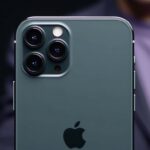
As the year 2026 promises to be rich in technological innovations, the iPhone 18 is already attracting attention, not only for its advances in performance and design but also for its potential impact on consumers’ wallets. Recent statements and financial analyses indicate a likely increase in the prices of the new range, a change that could redefine the very notion of investment in a high-end smartphone signed Apple. This phenomenon is notably explained by the surge in production costs, particularly those of essential components like memories, forcing the Californian firm to rethink its pricing policy. The iPhone 18 thus becomes a mirror of a tech market in full mutation, where price is combined with innovation in an unprecedented way.
In a sector where price stability has become a rare commodity, Apple had until now managed to maintain remarkable consistency. Yet, faced with cost pressures, this era seems over. This pricing evolution raises many questions: how will Apple justify this extra cost to its customers? What specific factors drive this increase? And above all, to what extent will this increase affect users’ buying strategy and their relationship to technology? By analyzing these dimensions in depth, it is possible to better understand the challenge represented by the launch of the iPhone 18 in the current ecosystem.
- 1 Detailed analysis of the iPhone 18 price: why an increase is necessary
- 2 Apple’s historical price stability: a strategy so far successful
- 3 Concrete consequences of the iPhone 18 price increase on consumer budgets
- 4 Innovation and cost: the delicate balance Apple must find in 2026
- 5 Price comparison between iPhone 18 and competitors: Apple facing competition in 2026
- 6 Possible Apple strategies to mitigate the iPhone 18 price increase
- 7 Buying and usage outlook for the iPhone 18 in an uncertain economic context
Detailed analysis of the iPhone 18 price: why an increase is necessary
The world of technology, and particularly that of smartphones, evolves at a frenetic pace where each component influences the final cost of the product. According to Erik Woodring, analyst at Morgan Stanley, the estimated price increase for all iPhone 18 models could be around 100 dollars more compared to the previous generation. This projection is not insignificant and reflects an unavoidable economic reality. Firstly, the recent considerable increase in memory prices, revealed by Apple during its financial conference, weighs heavily in the calculation of production costs.
Memories, whether RAM or storage, constitute a critical part of the architecture of modern smartphones, with a direct impact on performance, speed, and capacity. In 2026, the pressure on this component mainly comes from the increased global demand, the complexity of the technologies used, and the contraction of supply among certain manufacturers. This situation inevitably pushes the industry’s giants, Apple at the forefront, to pass these increases on to their selling prices. The result? A revision of budgets allocated to purchasing a smartphone that cannot remain frozen over time.
It is important to note that while this 100-dollar increase may seem significant, it remains relatively moderate compared to market standards. Other major players have already initiated similar or higher movements. For example, Samsung, faced with similar technological evolutions and constraints, regularly adjusts its prices upwards, often without tangible technical gains for its users. Moreover, some Chinese premium model manufacturers record high bill of materials costs, which weigh on their competitiveness and access to certain markets. In this light, Apple’s strategy could even be perceived as a “reasonable” adjustment in the face of a generalized inflation of components in the sector.
Apple’s historical price stability: a strategy so far successful
Apple has long been regarded as a model of stability in a market often fluctuating. This image relies on a thoughtful pricing policy, which has managed to balance consumer expectations while maintaining high profit margins. This stability is explained by rigorous supply chain optimization and a remarkable ability to anticipate costs related to manufacturing.
An excellent example of this is the comparison of laptop prices between Apple and Microsoft. The 13-inch MacBook Air M4 is offered at 999 dollars, a pricing that has remained relatively stable despite inflationary pressures. In parallel, Microsoft had to significantly adjust its pricing, with a notable increase on the 12-inch Surface Pro which is now at 1,049 dollars compared to 799 dollars previously. Yet, despite these variations, Apple maintains its premium positioning without tipping into excessive pricing.
On higher-end models, such as the MacBook Pro M5 Pro with 64 GB of RAM and 1 TB of storage, the situation is similar, with the Apple offer remaining more accessible than some equivalent configurations at Microsoft, which reach 3,649 dollars. This ability to contain prices also relies on strategic choices, notably the discreet removal of the 256 GB Mac mini M4, a tactic that avoids an apparent increase while optimizing margins.
This approach has allowed Apple to refine its brand image by combining commercial stability and technological innovation. However, the sudden rise in component costs is challenging this policy, and the iPhone 18 will clearly be a cornerstone of this new shift.
Concrete consequences of the iPhone 18 price increase on consumer budgets
The announcement of an average increase of 100 dollars on the price of the iPhone 18 will necessarily have a tangible impact on buyers’ budgets, whether individuals or professionals. For many users, this gap may seem marginal, but taken in a broader perspective, this increase can influence buying behaviors, renewal frequency, and even the perception of the Apple brand.
Initially, consumers who had anticipated some price stability will face the necessity to reassess their financial plan. Buying a high-end smartphone often requires a significant budget effort, which can be accentuated by repeated increases. The psychological effect of seeing the price soar, even moderately, can lead to postponement of purchases, or push some to turn to less expensive alternatives.
At the same time, it is essential to observe how this increase fits into the broader framework of technological expenses. In 2026, many households already dedicate a significant part of their budget to purchasing and maintaining connected devices, between smartphones, home automation equipment, and digital subscriptions. Thus, the extra cost linked to the iPhone 18 will have to be justified by notable innovation and a perceptible added value to convince the most demanding buyers.
For regular Apple customers, especially those enrolled in renewal or subscription programs, this increase may also change the dynamics of the secondary market, with potentially more competitive resales of older models. On their side, professionals, who often invest in a fleet of smartphones for their employees, could see their operating costs rise, which will encourage them to rethink their acquisition strategies.
List of potential impacts on consumer budgets
- Direct increase in the initial purchase price, requiring a more substantial budget.
- Tricky decision between keeping an older model longer or investing in the new one.
- Possible influence on the decision to switch to a more affordable competitor offer.
- Revision of Apple financing and subscription programs to mitigate the price impact.
- Impacts on the second-hand market, with potentially accelerated depreciation of older models.
- Increased necessity to justify the purchase through tangible innovations to maintain customer loyalty.
Innovation and cost: the delicate balance Apple must find in 2026
Apple has always been synonymous with innovation, both technologically and design-wise. Each new iPhone generation introduces features that push market standards, whether in terms of performance, camera, or software integration. However, this constant quest for excellence inevitably comes with rising costs to develop, produce, and market these devices.
The challenge for Apple with the iPhone 18 is therefore to combine innovation and control of production costs. Technical choices, such as adopting new memory technologies that are more efficient and energy-saving, partly explain the price inflation. For example, investing in next-generation flash memories improves data access speed and overall device autonomy, two key criteria for consumers.
Added to this are innovations related to the camera, with larger sensors, intelligent image optimization systems, and even the integration of LiDAR modules for increasingly advanced augmented reality uses. These advances entail complex and often highly targeted manufacturing costs, which push Apple to adapt its prices so as not to sacrifice quality and user experience.
To remain competitive, the company must also consider consumers’ growing expectations regarding durability and reparability. Improving material resistance and facilitating technical interventions involve a non-negligible additional cost. Yet these innovative aspects are also levers to justify higher pricing to an audience aware of environmental issues and product longevity.
Price comparison between iPhone 18 and competitors: Apple facing competition in 2026
In a saturated global market, Apple’s pricing policy stands out due to its relative consistency and premium positioning. However, the announced increase for the iPhone 18 places the brand in a directly debated comparison with its rivals, notably Samsung and certain Chinese manufacturers.
Samsung has already gradually raised the prices of its Galaxy S line, a trend visible over several generations. This increase often occurs without direct correspondence to major innovations, which has sparked debates among consumers and analysts about the real justification for these hikes. Yet Samsung benefits from a strong base of loyal users and a vast product range that can absorb these changes.
Chinese brands, such as Xiaomi or OnePlus, faced with sometimes higher production costs for specific components, must operate in a highly competitive environment. This limits their ability to increase prices without losing competitiveness, especially in price-sensitive markets. These constraints reinforce Apple’s position, which can afford higher price positioning due to its brand image and perceived product quality.
| Brand | Model | Approximate price (in dollars) | Key innovation | Recent pricing policy |
|---|---|---|---|---|
| Apple | iPhone 18 | 1099 | Improved memories, LiDAR camera, enhanced durability | Moderate increase +100$ compared to iPhone 17 |
| Samsung | Galaxy S24 | 1149 | Enhanced OLED screen, increased CPU performance | Gradual increase over several generations |
| Xiaomi | Mix 6 Pro | 899 | Fast charging, AMOLED screen | Stable price, few recent increases |
| OnePlus | OnePlus 12 | 799 | High performance, software optimization | Contained pricing to stay competitive |
Possible Apple strategies to mitigate the iPhone 18 price increase
To limit the negative impacts of a price increase, Apple could deploy several levers adapted to its economic model and highly integrated ecosystem. These strategies aim to preserve customer loyalty while maintaining its premium positioning.
Firstly, Apple could strengthen its financing and subscription offers, allowing consumers to spread the cost of their new iPhone over an extended period. This would include expanding the “Apple Upgrade” programs that encourage regular renewal and remove the burden of a large immediate purchase.
Next, the American giant could lean more heavily on its complementary services, such as iCloud, Apple Music, and AppleCare+, to offer attractive bundles that enhance the entire ecosystem and amortize the acquisition cost. By leveraging service synergy, the overall perception of the purchase is thus strengthened.
Finally, Apple could bet on strengthened communication around the added value and technical innovations of the iPhone 18. Highlighting improvements in durability, user experience, and performance would justify a high price by making it more acceptable to the public. This approach is crucial to transform price into a sustainable investment, a key argument in light of rising environmental concerns.
Buying and usage outlook for the iPhone 18 in an uncertain economic context
Faced with a global economic context still marked by uncertainties, the rise in the price of the iPhone 18 comes as a final element of reflection for consumers. The equation between technological innovation, rising cost, and available budget becomes a pressing issue.
For potential buyers, the decision to acquire the new iPhone is now part of a more thoughtful logic, where every euro spent is justified by concrete use and a tangible improvement in the smartphone experience. This change is also reflected in an adjustment of expectations: renewal frequency slows down, users prioritize quality and durability, and accessories are often maintained or updated rather than replaced.
For their part, professionals anticipate adjustments in their equipment policy, taking into account the revaluation of costs to optimize use and resource management. The strategy is oriented towards optimizing device lifespan and better software integration to maximize return on investment.
In this dynamic, the iPhone 18 could symbolize a major transition, that of a market where purchase is no longer made on a whim but within a strictly controlled budget framework and an expectation of palpable innovation. This evolution also invites Apple to consolidate its role as a responsible innovator, capable of offering products that sustainably meet the needs of its users.