In a universe where sports technology is revolutionizing the passion for running, an unexpected rivalry shakes the world of fitness applications and activity tracking. Garmin, giant of connected watches, and Strava, the iconic social platform for runners, find themselves opposed in a large-scale technological battle. A perfect symbiosis for millions of enthusiasts who measure their performance and share their achievements, this alliance seemed unbreakable. Yet, 2025 marks a turning point where tensions and legal disputes threaten to break this coordination that transformed the practice of running. The stakes go far beyond commercial aspects: they shape the future of performance analysis and collective motivation. What is really happening between these two titans, and what could be the consequences for running enthusiasts?
It all started with a dispute over the usage rights of key technologies that Strava considers its intellectual property, notably the famous route segments and heatmaps – features that allow runners to compare their performances on specific sections and identify the most frequented zones. Garmin, which equips millions of athletes with its watches and counters, allegedly integrated these tools without consent, triggering an unprecedented legal conflict in the connected sports landscape. The confrontation also reveals issues related to data management, where changes to API access imposed by Garmin risk isolating some users, making the synchronization of their sessions between devices and the Strava platform laborious.
This technological face-off raises fundamental questions about athletes’ dependence on these digital giants and the directions future digital fitness developments will take. At the heart of this crisis, runners, passionate about performance and sharing, find themselves held hostage. They could see the enriching experience of performance analysis and friendly competition significantly altered. From then on, this battle between Garmin and Strava concerns not just two companies: it could redefine the connected running ecosystem and durably influence how we run tomorrow.
- 1 Origins of the rivalry between Garmin and Strava: the clash of connected sports titans
- 2 Impacts of the API break between Garmin and Strava on running users
- 3 Technical analysis of contested innovations: segments and heatmaps at the heart of the Garmin-Strava dispute
- 4 Economic and strategic consequences for Garmin and Strava in this innovation battle
- 5 Challenges for the running community: how does the passion for running evolve in the face of the technological battle?
- 6 Legal perspectives and intellectual property protection in connected sports
- 7 What alternatives for runners facing the Garmin-Strava battle?
- 8 The future role of data and performance analysis in connected running
Origins of the rivalry between Garmin and Strava: the clash of connected sports titans
The relationship between Garmin and Strava has long symbolized a fruitful collaboration in the field of running and sports technology. Garmin, known for its multifunction connected watches offering precise activity tracking, and Strava, the reference for performance analysis and social data sharing, formed an inseparable duo. Yet, from 2024, invisible but palpable tensions emerged, fueled by disputes over intellectual property rights and strategic issues around user data.
The litigation officially broke out when Strava filed a complaint against Garmin, arguing that the latter had taken over two fundamental technologies without authorization: the segments, these emblematic sections where runners compare themselves in implicit competition, and the heatmaps, these visible thermal maps illustrating the most frequented routes and urban areas. According to Strava, Garmin not only used these tools but also broke a fundamental agreement signed in 2015, which was meant to guarantee respectful use of the patents and developed tools.
Key features at the heart of the controversy
- Segments: Allow Strava users to analyze their performance on specific sections of the route, creating a competitive dynamic among runners.
- Heatmaps: Offer a geographical visualization of the most frequented zones, useful for performance analysis and training planning.
These features have become pillars of the Strava user experience, which values the community aspect and collective motivation. The reproduction of these elements by Garmin in its own tools, integrated directly into its connected watches and bike computers, was therefore perceived as a betrayal and a direct violation of intellectual property.
Furthermore, the outbreak of the rivalry is also linked to Garmin’s desire to further control its image on partner platforms. Since July 2024, Garmin has imposed increased brand visibility for its partners on all data generated by its devices, notably mandatory logos on shared graphics and data. Strava, which favors a smooth user experience without forced advertising, resisted this injunction, which exacerbated the conflict.
| Aspect | Garmin | Strava |
|---|---|---|
| Position on segments and heatmaps | Proprietary integration in devices | Creator and patent holder |
| Brand policy | Mandatory logo on all data | Refusal of forced advertising |
| Historical relationship | Partner since 2015 | Leading social platform |
It is therefore essential to understand that this rivalry goes beyond a simple commercial conflict and touches on the fundamental values of sharing and innovation underpinning connected running. The exchanges between these digital sports giants reveal deep challenges regarding monetization models, protection of innovative ideas, and management of personal data in a domain where trust is essential.
Impacts of the API break between Garmin and Strava on running users
One of the major consequences of this technological battle is the threat Garmin poses on access to its API, the true bridge between its connected watches and the Strava app. Since November 2024, Garmin has conditioned continued access on compliance with its new advertising rules, threatening a total cutoff in case of refusal. This drastic measure could disrupt the user experience for millions of connected runners.
Practically, the API allows automatic synchronization of activities recorded on Garmin watches to Strava. Without it, the user would have to take manual steps to import their data, a time-consuming and inconvenient task. This technical obstacle could divert athletes from Strava, even reducing their motivation.
- Automatic synchronization: Allows real-time data transfer without intervention.
- Manual import: Users must export their files and import them one by one into Strava.
- Impact on loyalty: Risk of migration to other more integrated platforms.
Runners who use Strava intensively to track their progress and for the social dimension risk losing a large part of their comfort. Automatic sync simplifies performance comparison, segment tracking, and sharing activities with a global community that grows every year. An API break could isolate these runners, breaking the fluidity and collective motivation that are at the core of their running passion.
| Consequence | Situation with API | Situation without API |
|---|---|---|
| Data transfer | Automatic, fast, reliable | Manual, tedious, error-prone |
| Segment tracking | Available in real-time | Limited access, delays |
| Social sharing | Instant and motivating | Reduced, fewer interactions |
This scenario also raises long-term concerns. A fracture in the connected running ecosystem could encourage user dispersion toward other platforms, which weakens the entire digital sports community. After more than ten years of collaboration, this episode illustrates how critical dependence on technical integration has become.
Technical analysis of contested innovations: segments and heatmaps at the heart of the Garmin-Strava dispute
At the heart of the legal battle, segments and heatmaps represent major innovations in activity tracking and runner performance improvement. Strava developed these tools to offer advanced performance analysis, based on comparisons within a global sports community. Garmin, by integrating similar features into its connected watches, claims a natural evolution of its products but clashes with Strava’s exclusive ownership.
Operation and advantages of segments
Segments are specific sections of a route defined by the community or Strava, often a short to medium distance stretch. Runners can compare their personal times, encourage friendly competition, and measure their progress.
- Increased motivation: Comparison with other users stimulates effort.
- Record visualization: Rankings displayed directly in the app.
- Strategic use: Allows targeting training on specific segments.
The importance of heatmaps in planning
Heatmaps illustrate the most frequented routes, based on an aggregate of millions of activity data points. They allow:
- Identification of popular training zones: Choose routes adapted according to traffic.
- Geographical analysis: Understand spatial trends of athletes to better adapt.
- Future innovations: Improvement of personalized training plans.
| Innovation | Strava | Garmin claims |
|---|---|---|
| Segments | Patents and community model | Similar features integrated |
| Heatmaps | Comprehensive multi-user analysis | Inspired tools for GPS watches |
The dispute is not only about the existence of these technologies but about how they were reproduced without agreement. This conflict raises debates about respecting intellectual property in a sector where innovation and competition are fiercely contested. The connected sports world is thus confronted with a major turning point regarding idea protection.
Economic and strategic consequences for Garmin and Strava in this innovation battle
Beyond technical and legal aspects, this battle between Garmin and Strava will have profound repercussions on their economic models and strategic positioning. Each of the two players is playing a tight game to preserve its market share and brand image among millions of passionate runners.
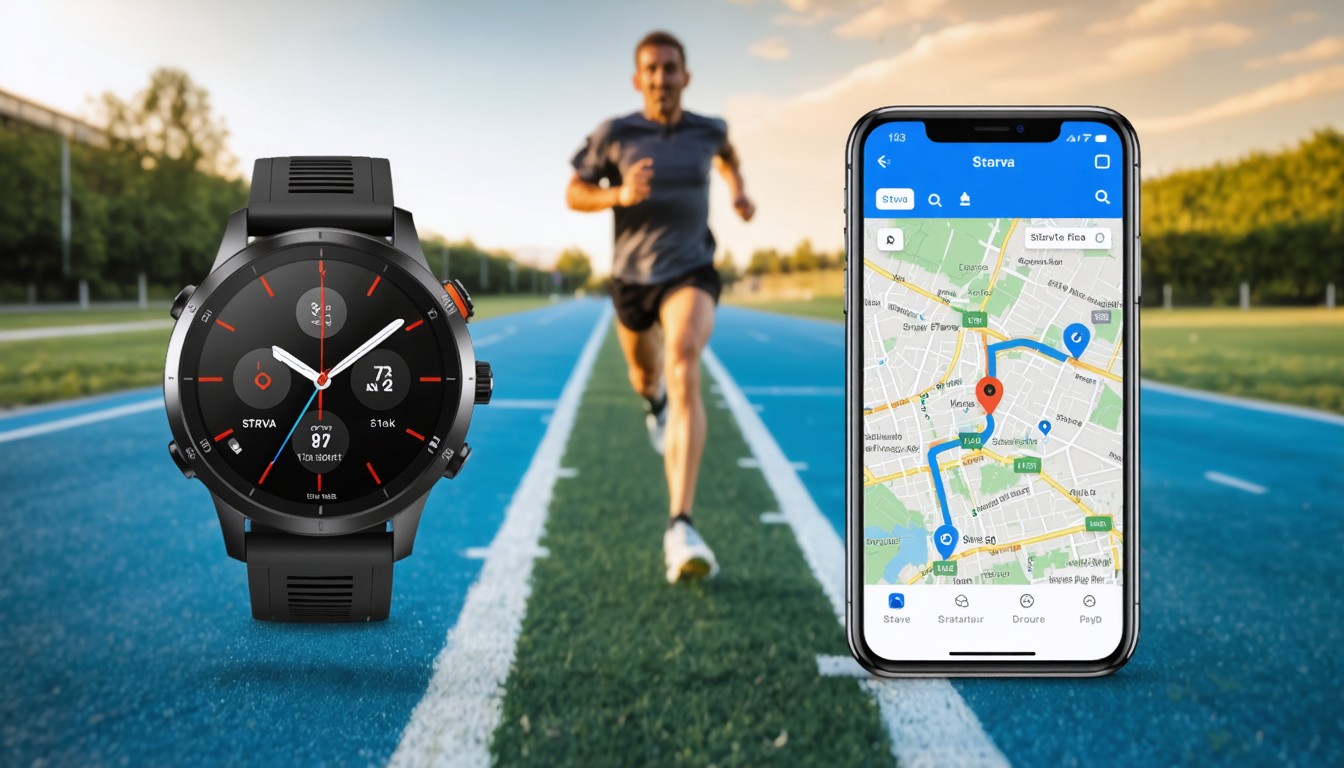
For Garmin, the stake is high: the ban on selling its connected watches in the American market, which represents a core clientele, would be a severe blow. The brand notably relies on its Fenix, Forerunner, Epix models and Edge counters to strengthen its dominance.
- Maintaining sales: Avoid negative impact on consumer trust from the controversy.
- Fight for API access: Keep control over data flows and their representation.
- Brand reputation: Assert technological authority in the face of rising fitness apps.
Strava, on its side, stakes its credibility on defending its innovations but also on the quality of its ecosystem, where smooth exchanges with Garmin are a pillar of its success. The platform fears losing a significant part of its users who trust the perfect integration with these watches.
- Patent protection: Ensure its ideas are not appropriated without compensation.
- User retention: Avoid weakening its position as leader among sports social networks.
- Future cooperation: Negotiate favorable agreements in a competitive environment.
| Aspects | Garmin | Strava |
|---|---|---|
| Risks | Loss of access to US market | User base reduction if API breaks |
| Strengths | Wide product range and historic notoriety | Global community and technological innovation |
| Strategy | Data control and visibility | Patent defense and user fluidity |
This struggle takes place in a broader context where data conquest and mastery of technological tools determine the sustainability of actors in connected running. Running passion now rests on a market where innovation, rights, and partnerships are constantly questioned.
Challenges for the running community: how does the passion for running evolve in the face of the technological battle?
Runners, most concerned by this battle, see their daily experience disrupted by these tensions. Running, long simple and accessible, has been transformed by technology into an exciting sport where numbers, rankings, and social interactions amplify individual and collective motivation.
Loss of accessibility and digital fragmentation
If access to Garmin’s API is cut, many Strava users will have to make the effort to manually import their activities. This paradigm shift, however technical it may be, could create an unnecessary barrier and generate frustration and disengagement.
- Usage complexity: Risk of losing less tech-savvy users.
- Community fragmentation: Fewer social interactions and less emulation.
- Development of alternatives: Migration to more flexible and integrated applications.
Maintaining motivation and expected innovations
Faced with this tension, running enthusiasts always seek to maximize their potential. The arrival of alternatives could encourage a new wave of innovations in the sector, boosting creativity and supply to meet evolving athlete needs.
- Calls for more interoperability: Users want easy connections between various tools.
- Valuing personal data: Searching for ways to better exploit performance.
- Innovation in analysis and coaching: Smart and personalized technologies expected.
| User impact | Consequence |
|---|---|
| Technological exclusion | Decrease in active user base |
| Collective motivation | Risk of weakening social dynamics |
| Innovation | Call for new tailor-made creative solutions |
Legal perspectives and intellectual property protection in connected sports
This technological battle between Garmin and Strava highlights the growing complexity of legal issues surrounding connected sports. Intellectual property protection is becoming a major challenge to encourage innovation while respecting creators’ rights. The Strava-Garmin case is an emblematic example of conflict risks when the boundaries between inspiration and copying are blurred.
Patent law, particularly in the digital field, is rapidly evolving. Courts must arbitrate between the legitimate defense of inventions and the necessary openness to competition. By filing a complaint for patent infringement, Strava seeks to enforce these principles and set clear limits on the reproduction of key tools.
- Usage rights: Clarification needed on licenses and authorizations.
- Balance between innovation and competition: Find a fair middle ground to avoid stifling creativity.
- Protection in a global environment: International coordination to harmonize standards.
| Legal aspect | Specific issues |
|---|---|
| Technological patents | Clear definition and absolute respect |
| Licenses and agreements | Respect contracts signed and transparency |
| International litigation | Consistent application of rules in multiple countries |
For companies, this situation underlines the importance of rigorous innovation management and constant vigilance over their rights. For users, it reminds them that they operate in a regulated ecosystem, where actors’ choices can directly impact their favorite tracking and performance analysis tools.
What alternatives for runners facing the Garmin-Strava battle?
Faced with the tensions currently shaking the connected sports market, runners must consider alternative solutions to continue following their running passion without losing features or comfort. Several platforms and apps are boosting their development to specifically address the challenge of better interoperability and a seamless experience.
- Runkeeper: Robust app with activity tracking and performance analysis, compatible with various watches.
- Endomondo: Social platform with GPS tracking, offering a good social alternative close to Strava.
- Polar Flow: For Polar watch fans, a comprehensive alternative with integrated coaching.
- Relive: Innovative sports storytelling app to relive routes in 3D video.
| Platform | Strengths | Compatibility |
|---|---|---|
| Runkeeper | Intuitive interface and coaching | Garmin watches, Apple Watch, etc. |
| Endomondo | Strong social aspect | Multi-GPS devices |
| Polar Flow | Personalized coaching | Polar watches |
| Relive | Immersive route visualization | Compatible with Strava and Garmin |
However, migrating to these alternatives requires an adaptation effort for users used to the Strava-Garmin ecosystem. The challenge also remains in the ability of these platforms to offer equivalent innovations in terms of performance analysis and data management. This could open the door to renewed dynamic competition in connected sports.
The future role of data and performance analysis in connected running
As the battle between Garmin and Strava shakes the market, it is crucial to consider the overall evolution of the role of data in connected running. Sports technology is no longer limited to simple activity recording: it transforms habits, coaching, and motivation.
Personalization and intelligent coaching
Data collected by connected watches and fitness apps now allow offering personalized coaching, adapted to the profile, physical condition, and goals of each runner. Fine analysis of routes, segments, and splits, coupled with smart algorithms, provides precise recommendations.
- Adapted training plans: Real-time adjustments according to recovery and performance.
- Injury prevention: Analysis of biometric data to avoid overload.
- Increased motivation: Personalized goals and gamified encouragements.
Advanced visualization and augmented reality
To go further, some apps integrate augmented reality to visualize data live on the road or screen, making running more immersive. This technology promotes engagement, focus, and effort management, notably in segment planning and route optimization.
| Technology | Impact on running |
|---|---|
| Intelligent coaching | Continuous performance improvement |
| Biometric analysis | Reduced injury risk |
| Augmented reality | Immersive and interactive experience |
In this context, mastering and free circulation of data between platforms remain paramount challenges for nurturing running passion without hindrance. The current battle between Garmin and Strava could therefore also serve as a warning on the necessity of more transparent and fair collaboration in this rapidly expanding sector.