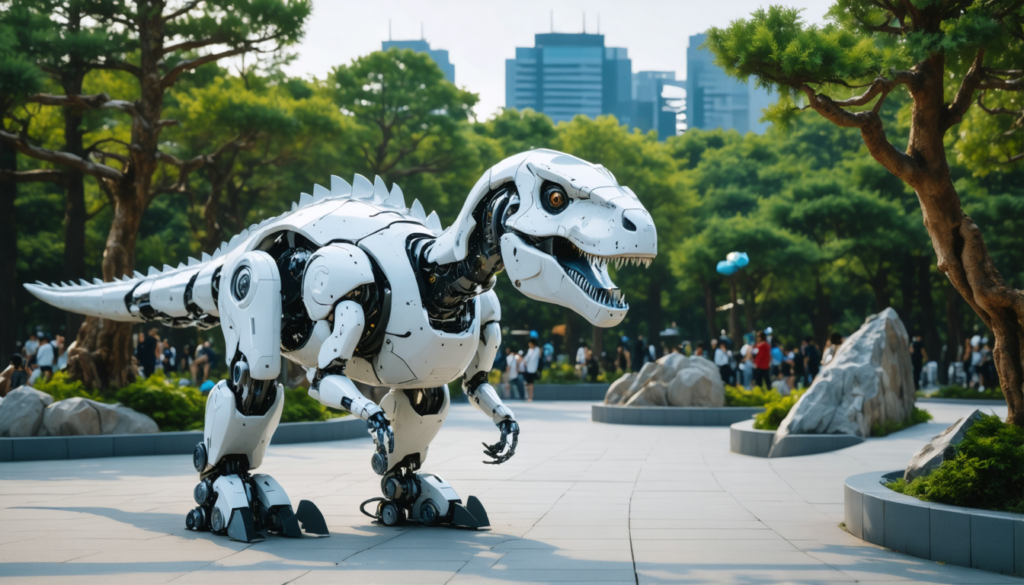
In 2025, China confirms its role as a pioneer in technology and robotics with a surprising innovation that attracts global attention: a transformable robot capable of becoming a life-size dinosaur. This spectacular metamorphosis, carried out by LimX Dynamics, opens a new era of interactions between humans, machines, and prehistoric history, blending artificial intelligence and advanced robotic design. The enthusiasm for dinosaurs, deeply rooted in our collective imagination, finds here a fascinating embodiment, making a futuristic cultural experience tangible and immersive. Let’s discover together the multiple facets of this fascinating technological feat coming from the heart of China.
- 1 LimX Dynamics: a major breakthrough in transformable robotic dinosaurs
- 2 How the transformable robot revolutionizes the museum and tourism experience
- 3 The technological feats behind the dinosaur metamorphosis
- 4 The role of artificial intelligence in the robot’s autonomy and interaction
- 5 Modularity and customization: the key to a transformable future
- 6 Envisioned applications: from cultural tourism to techno-futuristic events
- 7 Future perspectives and challenges for morphing robots in a cultural context
- 8 The future of transformable robotics: towards a global revolution
- 9 Social and cultural implications of a dinosaur robot in China
LimX Dynamics: a major breakthrough in transformable robotic dinosaurs
LimX Dynamics, the Chinese company behind this innovation, has developed a bipedal robot called TRON1. This robotic platform was specially designed to handle rapid changes in weight and balance. Thanks to its advanced stability capabilities, this robot can transform into an impressive T-Rex dinosaur with a realistic appearance. The technique of covering the robot with an ultra-detailed silicone “skin” reflects extreme care given to appearance and animal-like gestures.
This innovative technology allows the robot to interact with its environment, walk at a speed of about 5 km/h, and maintain its balance even under constant external pressures. Pushing, pulling, or shaking actions applied by spectators do not disturb its posture at all, thanks to a real-time balance recalculation system based on sophisticated sensors.
List of the main technical features of the TRON1 robot:
- Robust biped, adapted to rapid load changes
- Advanced dynamic weight management system
- Removable and realistic T-Rex skin with anatomical details
- Integrated stability sensors and environmental cameras
- Multiple locomotion modes: bipedal walking, stability on varied terrain, wheel mode on smooth surfaces
- Energy autonomy of several hours (for continuous operation)
- Intuitive operator interface with remote control and “robot leash” system
| Characteristic | Description |
|---|---|
| Robot name | TRON1 |
| Type | Transformable biped robot |
| Movement speed | About 5 km/h |
| Autonomy | Several hours of continuous use |
| Embedded technology | Balance sensors, cameras, stabilization AI |
| Applications | Museums, tourist parks, traveling exhibitions |
This innovation is much more than a mechanical feat: it represents a significant advance in artificial intelligence applied to transformable robotics. This robot embodies a fusion between fascination with ancient nature and future technologies.
How the transformable robot revolutionizes the museum and tourism experience
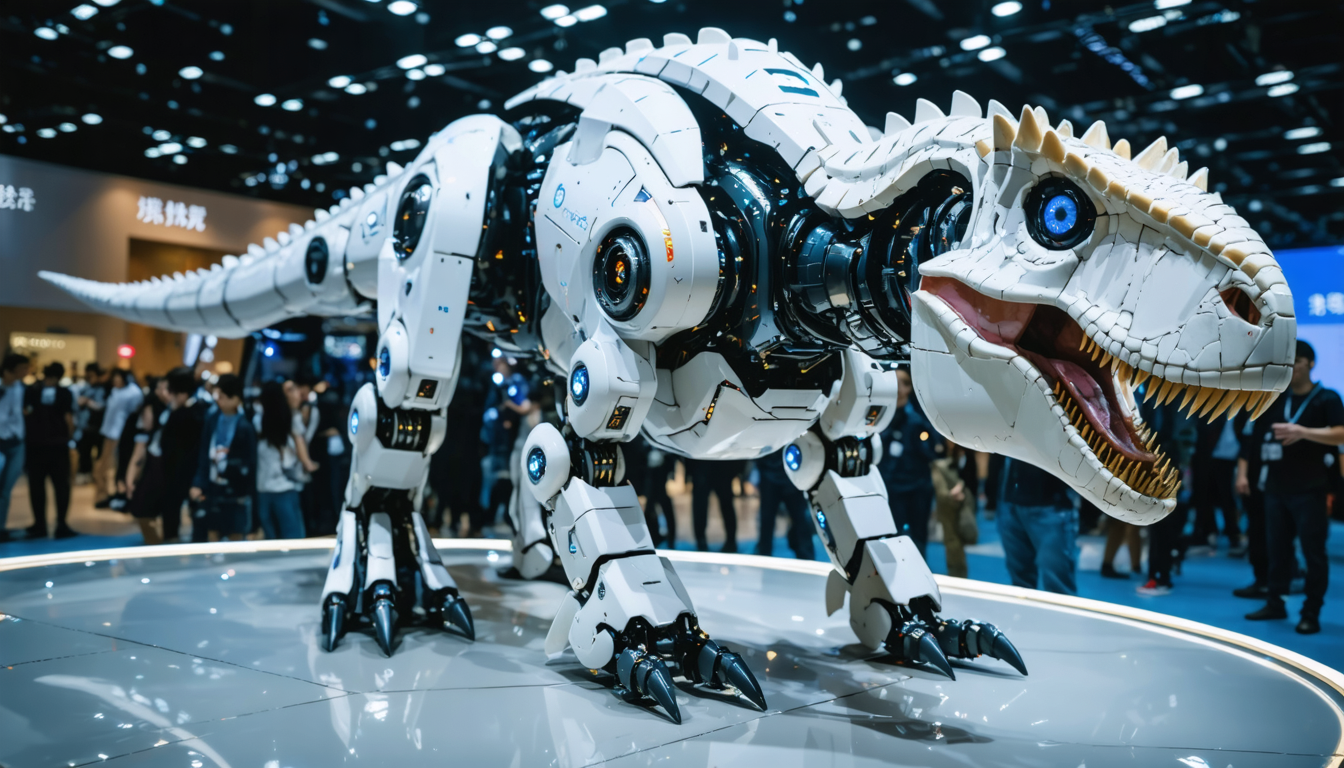
The dinosaur robot is not just a simple gadget: it is intended to revitalize and enrich the way museums, theme parks, and tourist sites present prehistory. Unlike traditional exhibitions where only inert models or screens are found, this machine allows a dynamic immersion that evokes emotion and curiosity.
In museums, the presence of this robot encourages direct interaction with visitors. Here are the benefits:
- Sensorial immersion through walking and realistic movement
- Dynamic interaction thanks to the robot’s responsiveness to external stimuli
- Appeal to a family and international audience due to its spectacular aspect
- Playful education by allowing personalized explanations and animations
Visiting a theme park or museum equipped with this technology, visitors may find themselves face-to-face with a life-size dinosaur moving, seeming almost alive. The combination of “living stage” and advanced robotics attracts a growing number of visitors curious about the future of museography.
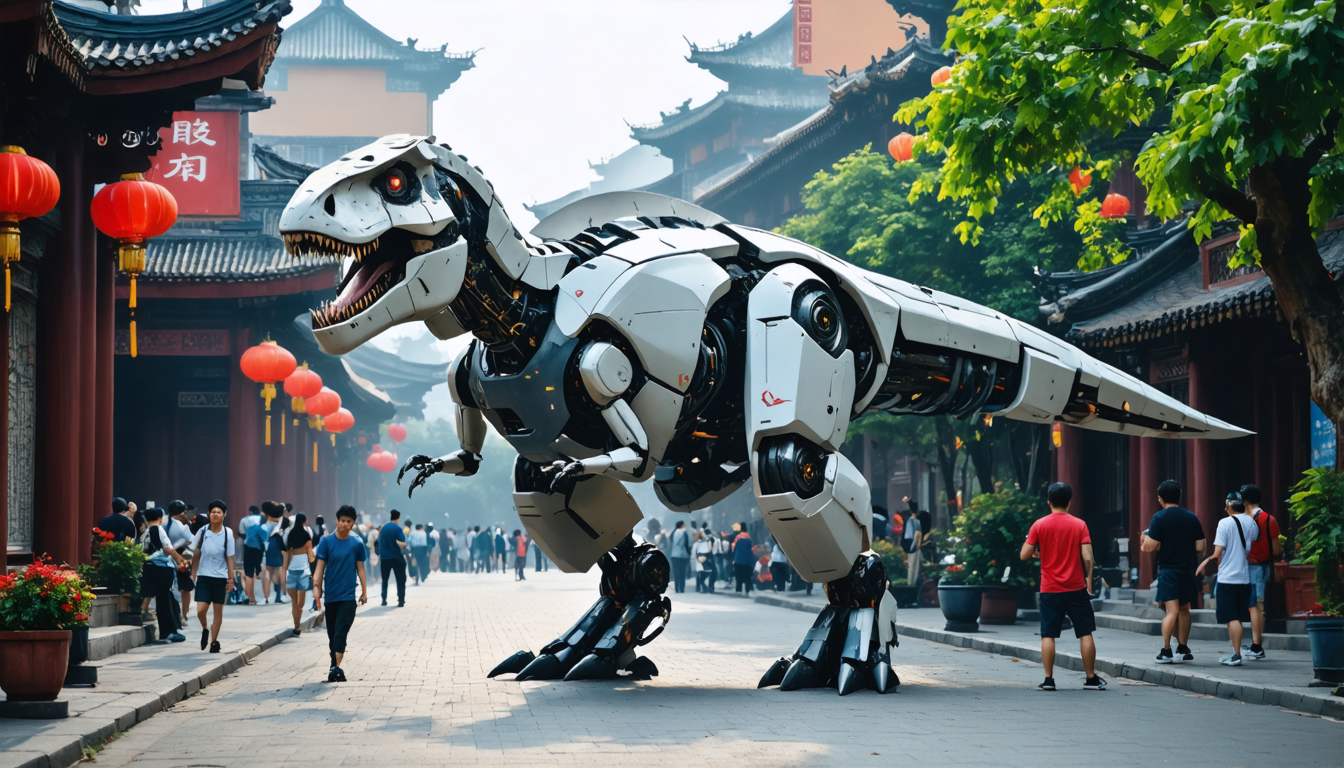
A concrete example is the demonstration on an urban sidewalk where spectators surround the robotic T-Rex and try to destabilize it. The robot instantly adjusts its posture, proving its unique balance system. This interaction becomes a show in itself, enhancing the social dimension of the visit.
| Type of site | Benefits brought by the dinosaur robot |
|---|---|
| Museums | Enhanced interactive and educational immersion |
| Tourist parks | Spectacular animation for family audiences |
| Traveling exhibitions | Ease of transport and skin modularity |
| Cultural events | Increased innovation and attractiveness |
This transformable robot can also serve as a starting point for narratives enriched by other technologies such as augmented or virtual reality, thus extending public engagement in these cultural venues.
The technological feats behind the dinosaur metamorphosis
This Chinese robot performs a stunning metamorphosis thanks to several innovations in robotics and artificial intelligence. The TRON1 platform is an example of advanced robotics with increased capabilities:
1. Dynamic balance management: The embedded system uses a network of sensors and gyroscopes analyzing the robot’s position in real time, with instantaneous recalculation to restore correct posture.
2. Removable robotic skin: Completely covering the metal structure, this synthetic skin is modular to adapt to other animal shapes, offering unprecedented flexibility.
3. Intelligent interaction: Thanks to analysis of received signals (touches, spectator positions, obstacles), the AI continuously adjusts movement and gait.
4. Multiple movement modes: Although favoring bipedal walking in T-Rex mode, TRON1 can also adapt to specialized modes depending on the environment.
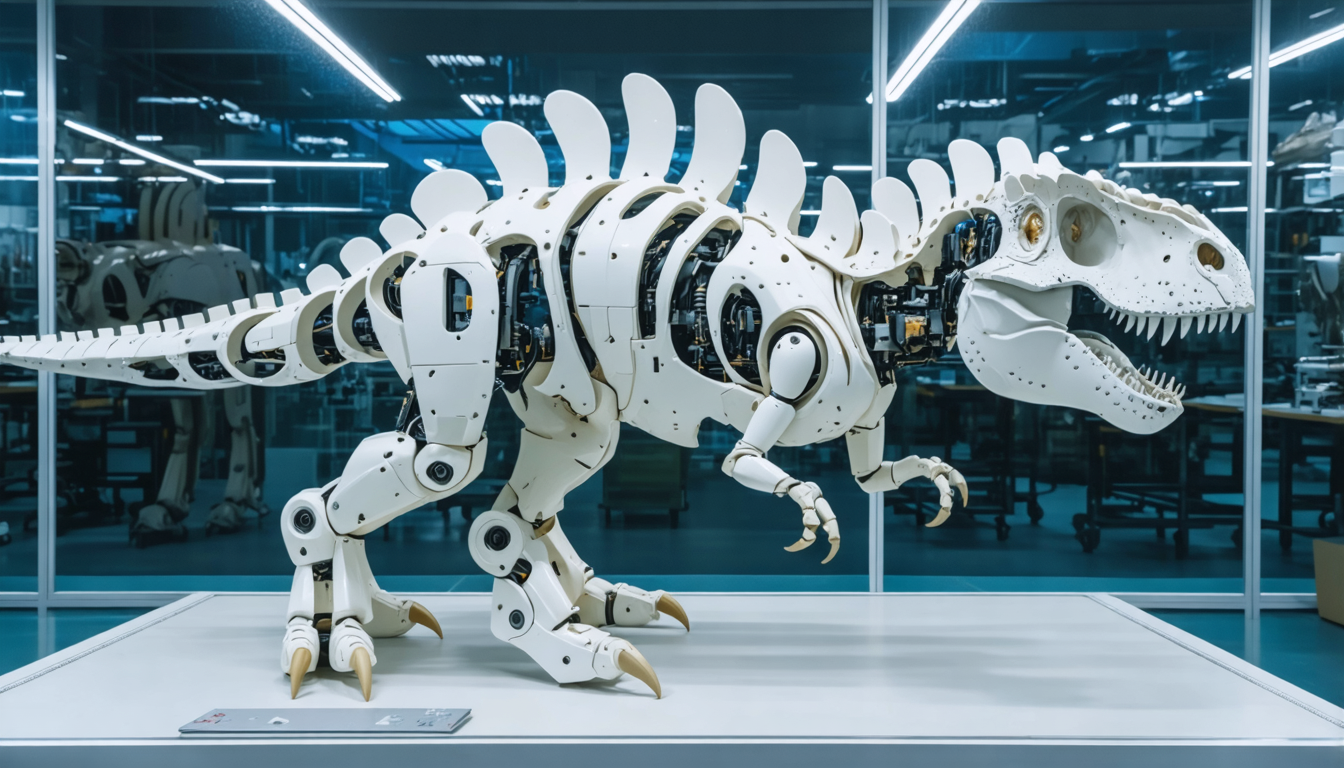
The engineering behind this robot is a perfect illustration of the convergence between passion for ancient natural history and technological modernity. For example, the enormous T-Rex head is designed with materials that are light yet strong, while the articulated tail plays a crucial role in stabilizing during walking.
| Technological innovation | Description |
|---|---|
| Sensors and gyroscopes | Continuous posture analysis and rapid correction |
| Modular skin | Quick substitution for different creatures |
| Adaptive AI | Natural reactions to external stimuli |
| Multiphase locomotion | Bipedal walking and other compatible modes |
The robot thus approaches a truly simulated being rather than a rigid mechanical construction, thanks to the use of sophisticated artificial intelligence and advanced robotics algorithms.
The role of artificial intelligence in the robot’s autonomy and interaction
One of the pillars of the technology developed by LimX Dynamics is the integrated artificial intelligence that supervises the dinosaur robot’s stability, reactions, and adaptability. This AI is capable of:
- Reading and interpreting data from cameras and sensors to anticipate disturbances
- Calculating in real time the necessary adjustments to maintain perfect balance
- Adapting the robot’s movements to the environment, including irregular terrains
- Reacting to human interactions, whether physical contacts or remote commands
- Allowing a semi-autonomous mode under operator control by remote or through a “robot leash” system
This ability to analyze and react almost instinctively creates a spectacular experience for visitors, making each appearance of the robot unique and dynamic.
Consequently, the several-hours autonomy allows sustained use during tourist and cultural events without frequent interventions.
| AI function | User benefits |
|---|---|
| Real-time analysis | Guaranteed stability even under mechanical stress |
| Reactions to interactions | Immersive and safe experience |
| Environmental adaptation | Flexible operation in different sites |
| Remote control | Simple and intuitive management by operator |
This alliance between robotics and artificial intelligence puts China at the forefront of developments in the transformable robot sector and opens the way for many other applications in the future.
Modularity and customization: the key to a transformable future
One of the most remarkable innovations of this robot lies in the modularity of the skin. In a few minutes, teams can remove the dinosaur’s skin and install a new one, adapted to a mammoth, dragon, or other mythological creature. This modular capacity revolutionizes tourist and cultural uses since a single robot can deploy several identities depending on needs.
This flexibility is a key advantage for museums or parks wishing to frequently renew their animations without investing in multiple robots. Here are some benefits of this modularity:
- Multiplication of animations from a single platform
- Diversification of cultural communication according to themes and seasons
- Cost optimization through rental or resale of complementary modules
- Ease of maintenance with simplified cleaning and upkeep
Focusing on this modularity, LimX Dynamics also plans the sale and rental of these robotic skins, opening innovative economic models for cultural and tourist institutions worldwide.
| Aspect of modularity | Impact on usage |
|---|---|
| Removable skin | Quick transformation into different creatures |
| Simplified maintenance | Short interventions for checks and cleaning |
| Rental and sales | Flexible economic model for clients |
| Customization | Adaptation to specific needs of each site |
This modularity is a true revolution and demonstrates an approach focused on sustainability and innovation in the cultural robotics sector.
Envisioned applications: from cultural tourism to techno-futuristic events
This dinosaur robot naturally fits into current and future trends in cultural tourism seeking originality and new experiences. LimX Dynamics targets several sectors with this versatile tool:
- Museums dedicated to paleontology and science
- Theme parks aiming to renew their attraction offerings
- Traveling exhibitions seeking modularity for easy transport
- Technological events showcasing robotic and AI innovation
LimX’s approach fits well within an intelligent robotics dynamic serving cultural animations, providing a perfect combination of innovation and entertainment. An ever-wider audience can thus benefit from lively and immersive experiences.
Some specific integration examples:
- Nocturnal animation in a park with a dinosaur robot guiding visitors
- Augmented guided tours with a robot answering questions during exhibitions
- Interactive workshops where children and adults handle transformable robots
- High-tech promotional events linking history and futurism
| Event type | Advantages of using the robot |
|---|---|
| Tourist parks | Major spectacular attraction |
| Museums | Interactive educational tool |
| Traveling exhibitions | Multimode portability |
| Technological events | Highlighting technology and Chinese robotics |
Launched in China, this robot is a remarkable testimony of the country’s innovative capacities, but also a product adapted to the international market as visitors of cultural sites worldwide demand it.
To better understand the boundaries between robotics and territorial uses, discover this article that clearly illustrates some robotic applications.
Future perspectives and challenges for morphing robots in a cultural context
While the technology inaugurated by LimX Dynamics impresses with its advance, several issues remain to be considered for large-scale and sustainable deployment:
- Production cost: although innovative, the robot remains expensive to manufacture and requires a substantial budget for maintenance.
- Cultural acceptance: some audiences may perceive this type of technology as “too futuristic” or disconnected from pure museum tradition.
- Safety: ensuring safe interaction between robot and visitors in highly frequented places requires strict protocols.
- Durability and updates: maintaining software updates and guaranteeing mechanical longevity and aesthetic quality of replaceable skins.
- Ethics: reflection on the impact of intelligent machines in the enhancement of historical heritage.
These challenges must be met for this technology not to be a mere trend, but a true revolution sustainably integrated into the cultural landscape. China, with its robotics and AI expertise, remains a leader likely to drive the next step in applied robotics.
| Challenges | Potential solutions |
|---|---|
| High cost | Production optimization and public-private partnership |
| Public acceptance | Awareness and accessible demonstrations |
| Safety | Integration of strict standards and human supervision |
| Durability | Software updates and regular maintenance |
| Ethics | Dialogue with experts and institutions |
The development of this Chinese transformable robot perfectly illustrates how technological innovation and cultural tradition can coexist and open new paths.
The future of transformable robotics: towards a global revolution
Over the years, robotics is evolving towards a smoother and more natural interaction with humans and their environment. LimX Dynamics’ example opens the way to futuristic projects where transformable robots will fulfill numerous adapted roles:
- Reconstructed historical characters for education and entertainment
- Animated mythological creatures for cultural festivals
- Robot assistants capable of switching from one form to another based on needs
- Infiltration in various professional fields (health, security, agriculture) thanks to modularity
China thus establishes itself as an engine of innovation and progress in robotics and artificial intelligence, founding a future where technology blends into our lives with unprecedented adaptation.
| Sector | Potential robotic transformation roles |
|---|---|
| Education | Immersive historical animation |
| Tourism | Interactive and attractive experiences |
| Cultural events | Festive animation and storytelling |
| Industry | Modular robots for various functions |
Recent articles such as this focus on cutting-edge robotics explain possible trajectories of a future dominated by machines with transformable functions.
Social and cultural implications of a dinosaur robot in China
Finally, it is essential to understand that this innovation concerns not only technology but also profoundly influences local social and cultural dynamics. In China, a country where history and technology often coexist under the same prism, this dinosaur robot is a direct expression of the desire to transmit knowledge while modernizing the educational approach.
This project also opens debates on the role of robots in society, between fascination, learning, and ethical issues. Chinese audiences, often very open to innovative uses, see in this mechanical creature a source of technological pride and a vector of cultural influence on a global scale.
List of possible cultural and social impacts:
- Strengthening local cultural tourism thanks to unique interactive experiences
- Enhancing robotics as a symbol of modernity and national innovation
- Increased dialogue on heritage conservation through technological means
- Creation of new jobs related to maintenance and management of transformable robots
| Social and cultural impact | Description |
|---|---|
| Increased tourism | Attracting more visitors with an innovative offering |
| Technological pride | Strengthened national identity |
| Innovative education | Enhanced learning through interaction |
| Emerging jobs | New careers in cultural robotics |
All this dynamic demonstrates that the alliance between advanced robotics and culture has lasting repercussions far beyond a simple technological attraction.