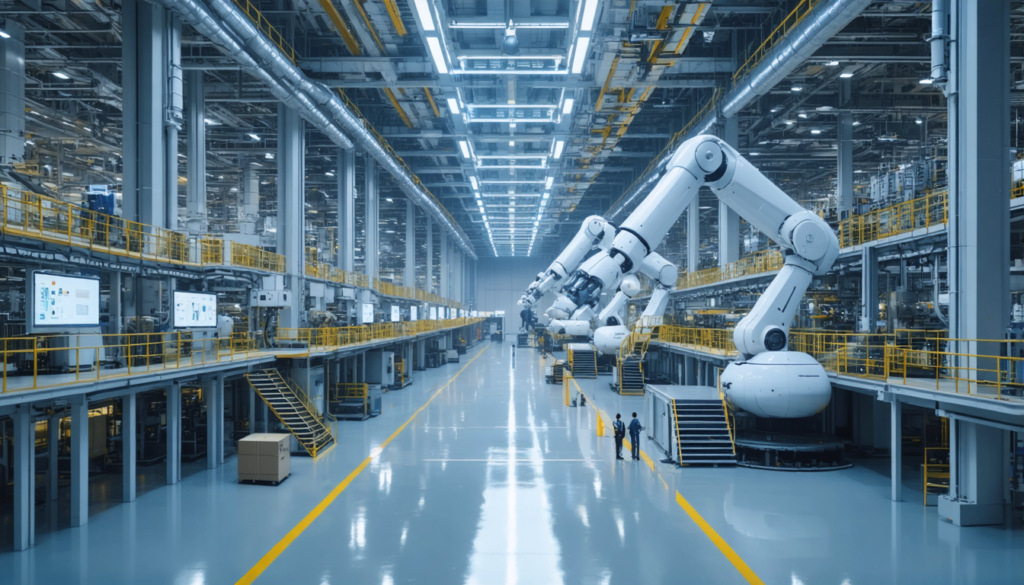
At the heart of an era where innovation and technology are redefining the very foundations of industry, China stands out as the major player in the robot revolution. This revolution is not only technological but also social and economic, disrupting entire sectors and redrawing the global map of industrial competitiveness. While Chinese giants multiply their investments in intelligent automation, especially in ultra-advanced humanoid robots, France seems to struggle to fully seize this wave. This gap, if it persists, could weigh heavily on the technological and industrial future of Europe, leaving the door open to a marked imbalance between an emerging power and countries still in the phase of digital transformation. This striking contrast raises an essential question: how can French policymakers, companies, and institutions react so as not to be left behind in this frantic race toward robotics and artificial intelligence?
The multiple facets of this revolution unfold in a global context where China maintains its status as the world’s largest market for industrial robots, relying on a proactive industrial policy and massive state support, which are invisible or insufficient in France. This rapid advancement not only optimizes the efficiency of its industries but also raises questions about the social impact of automation. Moreover, Chinese robotization is not limited to industrial production: it invests in service sectors, health, and even culture, fully embodying the fourth industrial revolution. In the face of these changes, the role of digital transformation, the integration of new technologies, and the management of economic effects are more crucial than ever, both in China and France.
- 1 China: the global giant of industrial robotics and its growing influence
- 2 Humanoid robots in China: between spectacular innovation and speculative bubble
- 3 Digital transformation in China: engine of industrial competitiveness and innovation
- 4 Social impacts of massive robotization in China and the fears it raises
- 5 Why is France lagging behind in the face of China’s technological revolution?
- 6 Innovate or disappear: challenges for industrialists facing the rise of robotization in China
- 7 Towards an uncertain future: the necessity for France to embrace digital transformation
- 8 International collaboration: a possible way not to lose the race to robotics
- 9 Towards human-robot coexistence: opportunities and challenges in the new technological era
China: the global giant of industrial robotics and its growing influence
For more than a decade, China has dominated the global market for industrial robots, embedding this superiority in its national industrial strategy. According to a senior official from the Ministry of Industry and Information Technology (MIIT), the country remains, for the 11th consecutive year, the world’s largest market for industrial robots. This dominant position is not a coincidence but the result of a public policy orchestrated methodically, combining massive investments, development of innovative technologies, and the creation of competitiveness clusters.
An essential part of this success lies in the ability of Chinese companies to integrate automation into production lines, thus promoting a rapid upgrade of their products. In the automotive industry, for example, robotized lines ensure exceptional productivity while improving quality. These gains are amplified by synergy between robotics and artificial intelligence, offering Chinese industry an undeniable competitive advantage. China is no longer just the world’s workshop but a technological laboratory in full effervescence.
- Establishment of R&D centers dedicated to robotics
- Promotion of an innovation ecosystem through public subsidies
- Professional training adapted to the new jobs of Industry 4.0
- Mobilization of private and public investments in automation
| Year | Number of installed industrial robots (thousands) | Global market share (%) | Public investment in robotics (billion USD) |
|---|---|---|---|
| 2020 | 260 | 35 | 5 |
| 2023 | 480 | 40 | 9 |
| 2025 | 620 | 45 | 12 |
These figures illustrate China’s acceleration and largely explain why this robot revolution in China continues to worry its competitors, notably in Europe. To better understand this rise, consult the detailed analyses of China remains the world’s largest market for industrial robots and the in-depth reports available on Chinese dominance despite trade tensions.
Humanoid robots in China: between spectacular innovation and speculative bubble
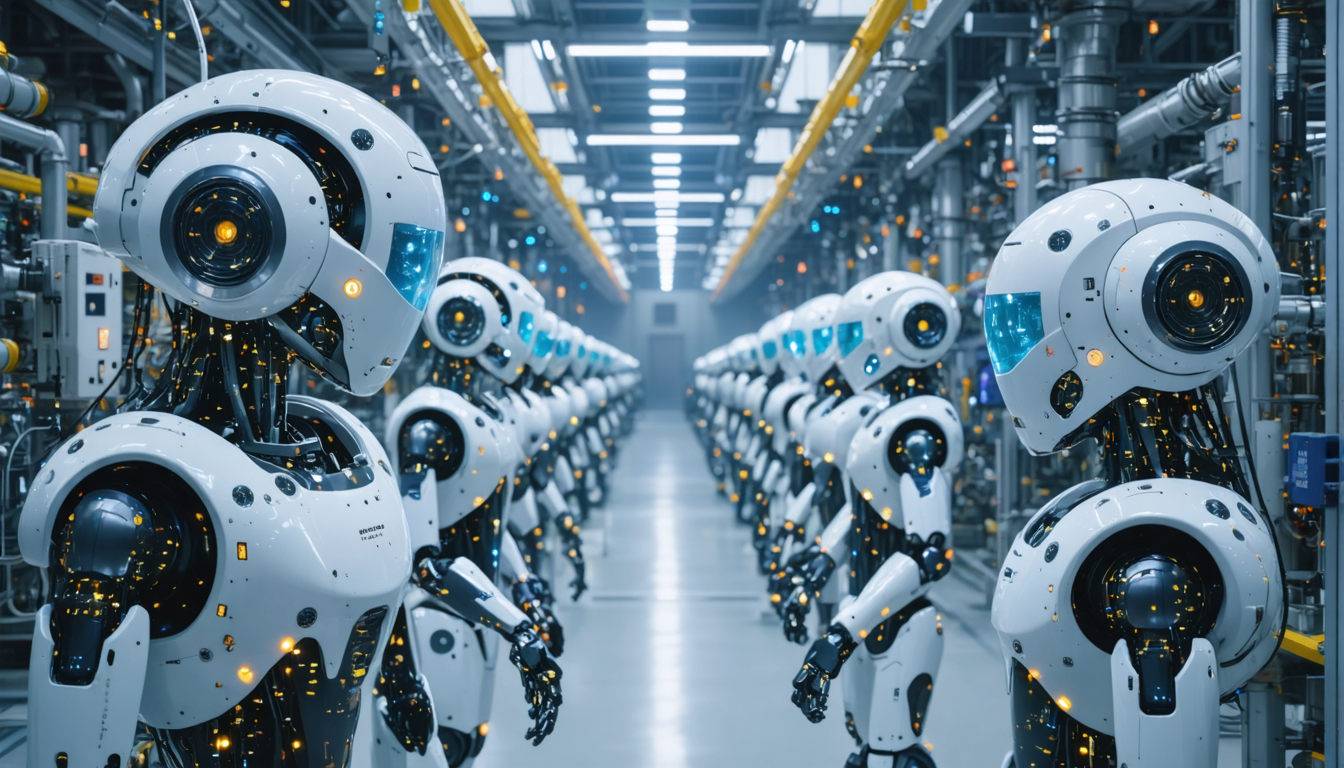
The recent surge of interest in humanoid robots in China elicits both fascination and caution. After several viral videos of robots dancing or running, showcasing their skills during the Chinese New Year Gala, the Chinese government has sounded the alarm. The National Development and Reform Commission, a key body, now encourages manufacturers to prioritize the creation of useful and functional robots rather than purely spectacular or recreational objects.
This warning reflects a growing concern over a form of speculative bubble that could resemble the bike-sharing boom, where an overabundant and almost identical supply saturated the market only to collapse. Indeed, while the aesthetic feats of robots attract attention, the labor market and industries need concrete and practical innovations.
- Multiplication of similar copies of dancing robots
- Challenge of real functionality versus a passing trend
- Fear of abandoning high value-added industrial projects
- Access control policies and market regulation
Chinese authorities thus want to further guide engineers toward industrial and high value-added service applications such as manufacturing, logistics, health, and even education. This new strategy illustrates Beijing’s desire not only to produce en masse but to control the quality and economic impact of its robots.
| Type of humanoid robot | Main functionality | Target market | Investments received (million USD) |
|---|---|---|---|
| Unitree robots (dance and demonstrations) | Entertainment, communication | Media, shows | 15 |
| Intelligent industrial robots | Manufacturing production | Automotive, electronics | 220 |
| Medical assistance robots | Support for caregivers | Hospitals, nursing homes | 55 |
To better understand this evolution and its challenges, you can browse the articles from Numerama on humanoid robots in China and the news from Forbes analyzing the humanoid robot bubble.
Digital transformation in China: engine of industrial competitiveness and innovation
China’s rise in robotics cannot be dissociated from its overall digital transformation strategy. This accelerated mutation pushes industries toward massive adoption of intelligent automation technologies and artificial intelligence. The country has deployed a dedicated digital infrastructure that integrates cloud computing, big data, and 5G networks, thus creating an environment conducive to rapid innovation and agile industrialization.
This move to Industry 4.0 marks the end of purely manual production and highlights the deep integration of robotics in all parts of the economy, from factories to logistics to service delivery. This Chinese model is also based on enhanced training for engineers and technicians, nurturing a workforce adapted to future challenges.
- Development of smart factories integrating AI
- Networking of machines to optimize production
- Increasing use of robots in automated logistics
- Accelerated professional training and retraining for Industry 4.0
| Sector | Main technology | Productivity impact (%) | Average number of robots adopted per company |
|---|---|---|---|
| Automotive | Robotics and AI | 45 | 550 |
| Electronics | Advanced automation | 38 | 430 |
| Logistics | Autonomous mobile robots | 50 | 300 |
In this respect, France appears to experience a noticeable lag in digital transformation within the industry, and its lag in robotics remains worrying. The stakes are crucial to maintaining competitiveness on the global stage. For more details on China’s digital strategy, Generation NT offers detailed insight into this evolution.
Social impacts of massive robotization in China and the fears it raises
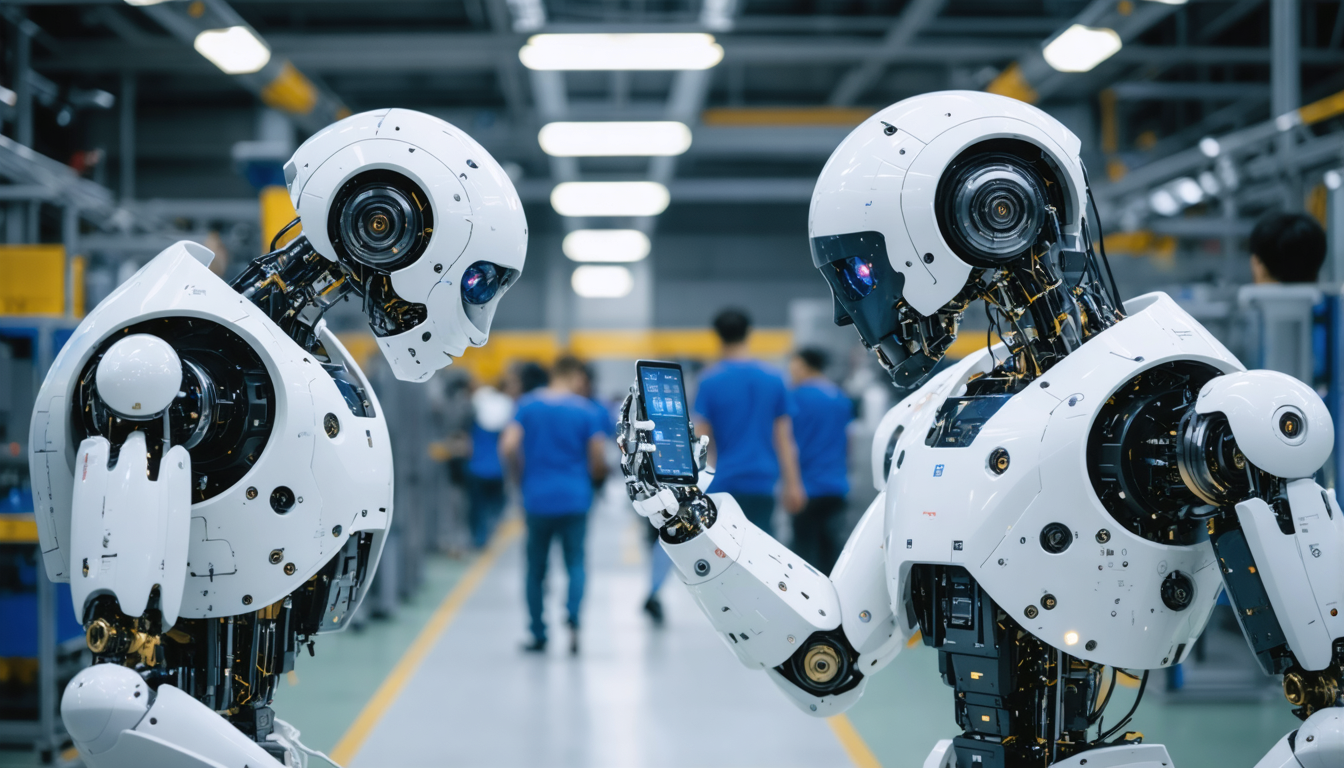
The accelerated robotization in China transforms not only the economy but also the social structure. While robots replace some manual or repetitive tasks, an intense debate is brewing about the effects on employment. Although China creates an army of specialized technicians and engineers, some sectors experience local job losses, with complex social consequences.
However, China approaches this transition pragmatically, investing in the requalification of employees and the emergence of new jobs related to the management, programming, and maintenance of robots. This change also provokes an evolution in professional and university training programs to accompany this dynamic.
- Shifting jobs toward high technology professions
- Massive investments in professional training
- Public support programs for career transitions
- Creation of jobs in robot maintenance and supervision
| Traditional job | Emerging job related to robotics | Evolution of number of jobs (2018-2025) | Required training |
|---|---|---|---|
| Assembly worker | Robotics technician | -30% | Bachelor +2 / Bachelor +3 |
| Manual quality controller | AI and automation engineer | +45% | Master’s degree (Bac +5) |
| Logistics operator | Robotics fleet manager | +50% | Bachelor +3 |
However, France must take these social transformations into account to anticipate its industrial future. Indeed, lack of preparation could lead to serious adaptation difficulties. Discover how this mutation impacts professions on the French AI blog dedicated to technological innovation.
Why is France lagging behind in the face of China’s technological revolution?
Despite recognized talents and significant industrial potential, France remains behind in the race toward robotization and automation. Several factors contribute to this lag, ranging from strategic choices to cultural and structural barriers.
Lack of large-scale public investment, administrative complexity, and a certain reluctance to take technological risks considerably slow the industrial development in robotics compared to China’s dynamic. Furthermore, fragmentation of private initiatives and insufficient support for research and development also weigh on French competitiveness.
- Weakness of public funds dedicated to robotics
- Complexity and slowness of administrative processes
- Fewer tax incentives for digital transformation
- Absence of a clear framework for developing innovative projects
| Indicator | China | France | Gap |
|---|---|---|---|
| Robotics R&D expenditure (billion USD) | 12 | 4 | ×3 |
| Number of installed industrial robots (thousands) | 620 | 95 | ×6.5 |
| Speed of adoption of digital transformation | high | moderate | significant |
To deepen these causes, studies published on Tekactiv and comparative analyses available on Tekactiv dedicated to Chinese robotics provide enlightening insight.
Innovate or disappear: challenges for industrialists facing the rise of robotization in China
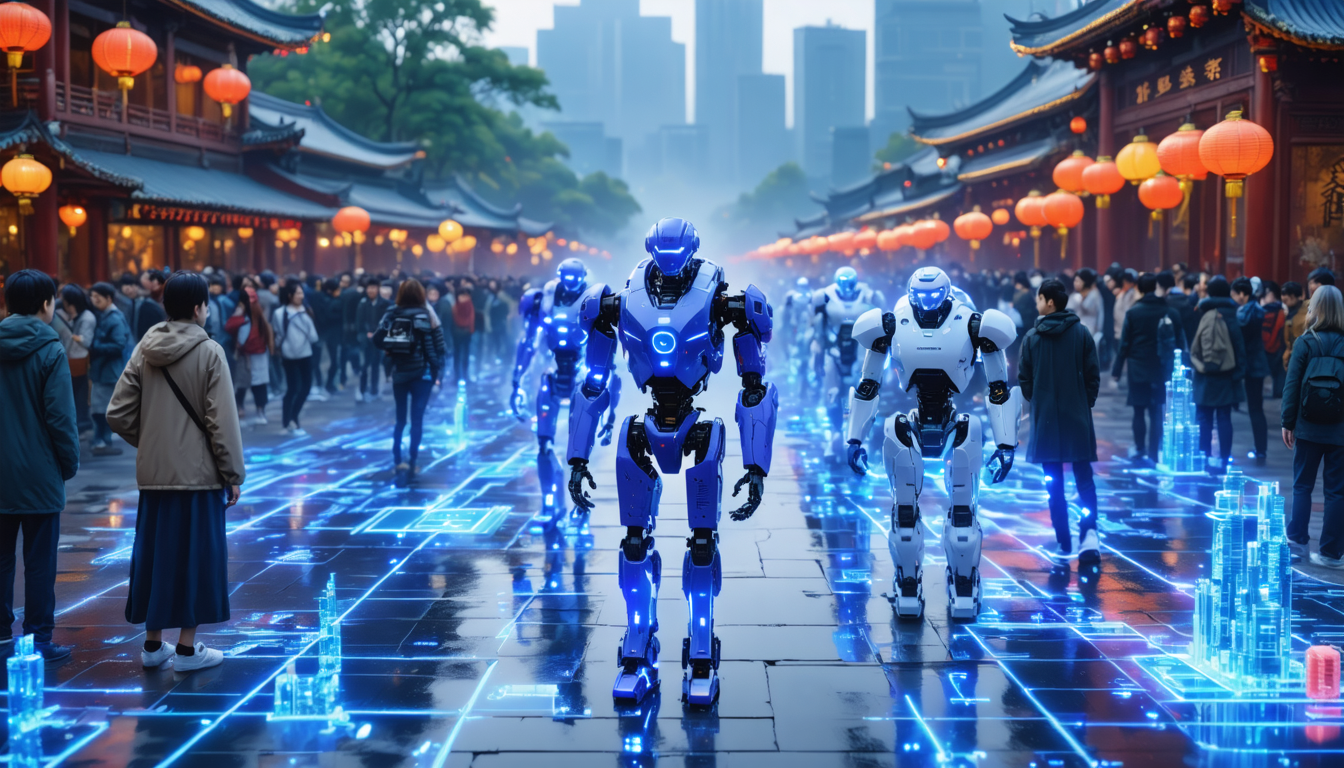
For industrialists, the robot revolution in China cannot be ignored. It creates unprecedented competitive pressure, forcing companies to adapt under the risk of being marginalized. This transformation comes with a profound change in investment, production, but also human resource management strategies.
The main challenges for companies are twofold: effectively integrating autonomous technologies into production lines and anticipating the new required skills.
- Adoption of smart technologies to gain productivity
- Reorganization of teams around human-machine collaboration
- Investment in training of advanced robotics technicians
- Implementation of continuous technological monitoring
| Industrial sector | Average investments in robotics (million USD) | Productivity gained (%) | Share of robots in production (%) |
|---|---|---|---|
| Automotive | 150 | 55 | 80 |
| Electronics | 120 | 48 | 75 |
| Textile | 40 | 30 | 60 |
To prepare for this upheaval, French industrialists must draw inspiration from Chinese models in terms of innovation and competitiveness. You will find comprehensive analyses on these issues in this article on the ultra-intelligent robot revolution in China.
Towards an uncertain future: the necessity for France to embrace digital transformation
For France not to fall behind in the face of the technological tidal wave, it becomes imperative that it commits to a proactive policy to accelerate its digital transformation and robotic industrialization. This necessity is imposed not only to guarantee economic competitiveness but also to support employment and sustainable innovation on its soil.
Coordinated efforts between the State, economic actors, and research centers are essential to create a dynamic and attractive ecosystem. Increased investment in specialized training, simplification of administrative procedures, and better mobilization of public funds are essential levers to activate.
- Launch of national programs dedicated to robotics and AI
- Creation of public-private partnerships for innovation
- Increased financial support for startups and innovative SMEs
- Promotion of fundamental and applied robotics research
| Action | Description | Expected impact |
|---|---|---|
| National robotics program 2025 | Targeted investment and funding of innovative projects | Acceleration of local robotics production |
| Strengthened technological training | Reinforcement of technical and university curricula | Better preparation for future jobs |
| Administrative simplification | Reduction of legal obstacles to innovation | Facilitation of tech startup creation |
To nurture this reflection, prospective analyses related to digital transformation in France and China are available on this reference page Generation NT on industrial challenges.
International collaboration: a possible way not to lose the race to robotics
The race to robotics and automation should not be an exclusively national competition. In a globalized world, international cooperation can become an essential engine for shared technological progress. Faced with China’s spectacular rise, France and other European countries must consider strategic partnerships, notably in research, development, and skills exchange.
This collaboration would allow pooling resources and stimulating innovation while sharing economic risks. Moreover, technological and ethical standards could be jointly built to guarantee harmonious and responsible development of robotics.
- Bilateral partnerships in robotics R&D
- University exchanges specialized in artificial intelligence
- Co-development projects in industrial automation
- Creation of European consortia for advanced robotics
| Type of partnership | Main objectives | Example | Expected benefits |
|---|---|---|---|
| Fundamental research | Development of new technologies | Franco-Chinese AI project for robots | Acceleration of innovation |
| Training | Sharing of know-how | Exchange program between Chinese and French universities | Skills development |
| Industry | Co-development of robotic products | Joint venture in automotive robotics | Cost reduction |
A more in-depth look at international initiatives can be found on Tekactiv and its articles on robotics collaborations.
Towards human-robot coexistence: opportunities and challenges in the new technological era
The coexistence between humans and robots marks the next stage of the technological revolution. In China, where automation is in full swing, collaboration between artificial intelligence, humanoid robots, and human workers is intensifying in factories, hospitals, and services. This integration opens vast perspectives but also raises major challenges in terms of ethics, employment, and safety.
Current initiatives aim to optimize human-machine interactions, improve the friendliness and safety of robots while developing hybrid work environments. This approach strengthens the complementarity between human skills and robotic performance, an imperative to make the most of this transformation.
- Development of AI algorithms favoring collaboration
- Creation of safe workspaces for human-robot interactions
- Strengthening social acceptability of robots
- Ethics and regulation in evolving robotics
| Aspect | Chinese initiatives | Expected results |
|---|---|---|
| AI-robot collaboration | Development of adaptive algorithms | Improvement of productivity and safety |
| Hybrid environments | Design of mixed smart factories | Optimization of work processes |
| Social acceptability | Awareness campaigns and training | Facilitated technology adoption |
These issues will also be decisive for the future of French industry. The challenge is to create robotics beneficial to all, encouraging innovation while protecting workers. More information on this dynamic is available on Migliore and the transformation of ultra-intelligent robots.