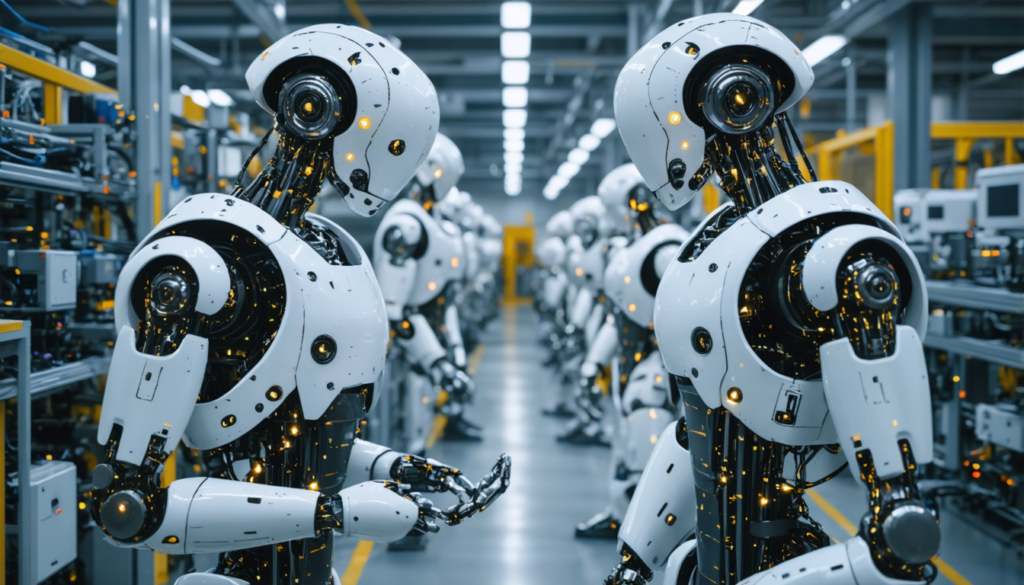
Industrial management is entering a new era today, marked by the spectacular arrival of humanoid robots. Xiaomi, one of the Chinese tech giants, has declared that it will massively integrate these automatons into its factories by 2030. This upheaval takes place in a context of increased automation and the rising power of artificial intelligence (AI), heralding a profound transformation of the industrial world. These artificial human robots promise to improve the efficiency of production lines while redefining the role of human workers.
As Industry 4.0 relies on major technological innovations, advanced robotics opens unprecedented prospects in terms of efficiency, precision, and cost reduction. This transition also raises passionate debates around employment, ethics, and social integration. By examining the various aspects of this revolution on the horizon of 2030, it appears that the future of production will rely as much on artificial intelligence as on human adaptation to the new industrial realities.
- 1 The incursion of humanoid robots in factory management: a major advance in Industry 4.0
- 2 Xiaomi and advanced robotics: an innovative industrial modernization strategy
- 3 Automation and performance: the tangible benefits of humanoid robots in Xiaomi’s factories
- 4 Social and economic impacts of the massive integration of robots in factories
- 5 CyberOne Robot and other Xiaomi innovations: an overview of key technologies
- 6 How humanoid robots redefine the future of industrial production
- 7 Ethical and social challenges of the massive use of humanoid robots in factories
- 8 Future perspectives: how Xiaomi is preparing a fully automated and connected factory by 2030
The incursion of humanoid robots in factory management: a major advance in Industry 4.0
The deployment of humanoid robots in factories marks a significant step in the rise of Industry 4.0. Xiaomi is at the forefront with its ambitious project aimed at gradually replacing human positions with these machines with advanced capabilities. Unlike traditional industrial robots, humanoids are designed to interact in varied environments, replicate complex gestures, and learn thanks to embedded artificial intelligence.
They bring surgical precision to repetitive operations, guarantee unparalleled consistency, and free themselves from human physical constraints such as fatigue or breaks. For example, on Xiaomi’s electric vehicle production lines, robots equipped with X-ray vision systems combined with AI can inspect a part in a few seconds, whereas a human operator would need several minutes. This advanced automation significantly optimizes productivity and manufacturing quality.
- Adaptation capabilities and machine learning
- Non-stop work without performance decline
- Smooth integration into complex work environments
- Enhanced human interaction capabilities
This massive adoption also leads to a profound change in industrial organization, where human-machine collaboration is reinvented. To deepen these issues, you can consult this article detailing the massive adoption of humanoid robots as early as 2030.
Xiaomi and advanced robotics: an innovative industrial modernization strategy
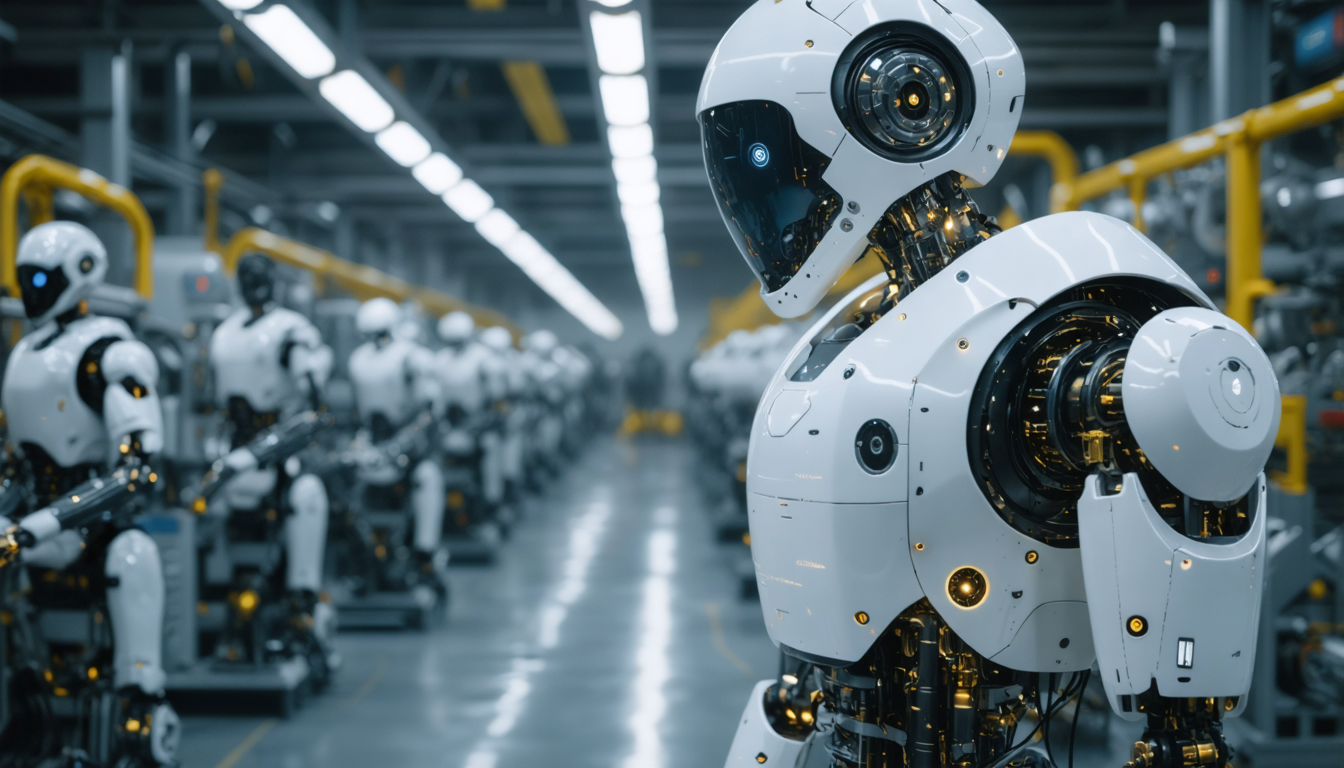
Advanced robotics is no longer a futuristic concept for Xiaomi but a rapidly growing reality. Under the leadership of Lei Jun, the CEO, the company has adopted an ambitious strategy aiming to make the humanoid robot the cornerstone of its factories of the future. This industrial modernization relies on a massive integration of artificial intelligence that allows robots to manage increasingly complex processes.
The success of this approach lies in the ability to combine speed, precision, and flexibility. For example, in the factory dedicated to electric vehicles, Xiaomi has replaced manual inspection with a sophisticated system combining X-rays and AI, enabling quality control to be sped up tenfold while practically eliminating human errors.
- Complete automation of repetitive and sensitive phases
- Continuous improvement through real-time data collection and analysis
- Collaboration between robots and human operators on creative management tasks
- Support for intelligent planning and predictive machine maintenance
This evolution fits perfectly within the context of a Chinese national strategy that relies on smart industry and technological innovations to conquer the global market. More information on this industrial shift can be found on the rise of humanoid robotics in China.
Automation and performance: the tangible benefits of humanoid robots in Xiaomi’s factories
The ability of humanoid robots to transform factory management is not limited to merely replacing the workforce. Comprehensive automation of processes brings tangible benefits regarding efficiency, quality, and responsiveness. In an industry where the slightest mistake can lead to colossal costs, these robots help meet the growing demands of modern production.
Here are some key advantages presented by the introduction of humanoid robots:
- Drastic reduction of human errors: robots perform tasks with impeccable precision and consistency.
- Optimization of production time: they work continuously, eliminating breaks and downtime.
- Agility and flexibility: able to quickly adapt to changes in lines or products.
- Better traceability: thanks to numerous collected data, processes are better controlled and analyzed.
This advanced automation not only accelerates the supply chain but also improves stock management and maintenance. Xiaomi is developing a network where each robot communicates in real time, thus contributing to the overall optimization of operations. A summary table of these gains is presented below:
| Aspect | Before Humanoid Robots | After Automation |
|---|---|---|
| Precision | Variable, frequent errors | Consistent, almost none |
| Production speed | Limited by human effort | Continuous and accelerated |
| Operational costs | High, labor expenses | Reduced, robotic maintenance |
| Flexibility | Long and costly changes | Rapid integrated adaptation |
This approach leads Xiaomi to bet on a future where industrial processes will become almost autonomous, helping redefine global industry standards. You can find more in-depth analyses on the humanoid robots revolution.
Social and economic impacts of the massive integration of robots in factories
The prospect of replacing human labor with humanoid robots generates a strong social and economic debate. While automation promises indisputable productivity gains, it also raises questions about the future of employment and the retraining of employees.
Experts agree that this new industrial ecosystem will give rise to jobs focused more on management, programming, and robot maintenance. Xiaomi presents this scenario as a way to free workers from repetitive tasks to direct them toward creative and strategic roles. However, such a rapid transition requires a colossal effort in training and adaptation.
- Skills transformation: upskilling on robotic technologies becomes crucial.
- Risks of exclusion: some profiles could be marginalized if training does not keep pace.
- Social challenges: need for public policies to support the change.
- Innovation opportunities: creation of new jobs and employment linked to technology.
China, in particular, pushes its smart industrialization policy with the goal of becoming the world’s leading power in this field. The French and European debate on this topic sometimes appears illusory in the face of this dynamic, as highlighted in this article on the robotic revolution in China.
CyberOne Robot and other Xiaomi innovations: an overview of key technologies
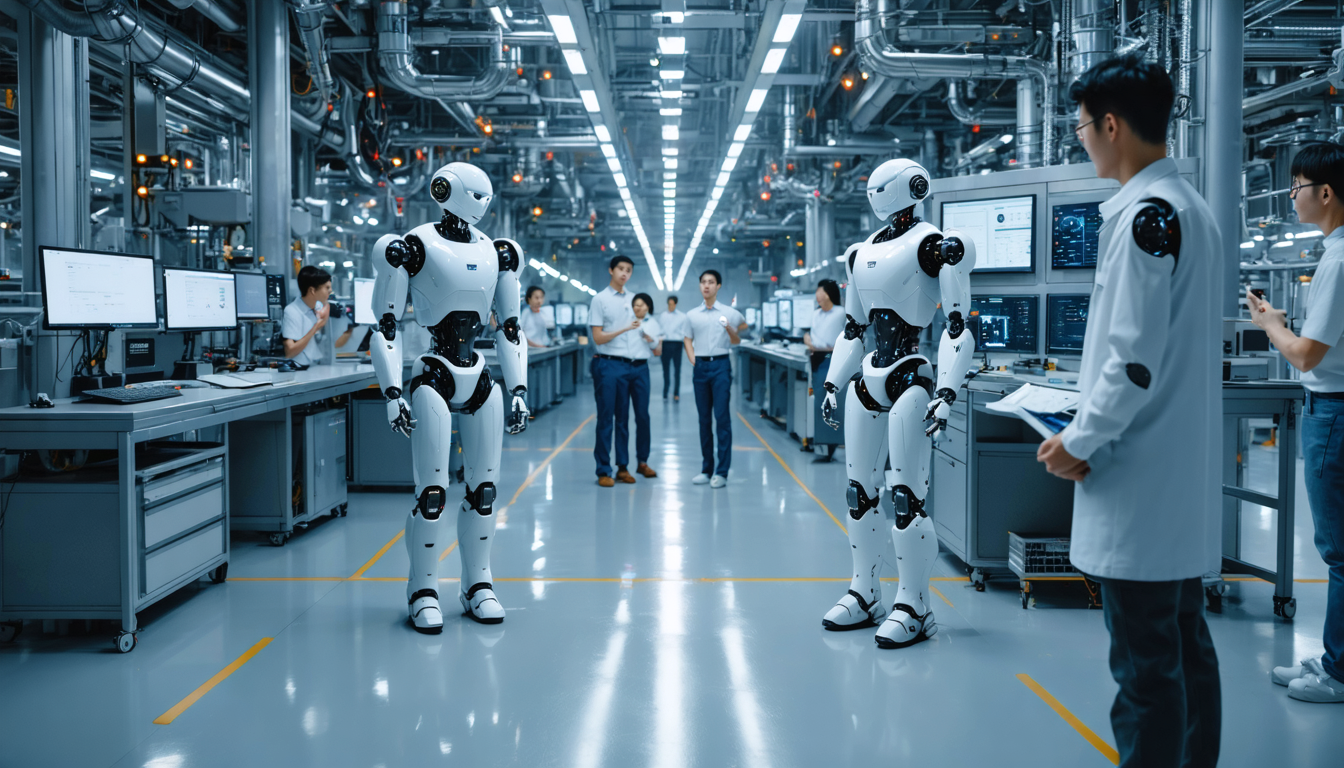
In 2022, Xiaomi unveiled the CyberOne robot, a promising prototype in the category of intelligent humanoids. This android marks the beginning of a series of technological innovations aimed at deploying machines capable of performing complex and varied tasks in industrial environments. The development of CyberOne was followed by strengthening teams in AI and robotics to transform this tool into a central actor of Xiaomi’s industrial future.
These robots feature multiple sensors, advanced perception capabilities, and conversational intelligence that will facilitate their interaction with human operators in the factory. Their modular architecture also allows rapid adaptation to different production applications.
- Advanced sensory detection to identify objects and defects
- Real-time communication with the industrial network
- Partial autonomy through continuous machine learning
- Intuitive interface facilitating human-robot collaboration
This synergy is essential to create connected and intelligent factories that handle the entire production cycle. To explore in depth the impact of these technologies, consult this comprehensive dossier on humanoid robots and AI at Xiaomi.
How humanoid robots redefine the future of industrial production
The convergence between AI and advanced robotics is radically transforming production methods. Humanoid robots embody this change by offering versatility never before achieved. They can perform manual tasks, oversee complex operations, and even contribute to decision-making through real-time data analysis.
The future of production is heading toward interconnected autonomous systems with processes capable of continuously self-optimizing. This approach minimizes waste, improves quality, and allows rapid addressing of market needs without constant human intervention.
- Use of data to predict and prevent breakdowns
- Evolutionary and adaptive automation according to demand
- Human-machine collaboration for creative and strategic tasks
- Reduction of manufacturing deadlines and costs
This vision places Xiaomi at the forefront of companies defining Industry 4.0. To learn more about this ongoing revolution, you can read this article on the new technological era of humanoid robots.
The rapid integration of humanoid robots in factories also raises major ethical questions. The replacement of humans by connected machines endowed with intelligence sparks debate on responsibility, safety, and job preservation. Xiaomi asserts that this revolution must be accompanied by deep reflection on the role of humans in the factory of tomorrow.
Among the identified challenges:
- Data protection: massive data collection raises confidentiality issues.
- Workplace safety: integrating robots in a human environment requires strict standards.
- Social impact: managing employment transitions and supporting employees.
- Human-machine balance: preserving the meaning of work and social interactions.
These issues push for designing an evolving regulatory framework and involving all stakeholders – industries, governments, and unions – to build a responsible industry. The in-depth reflection is addressed in this op-ed dedicated to the global industrial revolution embodied by humanoid robots.
Future perspectives: how Xiaomi is preparing a fully automated and connected factory by 2030
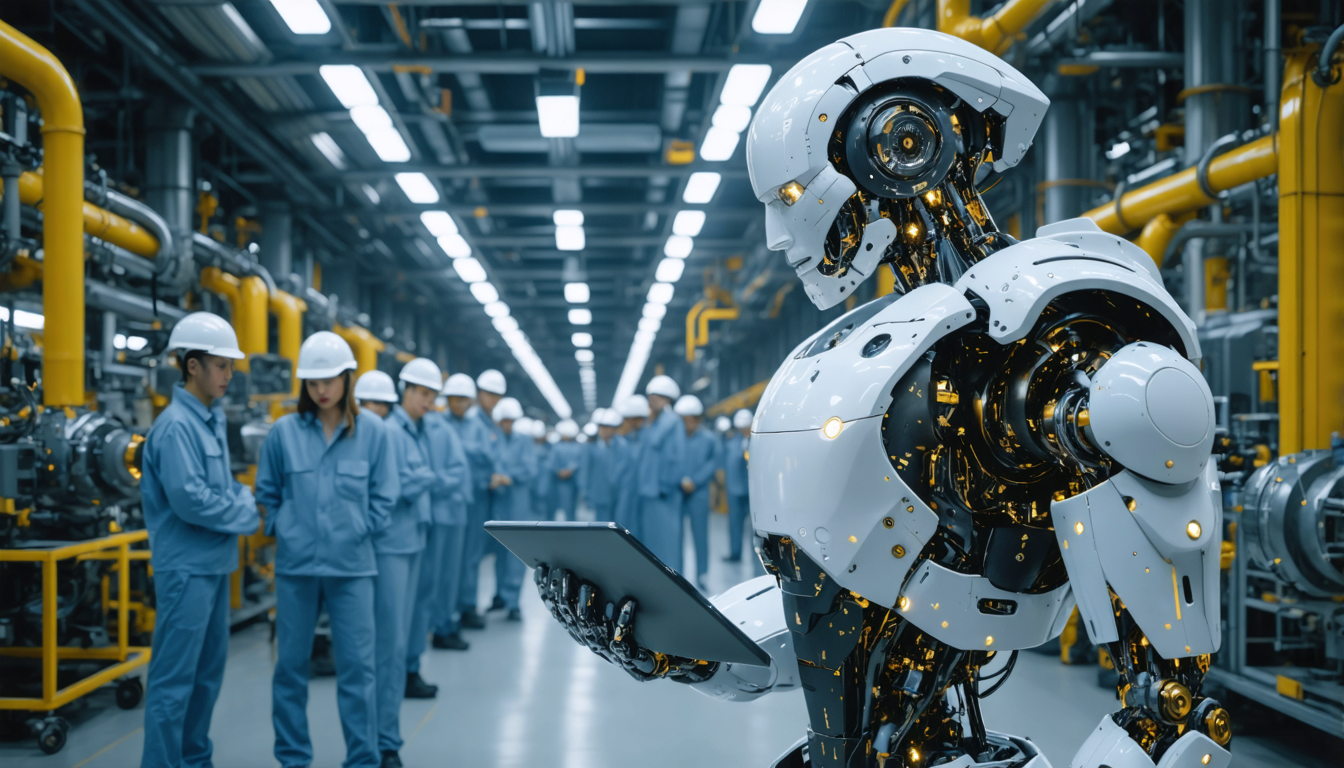
The challenge for Xiaomi is now to assemble all these elements into an integrated productive network where humanoid robots will interact not only among themselves but also with the factory’s various smart systems. The goal is to create a fully automated environment, capable of adapting in real time to production hazards and market fluctuations.
This factory of the future is based on several pillars:
- Total interconnection: fluid communication between robots and systems via industrial IoT
- Self-optimization: continuous learning to improve performance and maintenance
- Extreme flexibility: rapid modification of lines and reassignment of robots
- Reduction of ecological footprint: predictive maintenance and intelligent resource management
This model represents a radical change in industrial production and its economic and social implications. Xiaomi insists on human-robot complementarity, where each party will find its place in the process. For a detailed analysis of the future of these innovations, you can consult this study on the future of humanoid robots in industry according to Xiaomi.