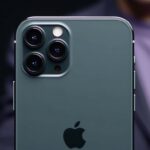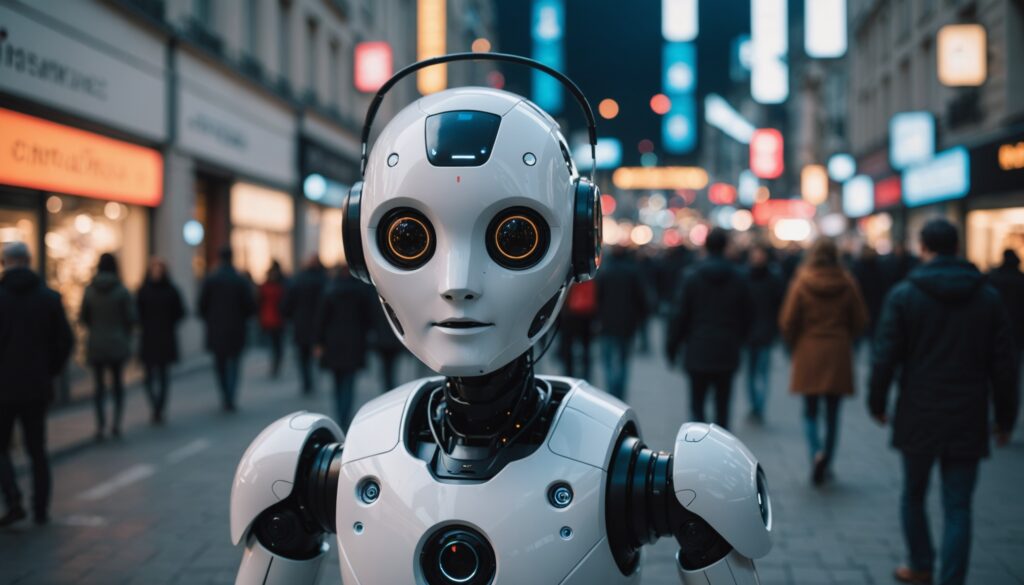
At the heart of MWC 2026, a breeze of novelty blows with the presentation of the very first robot smartphone equipped with artificial intelligence that rethinks our interaction with mobile technology. Honor, the Chinese manufacturer, innovates with a truly hybrid device, where the motorized camera no longer just captures images but becomes a mini-robot capable of autonomous movements and interactions. A technological breakthrough that heralds a revolution in the daily use of our connected objects and places the era of intelligent assistants in a new, more physical and sensitive dimension.
This innovation does more than push technological boundaries: it questions our relationship with the digital daily life and proposes a new form of connected future. This “mechanical presence” embodied by an intelligent assistant could profoundly change how we conceive the smartphone, no longer as a simple tool but as a quasi-living entity attentive to our needs. This article immerses you in the heart of this invention, exploring the technical, social, aesthetic, and economic implications of this extraordinary product at MWC 2026.
- 1 The robot smartphone: a major innovation of MWC 2026 redefining mobile technology
- 2 How artificial intelligence transformed into a physical assistant is revolutionizing the smartphone
- 3 Technical and hardware challenges of the robot smartphone
- 4 Ethical and privacy issues: the robot smartphone facing societal expectations
- 5 A comparison between robot smartphones and classic mobile technologies on the market
- 6 What future for robotized smartphones in our connected daily life?
- 7 Honor’s boldness and the need for innovation in a saturated mobile market
- 8 Do you know why a robot smartphone could redefine our relationship with connected objects?
- 8.1 Is the robot smartphone compatible with classic applications?
- 8.2 Does the motorized camera pose risks to privacy?
- 8.3 Is this smartphone more fragile than a classic smartphone?
- 8.4 How does artificial intelligence improve the user experience?
- 8.5 When will this smartphone be available on the market?
The robot smartphone: a major innovation of MWC 2026 redefining mobile technology
In Barcelona, the Mobile World Congress reveals this year a smartphone concept that goes beyond the traditional evolution of devices. Gone are the days of the race for thinness, brightness, or raw power. Honor offers a “Robot Phone” where the motorized camera extracts itself from the back of the phone to operate like a small articulated automaton, capable of rotating, tilting its head, or even following its user around the room. This innovation marks a radical shift in how we think about mobile technology, integrating a robotic dynamic at the core of the smartphone.
The stabilized camera relies on technical groundwork comparable to that of the DJI Osmo Pocket 3, using a three-axis motorized gimbal system to ensure smooth and precise movements. But instead of serving only video or photo purposes, this module fully assumes the role of a lively intelligent assistant, observing the environment, interacting, and reacting in real time. For example, in a demonstration, the phone sings a lullaby, plays hide-and-seek with a baby, or comments on an outfit, thereby blurring the lines between gadget and digital companion.
This novelty disrupts the classic smartphone image and proposes a true turning point toward a deeper integration of robotics into our personal equipment. The camera becomes a genuine “character,” evoking emotion and personality, somewhat like Pixar’s animated heroes such as Wall-E, embodying a more human and empathetic presence. Indeed, the robot smartphone establishes a new paradigm for the revolution announced at MWC 2026.
How artificial intelligence transformed into a physical assistant is revolutionizing the smartphone
In recent years, the rise of artificial intelligence in smartphones has offered advanced features: voice recognition, automated photo retouching, personalized suggestions. However, these advances, though useful, remained essentially confined to the role of a virtual assistant, hidden behind a software interface.
The “Robot Phone” signals the emergence of an embodied, physical, visible, and tangible AI. The device does not just respond to a request or execute a hidden task within the system. It actively observes its environment with its motorized camera, follows its owner’s movements, and can even initiate interactions. This radically transforms the nature of the human-machine interface by shifting the AI’s presence from an immaterial space to a manifestly living object.
This advance is made possible thanks to the integration of advanced computer vision algorithms, combined with a processor specialized in local processing of sensorimotor and linguistic data. In practice, this means the phone can understand and analyze the user’s attitude and context, adjusting its behavior and responses to offer a more natural and personalized experience.
For example, in video demonstrations, the smartphone can recognize facial expressions, interpret body movements, or remember user preferences. This novelty paves the way for a new form of proximity robotics that enriches the digital daily life through smoother and more engaging interaction.
Technical and hardware challenges of the robot smartphone
Imagining a smartphone coming to life thanks to a motorized module is exciting, but this innovation raises major technical challenges. Adding a mobile mechanical system to a daily-use object involves a delicate compromise between functionality, robustness, and energy autonomy.
First, durability is a critical issue. Smartphones are already known for their relative fragility, and integrating a motorized system that extends from the back of the device potentially increases the risk of breakage. A sudden movement, a fall, or an impact can compromise the mechanism, making the phone unusable or costly to repair. To address this, Honor had to reinforce the mechanical design to ensure maximum stability while maintaining the compactness expected by consumers.
Battery life is another essential issue. The operation of the motors, combined with constant management of a motorized camera, computer vision, and AI processing, places significant strain on the battery. This can significantly reduce autonomy, a major criterion for users who want a reliable device throughout the day. The challenge is therefore to optimize power consumption through dedicated chips and smart software that activates components selectively.
Finally, the software controlling these movements and sensory analysis must be very precise and secure. Errors in recognition or erratic behaviors must be avoided as much as possible, which could harm user trust or even cause dangerous situations.
Summary of main technical challenges of the robot smartphone
| Challenge | Description | Envisioned Solutions |
|---|---|---|
| Mechanical durability | Increased risk of breakage linked to exposed moving parts | Structural reinforcement, resistant materials, rigorous testing |
| Energy autonomy | High consumption due to motors and always-active AI | Use of low-power chips, software optimization |
| Software reliability | Possibility of analysis errors and unexpected movements | Improved algorithms, continuous learning, real-world testing |
Ethical and privacy issues: the robot smartphone facing societal expectations
Beyond technical prowess, the robot phone also poses an ethical challenge. The fact that it is equipped with a camera that can move and continuously follow its owner raises concerns regarding privacy and surveillance. This novelty raises legitimate questions about data management and possible uses.
Mobile technology with artificial intelligence, capable of autonomously observing and analyzing its environment, can easily be perceived as intrusive. Even if the feature is optional and disableable, the feeling of being constantly watched may impact the relationship between the user and their device. This mechanical presence, which seems animated by a form of consciousness, reinforces the impression of a “living” object that watches us incessantly.
Experts call for total transparency from manufacturers, rigorous management of permissions and data collection, as well as enhanced standards to guarantee respect for individual freedoms. The user must retain control over sensors and embedded intelligence, with a clear option to disable intrusive functions at any time.
The ethical dimension is not limited to privacy: it also involves questioning the social impact of a device capable of acting almost autonomously. What social bond will we create with smart objects that have become almost alive? What responsibility do manufacturers bear regarding the automated behaviors of these mobile robots? These questions now cross the smartphone industry at the dawn of this new era.
A comparison between robot smartphones and classic mobile technologies on the market
To better understand the scope of this innovation, it is useful to position Honor’s Robot Phone against current mobile technologies. Here is a comparison table of the main characteristics between a robot smartphone and a high-end classic smartphone, focused on user experience and innovation criteria.
| Criteria | Robot Smartphone | Classic Smartphone |
|---|---|---|
| Motorized camera | Yes, with gimbal stabilization and autonomous movement | No, fixed or simple pop-up camera |
| AI Interaction | Present and visible, follows and interacts with the user | Interactivity limited to voice recognition and software suggestions |
| Battery life | Lower (increased consumption due to motors and AI) | Standard, optimized for long duration |
| Robustness | Complex due to moving parts, higher fragility risk | More robust without exposed moving parts |
| Daily use | Dynamic and playful interaction | Practical and traditional functionality |
This table clearly illustrates that the robot smartphone innovates by its uniqueness and playful dimension, whereas classic models prioritize technical performance and reliability. It introduces a unique user experience, with significant potential to transform how we use mobile technology.
What future for robotized smartphones in our connected daily life?
The emergence of the robot smartphone at MWC 2026 could announce a strong trend in the future of mobile telephony and personal robotics. The combination of advanced artificial intelligence and a mobile physical body paves the way for more human digital assistants, capable of offering an unprecedented proximity and engagement.
This innovation, even if still experimental today, illustrates the quest for better integration between man and machine. It presents a fascinating potential for domestic, professional, and leisure uses. It is conceivable that in the near future, robot smartphones will be able to assist with daily tasks, accompany elderly people, or help children in their learning, thus becoming indispensable allies in a connected future.
Moreover, this technological evolution fuels a renewed imagination around the emotional connection with a digital device, bringing back technological seduction beyond mere functionality to include a playful and emotional dimension. This new step could therefore disrupt the industry and stimulate as-yet unimagined uses.
Honor’s boldness and the need for innovation in a saturated mobile market
In a context where smartphones resemble each other and innovation is often seen as incremental – screen improvements, increased RAM, refined camera sensors – the launch of the robot smartphone is a bold response. Honor chooses to break the classic mold to offer an experience as shocking as it is fascinating.
This strategic decision is an attempt to stand out in a saturated market where differentiation becomes vital. The introduction of a visible and mobile intelligent assistant creates a new form of attachment to the product, reintroducing a playful and almost emotional aspect often missing from modern smartphones.
Honor’s boldness could also inspire other brands to explore the convergence between AI and robotics to redefine tomorrow’s uses. This bet, while niche-oriented in the short term, could later influence traditional models. The spectacular and media-focused dimension of MWC 2026 offers an ideal exposure window for this type of initiative, highlighting the possible future of mobile technology.
Do you know why a robot smartphone could redefine our relationship with connected objects?
The novelty of the robot smartphone does not lie simply in the technology deployed, but also in the very nature of the relationship we have with our devices. This machine that moves, follows us with its gaze, and responds to our gestures changes usage dynamics. Instead of a passive tool we manipulate, the smartphone becomes an active partner in our digital daily life.
This profoundly changes our perception of the functions a phone can fulfill. The machine, endowed with an almost human presence, introduces a social and emotional dimension. It breaks with utilitarian and impersonal use to address the user more intuitively, almost companionably.
For example, the smartphone’s ability to sing a lullaby or play hide-and-seek transforms banal interactions into unique emotional experiences. It can reduce the feeling of loneliness for some individuals or stimulate creativity and curiosity thanks to technology that behaves like a digital companion. This new form of interaction also transforms our relationship with mainstream robotics.
- The robot smartphone humanizes mobile technology through its active design.
- It offers enriched tactile and visual interaction, more intuitive.
- It opens the door to unexplored uses in managing digital daily life.
- It encourages rethinking the role of AI in our domestic environment.
- It brings forth the concept of a connected object with its own personality.
Is the robot smartphone compatible with classic applications?
Yes, this model works like a traditional smartphone with access to all usual applications, simply adding physical and robotic interaction capabilities.
Does the motorized camera pose risks to privacy?
The camera module can be disabled at any time. Furthermore, Honor has implemented strict protocols to ensure the security and confidentiality of collected data.
Is this smartphone more fragile than a classic smartphone?
The motorized mechanism adds complexity that may increase breakage risks, but the design includes robust materials and specific protections to limit these hazards.
How does artificial intelligence improve the user experience?
Embedded AI enables a more natural and personalized interaction, adapting the phone’s reactions according to context and user preferences.
When will this smartphone be available on the market?
Honor plans a commercial launch in the second half of the year after an additional testing phase to ensure product quality and reliability.