In a constantly evolving technological landscape, the American startup World Labs has just reached a major milestone by securing funding of one billion dollars. Founded by Fei-Fei Li, one of the leading figures in artificial intelligence research, this company stands out for its ambition to develop revolutionary technology capable of generating and understanding three-dimensional environments. This breakthrough, at the crossroads of space exploration, robotics, and creativity, is about to transform several sectors, from industrial design to interactive storytelling.
World Labs does not stop at pushing the limits of classical AI. Its goal goes far beyond: to create sophisticated “world models” capable not only of perceiving the physical world in 3D but also of interacting with it intelligently. More than just an analytical tool, this spatial AI constitutes a true revolution promising to transform practices in the entertainment industry, healthcare, architecture, and scientific research. The partnership with leaders such as Autodesk and Nvidia attests to the relevance and potential of this innovation.
Through this spectacular fundraising and the integration of a flagship product named Marble, World Labs affirms its desire to anchor its project in a sustainable transformation dynamic. By offering advanced 3D modeling features using data derived from images, videos, and textual descriptions, the startup offers a new dimension to AI-assisted creation in the demanding context of space exploration.
- 1 The extraordinary genesis and evolution of World Labs in spatial intelligence
- 2 One billion dollar funding: a strategic boost for space ambitions
- 3 How World Labs’ “world models” are revolutionizing space exploration
- 4 Autodesk and World Labs: a key partnership for the growth of space design tools
- 5 Major expected impact on robotics and space research
- 6 The startup World Labs: towards a new era of artificial intelligence applied to exploration
- 7 Perspectives and challenges for the future of spatial intelligence
- 8 World Labs, engine of innovation for space research and digital creativity
- 9 The first concrete applications and upcoming projects at World Labs
The extraordinary genesis and evolution of World Labs in spatial intelligence
The creation of World Labs in 2024 immediately captured the attention of the tech sector. Supported by Fei-Fei Li, a pioneer who contributed to the development of AI at Google Cloud, the startup quickly stood out thanks to its unique specialization in spatial intelligence, an emerging branch of AI focused on the three-dimensional understanding of the physical world.
Only four months after its founding, World Labs reached unicorn status. This early success stemmed from a clear ambition: to surpass the limitations of traditional artificial intelligences that focus on two-dimensional analysis to fully embrace the complexity of the real world in 3D and even 4D, by integrating the time factor. This direction is largely linked to potential applications in fields as varied as healthcare, heavy industry, architecture, and of course space exploration.
In September 2024, an initial fundraising of 230 million dollars had already allowed World Labs to establish a valuation exceeding one billion from its industrial beginnings. This capital was dedicated to developing large models capable of perceiving, generating, and interacting with virtual three-dimensional environments. The official launch in November of the same year of the Marble model marked a major achievement of these ambitions.
Marble offers an innovative interface that allows the generation of digital environments from very diverse sources: still images, moving videos, but also complex textual descriptions. This innovative offer, available in freemium and paid versions, features multiple export options adapted to the needs of digital creators, integrating formats such as Gaussian splats, classic meshes, or video files intended for real-time rendering engines.
The concept supported by Fei-Fei Li asserts that the new generation of AI must not only analyze but also interact with its physical environment. This vision, representative of innovation in space research, aims to radically change the way machines and humans cooperate to apprehend reality in all its dimensions.

One billion dollar funding: a strategic boost for space ambitions
The World Labs funding round, closed in February 2026, is of exceptional scale. The one billion dollars raised is not a simple financial injection: it sends a strong signal to the technological ecosystem, investors, and industrial players about the disruptive potential of this emerging technology.
Among the main contributors are giants like Autodesk, with a contribution of 200 million dollars, as well as Nvidia, AMD, Emerson Collective, and Fidelity. This diversity of actors from software, semiconductors, and asset management demonstrates the broad interest sparked by spatial AI in several key segments.
This massive funding will serve not only to enhance World Labs’ ability to model 3D environments but also to expand practical applications ranging from autonomous robotics to optimizing space construction projects, passing through innovative tools in interactive storytelling and scientific research.
The challenge is even more strategic since the potential valuation of the startup is estimated in some projections to be near five billion dollars, demonstrating renewed confidence in the project. This fundraising also materializes the rise of a new category of AI, based on principles different from those that have dominated the industry so far: spatial intelligence.
Beyond the purely financial aspect, this partnership opens a close collaboration field in the way to conceive and integrate these complex models with the solutions offered by major computer-aided design players, notably Autodesk. An alliance that could lay the foundations for a new technological standard in the space industry and digital creation.
How World Labs’ “world models” are revolutionizing space exploration
The heart of the technology developed by World Labs lies in the “world models,” systems capable of accumulating knowledge, perceiving, and manipulating virtual or physical 3D environments. The goal is to provide artificial intelligences with a fine and dynamic understanding of the spaces in which they evolve.
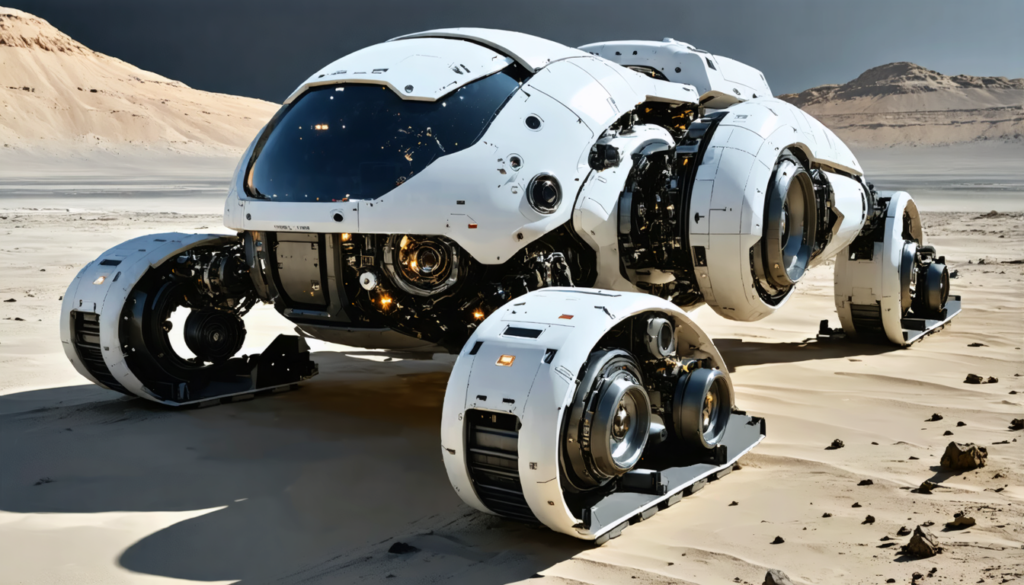
For example, in autonomous space exploration, these models allow robots to interact with unknown environments autonomously, anticipating physical constraints and the reactions of present elements. These advancements undeniably increase the safety of space missions and improve their efficiency.
The integration of these models in scientific research also facilitates modeling of extraterrestrial environments, offering researchers the ability to study planets or asteroids in simulated reality, without requiring immediate physical expeditions. Thus, the “world models” contribute to the rise of space research by faithfully simulating the complex 3D conditions encountered in space.
At the same time, this technology finds applications in the entertainment field, notably in animation and video game creation. By combining realistic modeling and artificial intelligence, developers can create immersive universes that react in real time to user actions, thus enriching the interactive storytelling experience.
This ability to perceive and interact in 3D opens the door to new forms of innovation where robotics, creativity, and research converge to make the most of this technological advance. It positions World Labs as a driving force for the next generation of artificial intelligences.
Autodesk and World Labs: a key partnership for the growth of space design tools
Autodesk’s role in this funding is much more than a simple financial investment. The company, recognized for its computer-aided design (CAD) software, engages in a privileged collaboration with World Labs to explore how the spatial models developed can be integrated into its tools.
This integration is particularly promising for the entertainment industry and digital construction. Autodesk being a global leader in these fields, its solutions already structure numerous projects in architecture, manufacturing, and cinema.
In this partnership, Autodesk also acts as a strategic advisor, participating in research work and the development of modeling capabilities. This collaboration will enable smooth interaction between World Labs’ 3D models and Autodesk’s technical tools, offering, for example, the possibility of creating a design in a virtual AI-generated context before refining it with precise professional tools.
Autodesk’s Chief Scientist, Daron Green, illustrates this complementarity well: a user will be able to sketch a desk in a virtual environment created by World Labs, then use Autodesk software to optimize the technical design. Conversely, an element designed in Autodesk can be directly imported into a Marble scene for real-time visualization and interaction.
Such symbiosis between World Labs’ innovation and Autodesk’s domain expertise represents a tremendous lever to accelerate the transition to a fully digital, immersive, and interactive design. The notion of “physical AI” developed simultaneously highlights the joint commitment of both companies to enrich the creative experience by combining advanced intelligence and spatializations.
Major expected impact on robotics and space research
World Labs’ model development is not limited to 3D modeling: it acts as a catalyst for space robotics. These so-called “spatial” intelligences allow robotic agents to perceive their environment with unprecedented precision, understand their physical interactions, and adapt their actions accordingly.
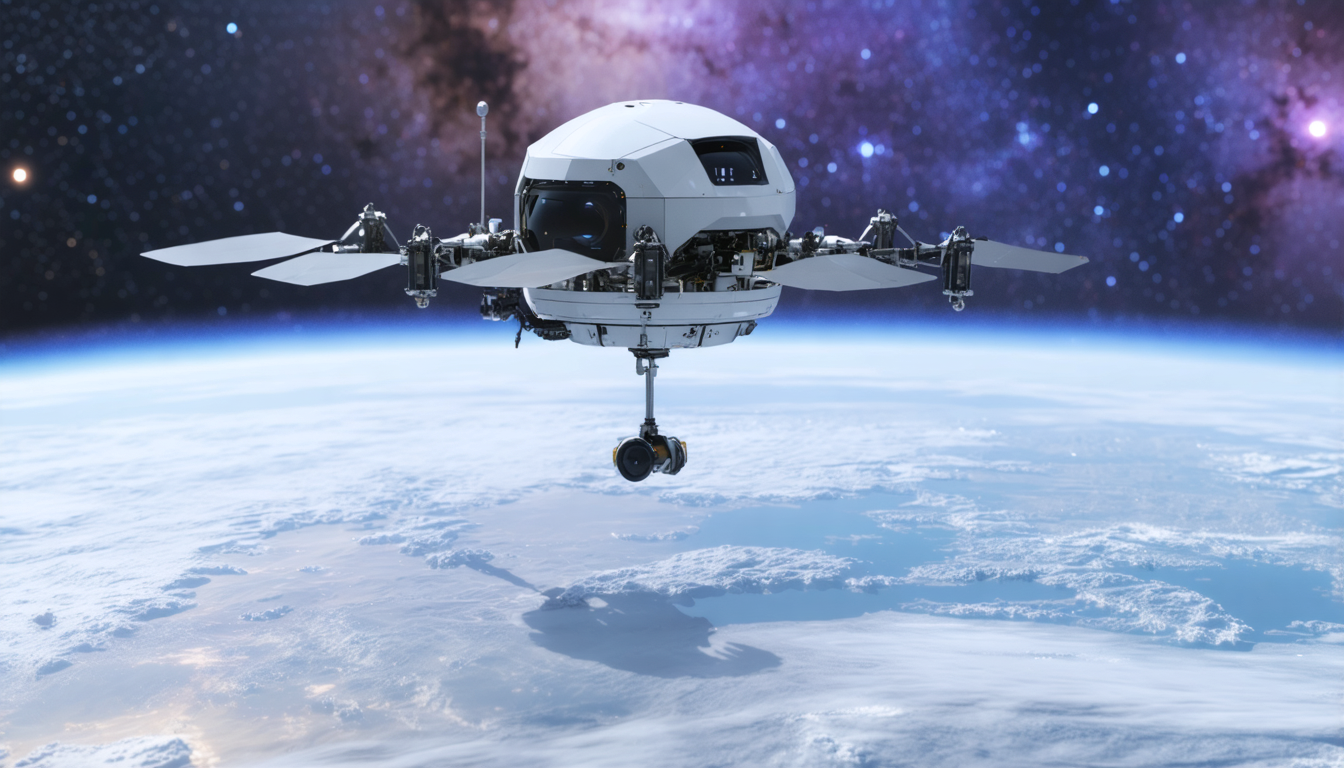
In space exploration, where robot autonomy and instant decision-making are crucial, these models provide a decisive advance. They can thus navigate complex environments without human intervention, identify objects, assess risks, and even repair or adjust installations according to intelligent preprogrammed protocols.
Moreover, the collaboration with Autodesk, specialized in neural CAD, strengthens the functional aspect of AI-generated objects. This technology uses geometric data to produce not only 3D shapes but also realistic physical behaviors, essential in space missions where every detail counts.
The combination of “world models” with neural CAD opens the way to a new era where design, simulation, and robotic implementation are closely linked, making innovations previously unimaginable in space research possible.

The startup World Labs: towards a new era of artificial intelligence applied to exploration
World Labs, although still young on the international scene, brilliantly demonstrates the ability of innovative startups to radically shake up certain future sectors. From its creation to its recent fundraising, the company has managed to combine scientific excellence, strategic vision, and dynamic partnerships.
By offering technology focused on three-dimensional understanding, it opens a door towards much broader uses of artificial intelligences than those based solely on manipulating texts or 2D images. This orientation is the key to deploying applications suited to the challenges of modern space exploration and the industry of the future.
One can also highlight the strategic importance of contributions from major players like Fidelity and Emerson Collective, who bring solid financial footing and a long-term vision to the project. Their commitment clearly illustrates the current trend of strengthening synergies between capital, cutting-edge technology, and scientific ambitions.
The freemium model practice for Marble democratizes access to this revolutionary technology while offering advanced features for professionals. This pragmatic positioning increases the chances that World Labs will become a key player, especially in the creative and industrial fields linked to 3D.
Perspectives and challenges for the future of spatial intelligence
As World Labs imposes itself on the rapidly expanding market of artificial intelligence applied to space, several challenges remain to be met. The development of increasingly precise world models requires enormous resources in data, computing power, and algorithmic creativity.
On the technical level, perfect synchronization between modeled 3D universes and the real world, especially in environments as complex as space missions, demands constant innovations. Real-time data management, consideration of physical laws in models, and interoperability with other systems are all crucial focus points.
From an economic and industrial perspective, converting such significant investments into concrete applications with high added value is also a determining factor. Strategic partnerships, like the one signed with Autodesk, demonstrate this willingness to anchor technological development in sectors with strong economic impact.
Finally, the ethical question, inherent to any major advance in artificial intelligence, calls for vigilance on how these technologies will be used, on the security of autonomous space systems, and on the implications for humans both in space and on Earth.
| Partner | Investment amount (in billion dollars) | Strategic contribution | Sector of activity |
|---|---|---|---|
| Autodesk | 0.2 | Design software, strategic advice | Architecture, engineering, entertainment |
| Nvidia | Not specified | GPUs and AI accelerators | Computer graphics, machine learning |
| AMD | Not specified | Semiconductors, high-performance computing solutions | Computing and robotics |
| Emerson Collective | Not specified | Long-term investment | Venture capital, emerging technologies |
| Fidelity | Not specified | Asset management | Finance and investment |
World Labs, engine of innovation for space research and digital creativity
Beyond technological advances, World Labs embodies a new philosophy combining innovation and ambition. Relying on an AI specialized in intelligent world exploration, the startup reinvents modes of collaboration between humans and machines.
The association of precise spatial models and an intuitive interface offers creators, engineers, and scientists tools capable of pushing the traditional boundaries of their activity. By skillfully connecting 3D modeling with machine learning and robotics, it transforms fields as varied as animation, industrial design, and space missions.
This technology also serves to enrich storytelling, enabling the construction of interactive and immersive stories where environments react in real time to users’ actions. This potential revolutionizes the way content is produced and consumed, particularly in the entertainment and communication sectors.
In conclusion, World Labs’ ambitions and economic model clearly illustrate a strong trend towards a more integrated, physical artificial intelligence capable of fully interacting with its environment. Although the path is strewn with obstacles, the results achieved and the massive financial support already testify to a major advance in space exploration assisted by technology.
The first concrete applications and upcoming projects at World Labs
Since the launch of Marble, World Labs has multiplied concrete experiments demonstrating the potential of its “world models.” In the entertainment industry, this technology is used to create rich digital environments, offering unprecedented immersion in video games and animated films.
Partner studios exploit Marble’s capabilities to produce scenes where every dynamic element reacts according to realistic physical laws, thus integrating a new narrative and visual depth. This work exemplifies the convergence of artificial intelligence and human creativity.
In the scientific field, teams are exploring the simulation of Martian and lunar habitats, to optimize the design of infrastructures necessary for future manned missions. Thanks to precise modeling, these virtual experiments allow adjustments of technical parameters upstream, significantly reducing risks and costs.
World Labs is also working on the development of robotic tools capable of adapting in real time thanks to intelligent analysis of the 3D environment. These innovations promise to advance the autonomy and versatility of robots in extreme contexts such as space.