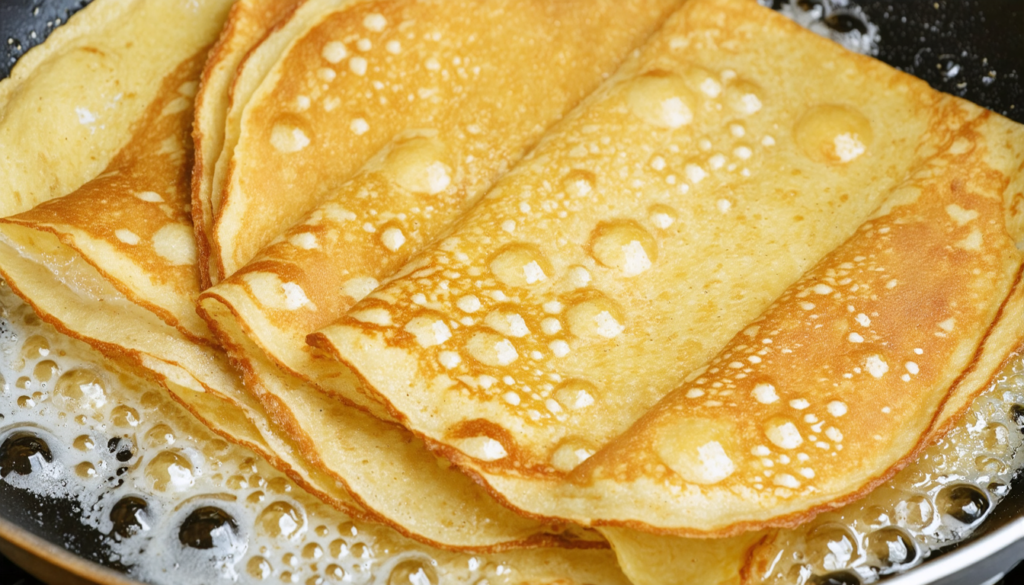
Crepe batter, a symbol of friendliness and sweetness, now invites itself to afternoon snacks all year round for an essential gourmet moment. Once confined to Candlemas celebrations, soft crepes have found their place on family tables in every season, blending simplicity and refinement. Their perfect texture, neither too thin nor too thick, transforms each bite into a tender and flavorful experience that delights both young and old. This culinary rediscovery relies on precise techniques ensuring a flawless result, even for beginner cooks, thanks to a meticulous measurement of ingredients and an optimized cooking method.
In the world of family cooking, soft crepes embody the perfect balance between indulgence and ease. Illustrating this revival well, French households now share this sweet pleasure as a regular appointment, far from exceptional occasions. Their success notably rests on mastering an effective and adaptable recipe, guaranteeing a successful snack where sweetness mingles with airy texture. Simple tips, accessible to everyone, allow for obtaining this light and creamy batter that makes all the difference. This recipe, which we detail here, highlights a cooking and ingredient secret that has continued to charm until 2026, bringing warmth and comfort to every home.
- 1 The secrets of a foolproof soft crepe batter: optimized ingredients and preparation
- 2 Cooking tips for soft and delicious crepes every time
- 3 Gourmet variations and accompaniments for a successful snack on every occasion
- 4 History and evolution of soft crepes: a classic revisited in modern family cooking
- 5 Common mistakes to avoid for foolproof soft crepes
The secrets of a foolproof soft crepe batter: optimized ingredients and preparation
To obtain perfectly soft crepes, the choice of ingredients and their assembly are fundamental. The classic recipe combines 250 grams of type 45 wheat flour, which guarantees a light texture, with 4 fresh eggs, providing structure and richness. Whole milk, at 500 milliliters, hydrates the batter while contributing to an indispensable velvety taste. A packet of baking powder includes a modern leavening agent ensuring optimal aeration of the crepes.
Granulated sugar, measured at 30 grams, subtly balances the flavor without dominating, while 50 grams of melted semi-salted butter gives the batter an incomparable creaminess and prevents it from sticking during cooking. Adding a teaspoon of vanilla extract delicately perfumes the preparation, giving it that gourmet character that immediately evokes sweet pleasure.
Preparation begins with gradually working the mixture, digging a well in the flour to break the eggs into before patiently incorporating the milk. This method prevents lumps from forming, an essential criterion for a fine and homogeneous batter. Using an electric whisk facilitates this step and provides a slightly airy texture, crucial for the final softness. If the mixture seems too thick after resting, a small amount of milk allows for a slight correction, adjusting the batter to the ideal consistency, neither too liquid nor too dense.
For those who want a little extra, substituting 100 milliliters of milk with whole liquid cream enriches the batter and intensifies that much-appreciated melting sensation. Finally, resting the batter for about 30 minutes at room temperature is a key time. It allows the flour to fully absorb the liquids and the baking powder to act, bringing a slight puffiness that will make all the difference when cooking.
| Essential ingredients | Quantity | Role and impact on the batter |
|---|---|---|
| Type 45 wheat flour | 250 g | Base of the batter, offers lightness and flexibility |
| Eggs | 4 pieces | Provides structure and support |
| Whole milk | 500 ml | Hydrates and enriches the batter |
| Baking powder | 1 packet | Leavens the batter, increases softness |
| Melted semi-salted butter | 50 g | Prevents the batter from sticking, adds flavor |
| Granulated sugar | 30 g | Sweetens the batter without making it too sugary |
| Vanilla liquid extract | 1 tsp | Provides a subtle and gourmet fragrant note |
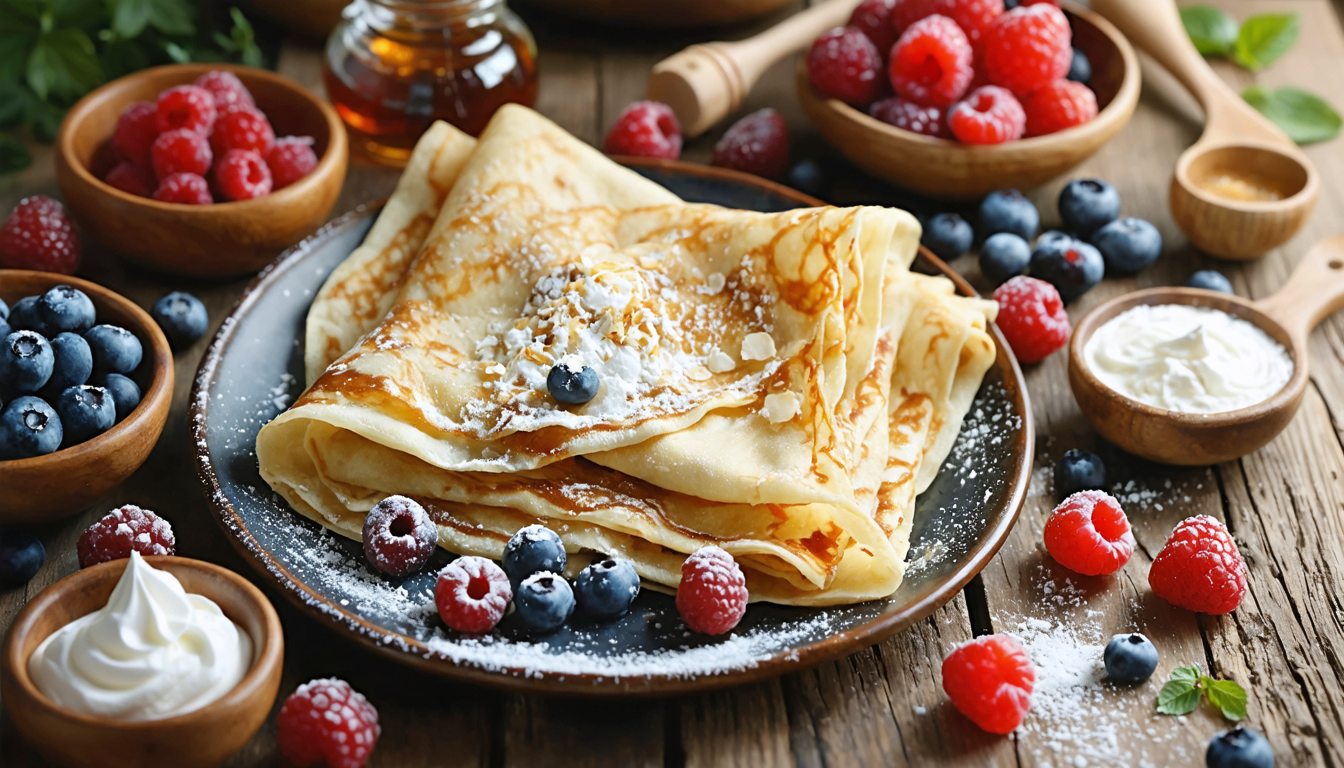
Cooking tips for soft and delicious crepes every time
The success of a soft crepe recipe does not rely solely on the batter but also on the cooking technique. Fully mastered, it transforms a simple snack into a true family pleasure moment. The first step is to heat a non-stick pan or crepe maker over medium-high heat. The ideal temperature is detected by a small drop of water that should sizzle and evaporate instantly. This ensures quick and even cooking while preserving the tenderness of the crepes.
A light film of neutral oil, applied on the hot surface with absorbent paper, is essential. This operation, repeated between each crepe, prevents them from sticking and gives them that beautiful golden color. When the batter is poured into the pan, spreading quickly in a layer about 3 millimeters thick encourages this typical soft texture. Unlike traditional thin and crispy crepes, here, thickness is a guarantee of softness.
Cooking lasts about 1 minute 30 to 2 minutes on the first side. The appearance of small bubbles indicates the batter is properly cooking. As soon as the edges slightly lift, it’s time to flip the crepe. On the opposite side, an additional minute is usually enough to achieve a golden surface. A discreet but firm spatula facilitates this action without risk of tearing.
To keep the crepes warm and preserve their softness, place them on a plate set over a simmering water pan. This tip, borrowed from professionals, limits drying out and keeps the crepes ready to be enjoyed, even after a long preparation. Several crepes can also be stacked, the steam released helping to maintain tenderness.
- Check the heat of the pan to avoid burnt or undercooked crepes.
- Lightly oil between each cooking for a golden color and better texture.
- Spread a medium thickness of about 3 mm for a perfectly soft consistency.
- Respect cooking times, especially by observing bubbles and the crepe’s edge.
- Use an appropriate spatula to flip crepes easily without damaging them.
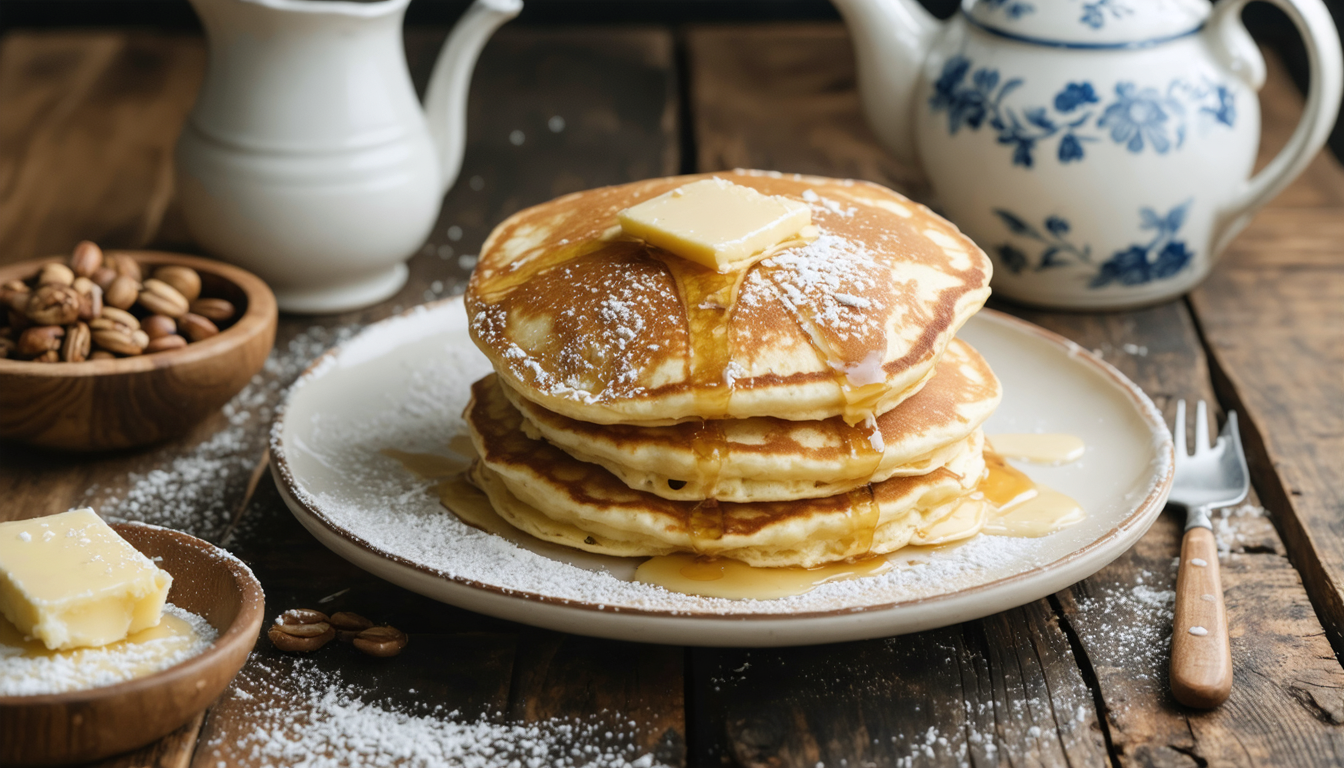
Gourmet variations and accompaniments for a successful snack on every occasion
Soft crepes, available in sweet versions, offer an infinite culinary expression ground to enrich family snacks. They pair wonderfully well with classic toppings such as homemade jam, honey, or chocolate hazelnut spread. For an even more gourmet treat, adding fresh seasonal fruits, chocolate chips, or even a cloud of whipped cream intensifies the sense of sweetness and conviviality around the table.
Sometimes, letting creativity run free to customize the batter itself proves very rewarding. For example, incorporating a few chocolate chips into the batter before cooking or mixing in a spoonful of almond powder gives an even more melting texture. Adding orange blossom or citrus zest imparts a delicate Mediterranean touch that will delight palates in search of novelty.
To accompany this sweetness, the drink remains a family snack staple. Children appreciate a glass of cold milk or artisanal apple juice, while adults often prefer a café au lait or bergamot black tea. A creamy hot chocolate, made with pure cocoa and whole milk, brings a comforting warmth perfect for winter afternoons.
| Sweet accompaniments | Taste notes | Recommended time |
|---|---|---|
| Homemade jam (red fruits, apricot) | Fruity and tart sweetness | Snack all year round |
| Hazelnut chocolate spread | Gourmet and chocolatey | Moment of instant pleasure |
| Fresh fruits (banana, strawberries, blueberries) | Freshness and lightness | Spring and summer, for a vitamin boost |
| Homemade whipped cream | Richness and creamy softness | For a party or festive snack |
| Liquid honey or orange blossom in the batter | Subtle aroma and natural sweetness | An alternative to classic vanilla |
History and evolution of soft crepes: a classic revisited in modern family cooking
Soft crepes stand out clearly from the traditional Breton crepe, famous for its thinness and crispiness. Their history reflects an adaptation to contemporary tastes, through the introduction of baking powder in the 20th century, a key step that changed their texture by creating small alveoli in the batter. This aeration phenomenon is inspired by American pancakes while retaining the generous format characteristic of the French crepe.
In the 1980s, this thick and tender version became widely popular among families seeking quick and simple alternatives for snacks. More than just a snack, it became a symbol of sharing and conviviality, a moment parents and children eagerly anticipate. In 2026, this recipe is experiencing renewed interest linked to the rise of homemade cooking and the search for authentic and easy recipes.
This revisited classic fits perfectly into modern family cooking, allowing everyone to add their personal touch: whether by adding flavors, additional textures, or ingredients from various origins, soft crepe batter remains a gourmet expression ground. Its success lies in its ability to bring people together around the table, combining simplicity and pleasure, two essential pillars of contemporary family cooking.
Common mistakes to avoid for foolproof soft crepes
Even with a well-mastered recipe, certain mistakes can compromise the final result of your soft crepes. The most common is improperly homogenized batter, which leads to lumps and an unpleasant texture in the mouth. To avoid this, it is crucial to incorporate the liquid ingredients gradually, whisking carefully between each addition.
Moreover, not respecting the batter resting time can seriously harm the lightness of the crepes. Indeed, if the batter has not had time to thicken and allow the baking powder to act, it risks being too liquid and flat after cooking, thus losing its softness. Similarly, using a pan that is not hot enough leads to sticky crepes that are difficult to handle.
Finally, it is important not to try to achieve a crepe that is too thin with this recipe. Soft batter requires a certain thickness to fully express its sweetness. Flipping must be done carefully and quickly to avoid tearing them. Even if the recipe seems simple, these subtleties are crucial for a successful snack, especially when it comes to satisfying both young and old.