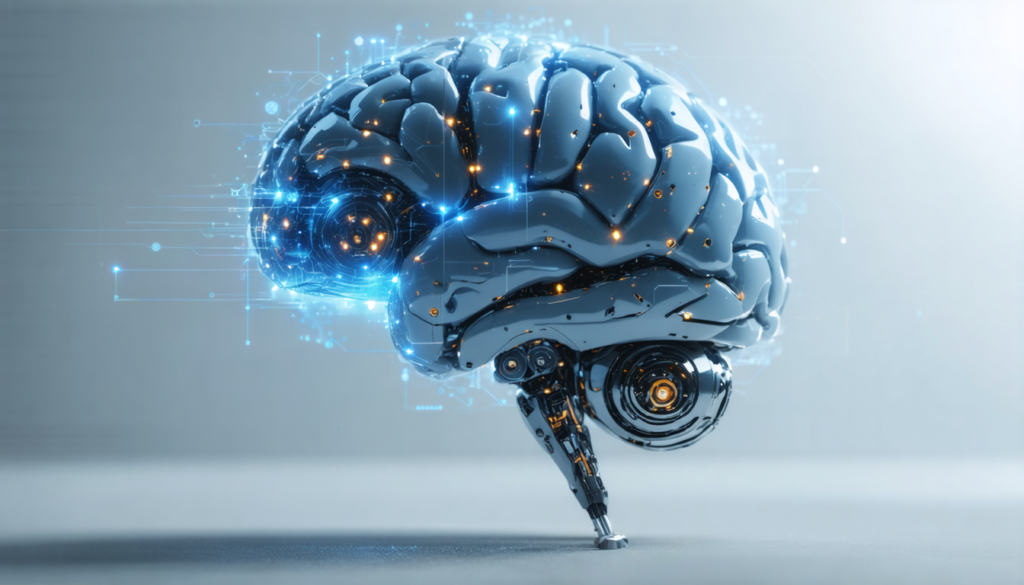
In 2026, artificial intelligence (AI) reaches a new critical milestone thanks to Stanhope AI, a London-based startup that has just completed an impressive funding round of 8 million dollars. This major financing paves the way for the development of an adaptive AI capable of evolving in real time in complex and changing environments, similar to the human brain. This innovative technology, called the “real-world AI model,” aims to profoundly transform sectors with a strong technological component such as robotics, defense, civil security, and edge AI. The challenge is enormous, both economically and scientifically, relying on advances in computational neuroscience and active inference principles.
At the heart of this innovation is the principle of “free energy,” a fundamental scientific concept that explains how intelligent systems continuously reduce uncertainty by adjusting their perceptions and actions. Stanhope AI draws on the pioneering work of Professor Karl Friston, whose ideas are now ready to come to life in concrete applications, thanks to the expertise of Professor Rosalyn Moran, the company’s founder. This funding round, led by Frontline Ventures with the support of other renowned investors such as Paladin Capital Group, prepares a series of field experiments scheduled for this year.
This seed round reflects a strong interest in technologies able to meet the operational challenges of autonomous systems, particularly in real-world contexts where unforeseen events and environmental variables are the norm. Industrial robotics will notably benefit from unprecedented agility, allowing rapid adaptation of movements in the presence of disruptive events. Similarly, autonomous drones that patrol or inspect will be able to recalculate their trajectory in real time based on unforeseen conditions without systematically relying on distant data centers. These advances also raise new questions about regulation, reliability, and security of autonomous systems, which will need to be addressed to allow large-scale industrial deployment.
- 1 Stanhope AI’s adaptive AI model: a technological revolution based on computational neuroscience
- 2 Concrete applications of Stanhope AI’s adaptive artificial intelligence in industrial robotics and autonomous drones
- 3 The 8 million dollar funding: a decisive step to accelerate development and technological security
- 4 Regulatory and security challenges related to the deployment of adaptive AI in real environments
- 5 Risks related to reliability, cybersecurity, and social implications of adaptive AI
- 6 Stanhope AI’s prospects: developing partnerships and field deployments starting in 2026
- 7 Economic and social benefits expected from the adaptive artificial intelligence developed by Stanhope AI
Stanhope AI’s adaptive AI model: a technological revolution based on computational neuroscience
Stanhope AI’s distinctive strength lies in its ability to go beyond dominant classical artificial intelligence methods. Rather than relying solely on static datasets and pre-trained predictive models, this startup develops an approach called “adaptive AI,” directly inspired by the functioning of the human brain. This approach is based on the use of the free energy principle combined with “active inference” — a theoretical framework describing how an intelligent system anticipates and minimizes uncertainty by combining perception and action in a continuous loop.
In practice, this means the system does not just recognize past patterns or trends. It learns to constantly adapt to unexpected signals from its real environment, adjusting its strategy as the situation evolves. Unlike classic language or deep learning models, often limited to the data on which they were trained, this artificial intelligence has the fundamental advantage of being able to react in real time, with enhanced autonomy. This is a major breakthrough for robotic applications, where adaptability and quick decision-making are often critical criteria.
Stanhope AI’s founding in 2023 is based on the expertise of renowned figures in computational neuroscience. Professor Rosalyn Moran, a pioneer in her field, has been able to bring to life the theoretical research of Professor Karl Friston, known for his work on the brain and its internal learning mechanisms. Their collaboration enabled the structuring of a “real-world model” that materializes these concepts into algorithms applied to AI.
This fusion of fundamental science and technological innovation also allows Stanhope AI to stand out in a market where competition is fierce. By specifically targeting AI that functions under real conditions rather than only on datasets or simulations, the startup opens the way to practical applications essential in sectors where autonomy, robustness, and flexibility have become synonymous with operational excellence and competitiveness.
Concrete applications of Stanhope AI’s adaptive artificial intelligence in industrial robotics and autonomous drones
The development of the adaptive AI model by Stanhope AI is not limited to mere theorization. The recent funding of 8 million dollars will allow the integration of this technology into pilot projects already underway, notably in robotics and drones. These use cases perfectly illustrate the benefits of an intelligence capable of making informed and agile decisions in unpredictable physical environments.
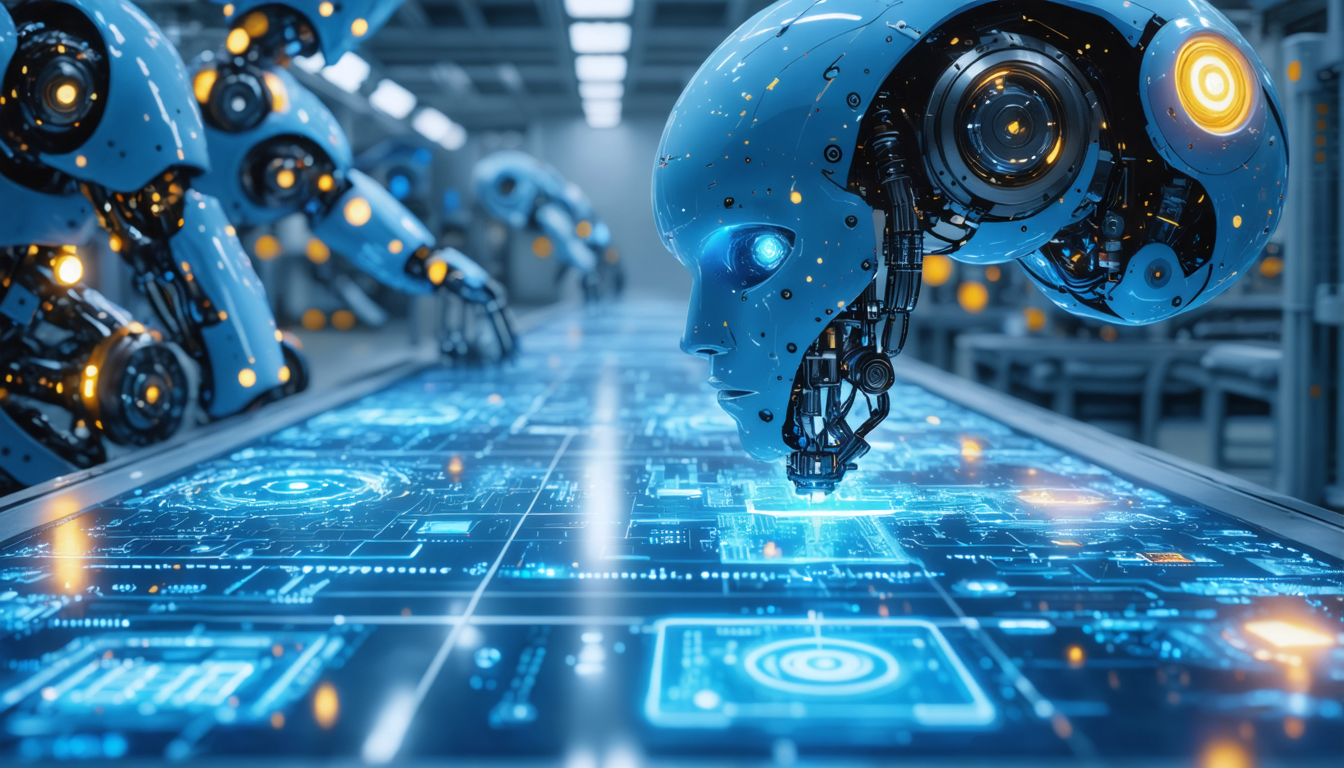
In manufacturing, an environment often marked by mechanical or human unpredictability, robots equipped with this technology will be able, for example, to instantly modify their trajectories upon detecting an obstacle or a change in the position of a piece on the production line. This form of “adaptive intelligence” results in a significant reduction in unplanned downtime and an improvement in productivity. An intelligent robotic arm no longer needs to wait for specialized instructions to manage unknown events; it can decide and act in real time.
These capabilities critically address the increasing shortages of skilled labor already affecting many industrial sectors. The 2026 Make UK Executive Survey report shows that around 9 out of 10 manufacturing companies anticipate rising labor costs due to increased difficulty in finding technical skills. The introduction of such adaptive systems could partly mitigate this problem by automating more complex operations while maintaining or raising quality standards.
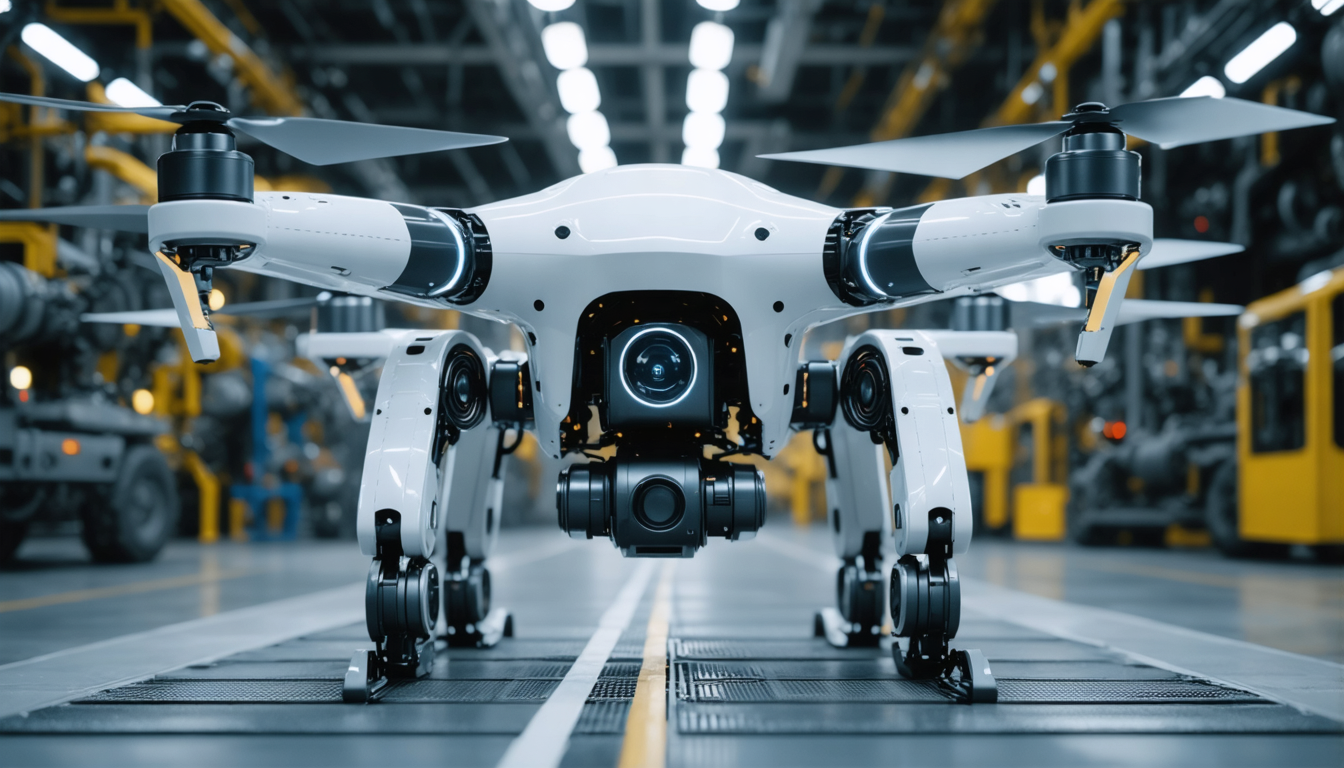
Regarding drones, uses extend to surveillance, inspection, or intervention missions in hard-to-reach areas. Stanhope AI’s AI will enable drones to autonomously recalculate their paths in response to rapid changes such as weather or unforeseen terrain modifications, thus maximizing mission efficiency and reducing risks. The stakes are particularly high in defense and security, where fast local decision-making can be critical.
Strategic sectors targeted for the first wave of use
Stanhope AI’s ambitions focus on areas where adaptive technology will bring major transformations:
- Defense: autonomous systems capable of operating in hostile and uncertain environments, improving safety and responsiveness.
- Industrial automation: increased resilience and flexibility of assembly lines.
- Embedded systems: vehicles, drones, and robots capable of operating autonomously in poorly connected areas.
- Edge AI computing: local data processing to limit cloud dependency and reduce intervention delays.
This targeted focus illustrates Stanhope AI’s clear vision regarding the immediate and future market needs, while laying the groundwork for a future where autonomous machines become intelligent and adaptive partners.
The 8 million dollar funding: a decisive step to accelerate development and technological security
This seed round led by Frontline Ventures has allowed Stanhope AI to establish solid foundations by gathering several investors specialized in deep tech and high-impact innovation. Paladin Capital Group, Auxxo Female Catalyst Fund, UCL’s technology fund, and MMC Ventures also demonstrated their confidence through complementary financial contributions.
These resources are primarily intended to strengthen research and development capacities, expand teams, increase real-world testing, and above all, ensure the reliability and security of the intelligent systems developed. Deploying an adaptive AI in critical environments requires rigorous security, both at the level of algorithms and of software and hardware infrastructure.
Security encompasses several aspects:
- Rigorous testing in industrial and military environments.
- Regulatory validation for compliance with sector standards.
- Advanced protection against cyberattacks.
- Continuous controls to prevent any drift of the autonomous system.
This funding provides the essential leverage to progress effectively on these fronts, in close collaboration with industrial and academic partners. It also gives strong credibility to Stanhope AI, which now appears not only as an innovative laboratory but also as a player ready to industrialize high value-added technologies.
The prospect of a highly autonomous AI operating in the physical world naturally raises considerable regulatory challenges. These rules are not uniform and vary widely by sector:
| Sector | Main regulatory requirements | Potential risks in case of non-compliance |
|---|---|---|
| Manufacturing industry | Machine safety standards, ISO certifications, enhanced quality control | Production stoppages, material damage, legal sanctions |
| Defense | Strict military standards, safety intervention protocols, regular audits | Serious security breaches, human-risk incidents, techno espionage |
| Autonomous drones | Aviation standards, airspace feeding controls, state partnerships | Usage restrictions, flight bans, liability in case of damage |
| Embedded systems in isolated areas | Robustness certifications, environmental protection, network compliance | Operational failures, communication outages, loss of efficiency |
Recognizing these challenges is crucial to anticipate industrialization phases and achieve sustainable deployment. Added to this is the issue of cybersecurity, which further intensifies the complexity of securing adaptive systems. Each functional extension and increased autonomy exposes the system to intrusion risks that must be managed through sophisticated solutions.
Despite impressive progress, implementing AI capable of real-time adaptation raises a series of essential issues that must be approached with caution. The reliability of autonomous decisions, for example, remains a major challenge. In sectors where errors can have serious consequences, such as defense or heavy industry, every decision made by an autonomous system must be validated and controlled before being integrated into an operational process.
The field of cybersecurity is also central. Reducing cloud dependency thanks to local embedded systems improves the device’s resilience. However, this independence does not eliminate the risk of cyberattacks, which could disrupt or hijack machine behavior. A targeted attack could cause serious failures or even compromise operation safety.
Finally, the human and societal implications cannot be underestimated. Advanced automation affects human labor, required skills, and legal responsibility in case of incidents. Companies must prepare their teams for these transformations by promoting training and acceptance of new technologies while clarifying responsibility frameworks.
These dimensions clearly show that the path to widespread adoption of adaptive AI is paved with obstacles to overcome for it to become both reliable and socially acceptable.
Stanhope AI’s prospects: developing partnerships and field deployments starting in 2026
With this crucial funding, Stanhope AI plans to accelerate its development timeline. The goal is clear: to multiply collaborations with leading industrial and academic players worldwide. The ambition is twofold:
- Expand real-world experiments on varied grounds.
- Establish technical credibility through robust and reproducible demonstrations.
Stanhope AI plans notably to launch extensive tests as early as 2026 in complex industrial contexts, in military infrastructures, and on autonomous drone platforms. These field tests will help refine the adaptive AI model, identify potential weaknesses, and validate the security mechanisms put in place.
This gradual deployment is also designed to prepare for the next step: large-scale commercialization. Once protocols are refined and validated, the technology could revolutionize multiple industries, giving rise to truly intelligent autonomous systems capable of reliably intervening in the heart of dynamic and changing situations.

The economic and social impact of the artificial intelligence designed by Stanhope AI goes far beyond mere technological innovation. Its ability to intervene in unpredictable environments could help address certain structural issues encountered in several strategic sectors.
For example, by enabling better management of unforeseen events in industrial production, this technology helps reduce unplanned downtime, which represents a major source of economic losses. It also helps compensate for shortages of skilled workers, a problem accentuated, as previously mentioned, by employment market trends in manufacturing. In the longer term, it will also promote skill development among human teams who will work in tandem with these intelligent systems.
In the defense and security sector, the precision and speed of autonomous decisions could save lives and improve operation safety while reducing human burden. This new efficiency also opens the door to innovations in emergency interventions and disaster management.
List of key expected benefits:
- Improved flexibility and responsiveness of autonomous systems.
- Reduced operating costs through minimizing errors and interruptions.
- Enhanced safety in critical contexts.
- Creation of new jobs related to the supervision and maintenance of adaptive AIs.
- Promote harmonious integration between humans and machines in industrial environments.
These advantages demonstrate that the innovation driven by Stanhope AI is part of a global dynamic of improving economic performance while considering the accompanying social issues.