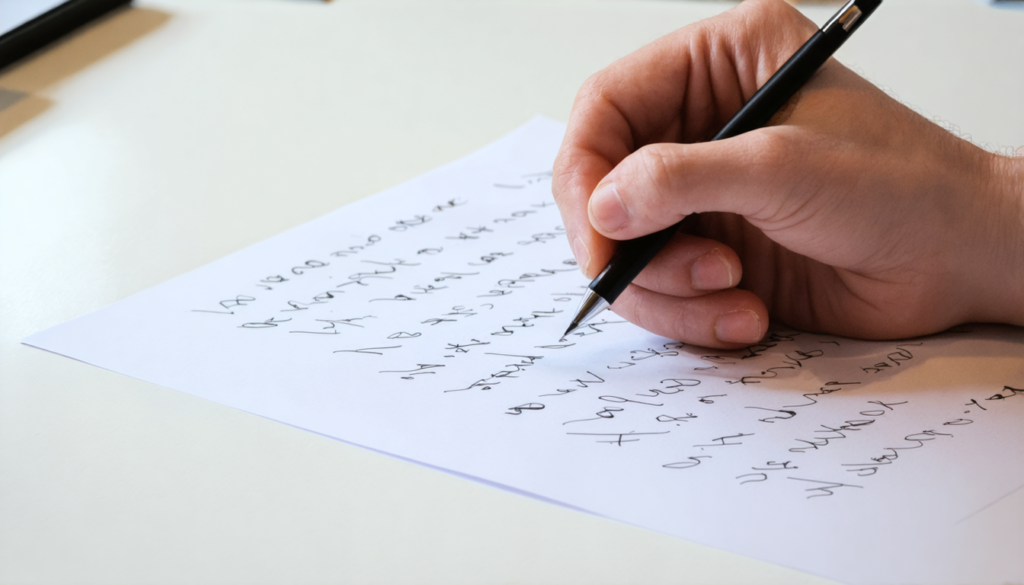
In our digital age where keyboards often replace pens, handwriting still holds a fascinating power: that of revealing intimate facets of our personality. Each loop, each curve we draw on paper constitutes a unique imprint, comparable to a psychological signature. Graphology, a little-known but intriguing discipline, relies on this idea to interpret our writing gestures and deduce deep character traits. Whether it is revealing an individual’s generosity, the kindness emanating from their stroke, or their intelligence through the precision of their writing, this handwritten analysis is gaining growing interest both in psychology and in certain professional fields. Understanding this link between writing and personality not only enriches self-knowledge but also helps better understand human interactions by unveiling subtle but revealing clues about our behavior.
The way we form letters, the size of words, the slant of lines—so many details which, according to graphology experts, are not insignificant. They can reflect qualities such as generosity, often seen in expansive and open writing, kindness materialized by a soft and rounded stroke, or intelligence, revealed by controlled fluidity and elegant simplification of shapes. However, the richness of this discipline is accompanied by debates about its scientific validity, which we will explore in detail. Over the decades, graphology has established itself as a subtle art, a true window into the human soul, inviting a reading of the gesture that goes beyond the simple form to explore the hidden character behind the pen.
How Graphological Analysis Deciphers Personality through Writing
Graphology is above all a study method dating back to the 19th century, with pioneering research by Abbé Jean-Hippolyte Michon, who laid the foundations for a systematic approach to handwriting. This discipline is based on the premise that every pen movement reflects brain activity which mirrors our emotions, strengths, and weaknesses. The precision of the analysis comes from careful observation of several key elements of writing.
The Fundamental Characteristics of Writing Analyzed
To understand a personality through their writing, the graphologist notably observes:
- The pressure exerted on the paper, indicative of vitality and emotional strength.
- The slant of the letters, which reflects relational orientation – a rightward slant indicates an open mind towards others, while a left slant may suggest a tendency to reserve.
- The size of the characters, where largeness or smallness illuminates the place the writer grants themselves in their environment.
- The spacing between words or lines, reflecting respect for social distances and personal balance.
- The fluidity of the stroke, symbolizing an agile mind or, conversely, hesitation.
- The shape of the letters, rounded, angular, or more complex, suggesting gentleness, rigor, or creativity.
Beyond these dimensions, graphology distinguishes three zones in writing:
| Zone | Part of the letter | Psychological dimension |
|---|---|---|
| Upper | Ascenders (e.g., b, d, h, l) | Intellectuality, spirituality, ambition |
| Median | Body of the letters (e.g., a, e, o) | Daily life, social relationships |
| Lower | Descenders (e.g., g, j, p, y) | Instincts, unconscious, materiality |
The combined understanding of these signs establishes a thorough psychological profile. For example, writing that largely develops the upper zone can reveal a great thirst for knowledge and abstraction, while a prominent lower zone reflects grounding in the concrete and instinctive emotions. It is essential to consider the writing context – fatigue, stress, environment – to avoid erroneous interpretations.
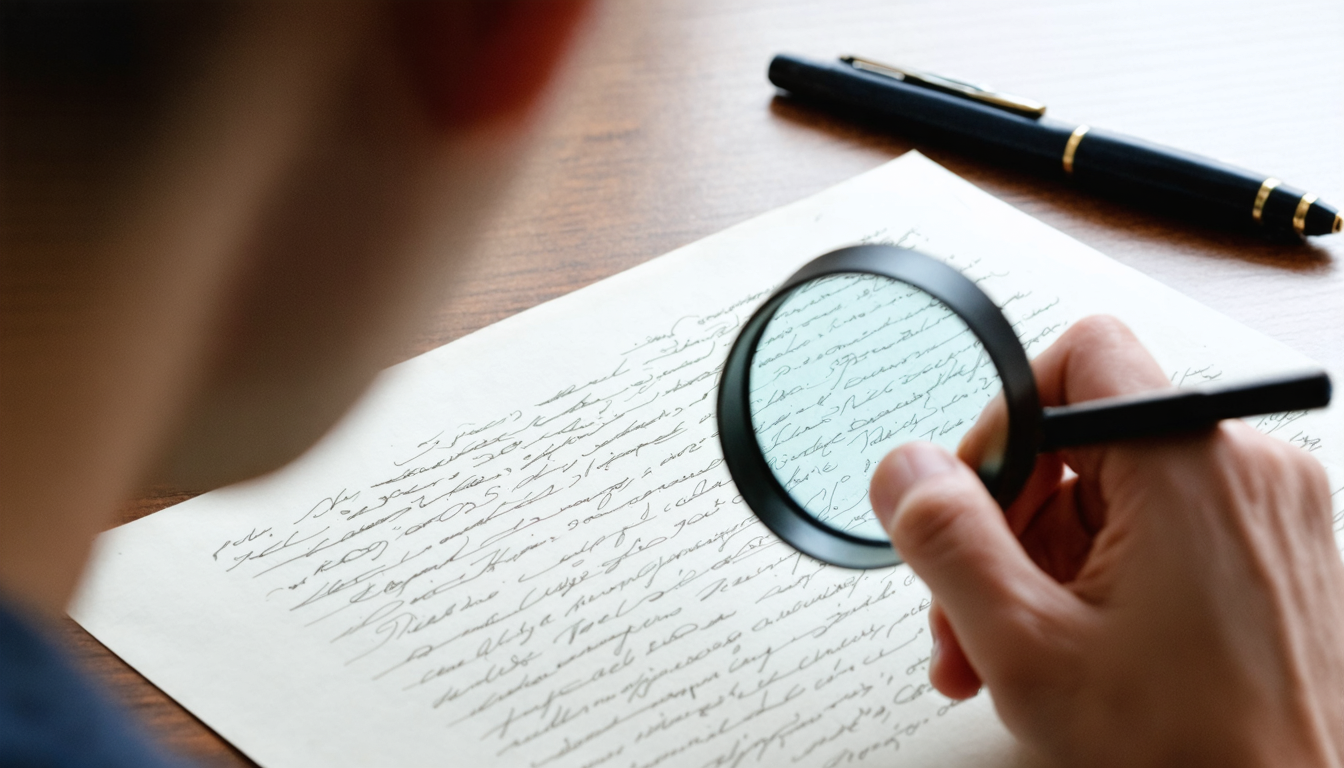
These detailed observations highlight the richness of reading the gesture through graphology, which proves especially relevant for deciphering traits such as generosity.
Graphic Indicators Reflecting Generosity in Handwriting
Generosity, as a personality trait, finds specific markers in handwriting that reveal a manifest openness of soul. These are mainly clues related to the breadth and quality of forms.
Visual Characteristics of the Writing of Generous People
A generous writer often displays:
- Expansive and open handwriting, occupying a large part of the page, sign of an expansive mind and an inclination to share.
- Wide loops in letters such as “l” or “h,” demonstrating a capacity for hospitality and a warm temperament.
- A rightward slant, indicating an orientation toward others and emotional availability.
- Extended finals that stretch beyond the letter, expressing generosity in action and thought.
- Moderate pressure on the paper, indicating balanced sensitivity, neither aggressive nor passive.
- Generous spacing between lines, revealing respect and consideration for others.
As an example, imagine Claire, a passionate teacher known for her altruism. Her handwriting, fluid with large loops and a marked slant to the right, offers a faithful mirror of her open and generous nature. In a professional setting, she never hesitates to devote time to her colleagues, a disposition perfectly legible in her stroke.
The amplitude of the gesture reflects ease in opening up to the world and giving without restraint. Conversely, narrow, hesitant, tightly composed handwriting often reflects a more limited scope of generosity, perhaps due to an introverted or protective temperament. The graphologist, by analyzing these combined clues, can thus provide a fine reading of an individual’s benevolent nature.
Signs of Intelligence Deciphered by Graphology
Beyond generosity and kindness, graphology also allows apprehension of the intellectual dimension of a personality. Intelligence is notably expressed through the structure and speed of the stroke.
Markers of a Quick and Synthetic Thought
Writing that testifies to a lively intelligence is characterized by:
- Simplification of forms, where letters are streamlined and reduced to the essentials, avoiding any superfluous ornamentation that might hinder thought.
- Fast writing speed, reflecting an ability to quickly process information and mentally anticipate.
- Certain originality in the form of letters, illustrating creativity and intellectual autonomy.
- Clarity of the text, with legible letters and an orderly arrangement, a sign of good mental organization.
| Indicator | Manifestation | Interpretation |
|---|---|---|
| Simplification | Streamlined letters | Synthetic mind |
| Speed | Fluid and fast stroke | Intellectual quickness |
| Originality | Personal forms | Creativity and autonomy |
| Clarity | Well-maintained readability | Mental organization |
Take the case of Julien, an engineer passionate about technological innovation. His fast, streamlined writing, without frills, reflects his aptitude to quickly synthesize complex data while maintaining a marked personal style. This reading of the gesture allows glimpses into his analytical capacity and creativity, fundamental qualities in his profession. Graphology, when practiced in a controlled setting, thus highlights intellectual abilities often invisible through a simple oral or digital written exchange.

The Softness and Kindness Readable in Curves and the Fluidity of Writing
While generosity is often expressed through size and openness, kindness shines through the softness and harmony of the stroke. Writing imbued with benevolence is recognizable by its rounded shapes and a supple, regular stroke.
Identifying Tenderness and Empathy in Writing Style
Here are some characteristics that convey kindness:
- Rounded shapes in letters, especially “m,” “n,” and “u,” evoking a conciliatory and empathetic nature.
- Light pressure on the paper, suggesting delicacy and gentleness in human relationships.
- Flexible connections between letters, testifying to harmony and emotional fluidity.
- Regularity in letter size and spacing, sign of affective stability and respect.
- Ascending finales indicating optimism and benevolence.
Delphine, a psychologist and attentive mother, has soft and regular handwriting, a faithful reflection of her benevolent personality. Her rounded and harmonious stroke invites trust and facilitates communication, essential qualities in her profession where human relations are paramount. This handwriting analysis thus reveals sincere kindness, palpable even through a simple scribbled word.
Graphologists emphasize the importance of overall stroke balance to detect softness. Neither angular nor aggressive writing, with a stable rhythm, affirms a peaceful and welcoming personality. Between these lines, graphology offers a subtle psychological insight, an intimate window into the emotions and deep nature of an individual.