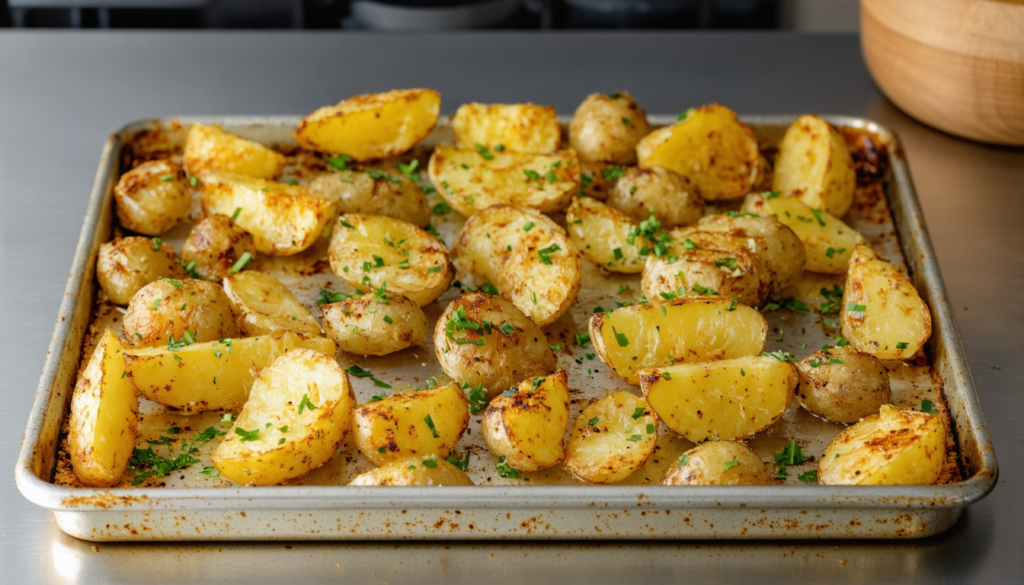
In many kitchens, baked potatoes are an unbeatable classic, a simple and delicious side dish that everyone agrees on. However, achieving that delightful crispness on the outside while maintaining a melting texture on the inside can often seem like an insurmountable challenge. Many end up with soft, unevenly golden potatoes, or stuck together despite dozens of attempts. With the evolution of cooking techniques, a quick and effective method has been developed, combining simple tips and strict adherence to times and temperatures. This technique requires no special equipment nor long hours spent in the kitchen. By mastering a few key steps, anyone can now transform this common tuber into a true delight for the taste buds, ready in less than an hour. This recipe combines high-temperature cooking, careful rinsing to remove starch, and a generous but balanced emulsion of oils and spices for a result worthy of the finest tables. The secret also lies in the choice of ingredients and the precision of the steps, which guarantee a crispy surface enhanced by the aromas of Herbes de Provence and mild paprika.
Over the years, whether in starred restaurants or family kitchens, this method has become a must-have appreciated for its simplicity and effectiveness. Its success is based on a fine understanding of chemical reactions during cooking and great care in preliminary preparation. The result? A perfect side dish that pairs equally well with red meat, poultry, or stands on its own for a successful vegetarian meal. In 2026, with the rise of vegetarian alternatives and uncomplicated gourmet dishes, the baked potato revisited from this perspective is experiencing a definite resurgence, captivating both novices and passionate cooks.
- 1 Choosing the right potatoes and properly preparing the ingredients for a golden and crispy result
- 2 Precise cooking steps for crispy and golden baked potatoes in record time
- 3 The art of seasoning and emulsification for a quick and deliciously flavored recipe
- 4 Food and wine pairings and presentation tips to enhance your baked potatoes
- 5 Nutritional benefits and history of baked potatoes, an essential and simple side dish
Choosing the right potatoes and properly preparing the ingredients for a golden and crispy result
The essential starting point for making crispy baked potatoes begins with a rigorous selection of tubers. Firm-fleshed potatoes, such as Charlotte, Ratte, Amandine, or Roseval, are favored. These varieties have the advantage of retaining their shape during cooking while offering a pleasant texture. Unlike floury potatoes, they do not fall apart under heat and thus avoid a mushy result. The standard weight for a family preparation often revolves around one kilogram, which comfortably serves four people. This quantity guarantees a perfect balance between quick and even cooking.
Before any cooking step, the potatoes must be carefully washed in cold water to remove all traces of dirt or impurities from the skin. Rubbing by hand helps remove embedded dirt without damaging the tuber, especially when the skin is kept to enhance the crispness. To eliminate residual moisture, it is crucial to thoroughly dry the potatoes using a clean cloth. Water is the enemy of crispness, as it prevents the expected exterior caramelization during oven baking. Some prefer to peel them, but the thin and delicate skin of firm-fleshed potatoes offers an additional appreciated texture, also providing fibers that enhance the dish’s nutritional aspect.
The cutting must maintain a certain regularity to ensure even cooking. Two-centimeter-thick wedges are ideal. This size allows balanced cooking: thin enough to brown quickly but thick enough to keep a soft core. A rough or uneven cut will lead to burnt or undercooked pieces, which detract from the tasting experience. Once cut, the wedges must be rinsed several times in cold water until it becomes clear. This process removes surface starch, which would otherwise create a gummy texture and prevent the formation of a crunchy crust. This rinsing is a technical step that makes all the difference and that few detailed recipes recommend as insistently.
Finally, a crucial step to reinforce crispiness is the complete drying of the potatoes after rinsing. Using a clean cloth to blot each piece eliminates up to 50% of the risk of bothersome steam during cooking. This sometimes underestimated step conditions the final success and deserves all your attention. Without this rigorous drying, even the best oils and seasonings would not be enough to achieve the sought-after golden result.
To accompany these potatoes, the choice of fats is also a step not to be neglected. The combination of olive oil and sunflower oil creates a perfect balance between flavor and technical performance. Olive oil brings the aromatic richness so prized in Mediterranean cuisine, while sunflower oil protects against burning due to its high smoke point, allowing high-temperature cooking without bitterness. This oily emulsion is enriched with spices such as mild paprika, garlic powder, Herbes de Provence, as well as salt and ground black pepper, ensuring a rich and balanced taste that works on the sweet, salty, and slightly smoky notes of the potatoes.
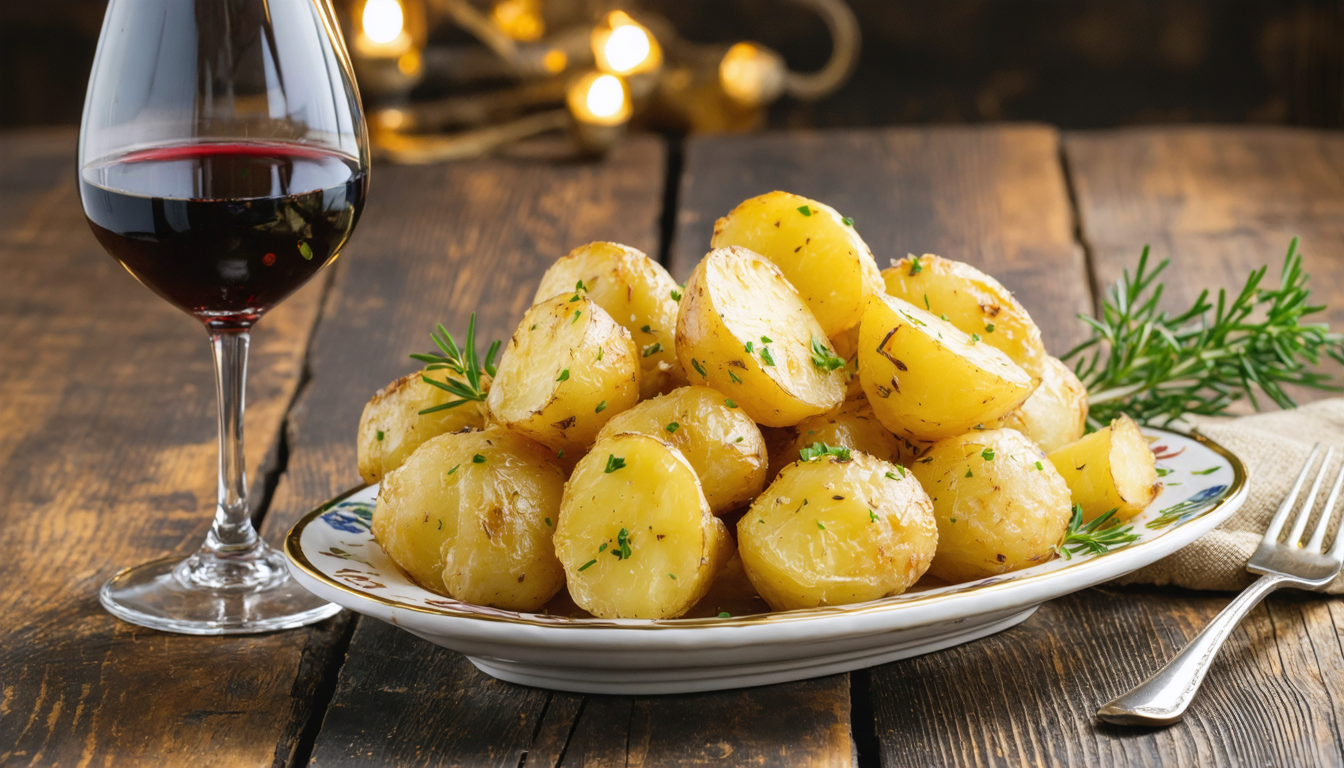
Precise cooking steps for crispy and golden baked potatoes in record time
Preheating the oven remains the key to successful potato cooking. The quick method involves setting it to 220°C in convection mode, promoting even heat distribution and effective surface dehydration. In the case of an oven without convection, it is advised to increase the temperature to 240°C and lengthen the cooking time. This adaptation is essential because convection speeds up the formation of a crispy crust that would be difficult to achieve otherwise.
Once the potatoes are perfectly prepared and coated with seasoned oil, it is important to arrange them in a single layer, spaced at least one centimeter apart. This presentation detail often makes the difference between roasted potatoes and steamed ones. When pieces are too close together, the steam they release remains trapped, preventing caramelization and producing a soft texture. The spacing between wedges also allows each side to be fully exposed to direct heat.
The quick cooking time of 25 minutes, regulated by precise timing, facilitates meal planning even when in a hurry without sacrificing quality. Midway through cooking, it is essential to take out the tray to gently turn each wedge, ensuring even coloring. This action must not be neglected: it prevents some pieces from remaining pale or sticking to the tray, making the final result more aesthetic and pleasant to the palate.
The final cooking step can be enhanced by activating the oven grill for the last three minutes. Under close supervision, this grilling intensifies coloration and strengthens the crunchy texture, creating a perfect contrast with the soft interior. However, the risk of burning requires vigilance and constant attention to remove the tray at the right moment.
In summary, speed and mastery of time are the pillars of this express method. Each phase has a clearly defined role that, when followed to the letter, gives this dish a professional and irresistible appearance.
Comparative table of cooking according to oven types
| Oven Type | Recommended Temperature | Cooking Duration | Specific Tip |
|---|---|---|---|
| Convection Oven | 220°C | 25 minutes | Turn midway, final grill 3 min |
| Conventional Oven | 240°C | 35 minutes | Space pieces well, monitor grill |
The art of seasoning and emulsification for a quick and deliciously flavored recipe
Seasoning plays a fundamental role in the success of this traditional dish. The emulsification technique allows intense mixing of oils with spices and salt, creating a perfectly homogeneous coating that adheres impeccably to every piece. This process guarantees an even distribution of flavors and optimizes the contact between fat and potato, promoting the formation of an aromatic and golden crust.
To make this emulsion, simply combine in a bowl four tablespoons of olive oil and two tablespoons of sunflower oil, then incorporate one teaspoon of fine salt, ½ teaspoon of ground black pepper, one teaspoon of dried Herbes de Provence, ½ teaspoon of garlic powder, and ½ teaspoon of mild paprika. The mixture is vigorously stirred with a wooden spoon or whisked by hand until a slightly thick liquid is obtained where spice particles float in unison within the oil.
Then, the carefully dried potato wedges are dipped into this preparation and gently stirred to coat them completely. This step requires a precise rhythm of two minutes to ensure every side is covered with a thin oily and flavorful layer. This coating is essential: inadequate coverage will cause pale or wet spots after cooking, compromising the dish’s crunchy indulgence.
One last tip to further enhance your seasoning: do not hesitate to taste and adjust spice quantities according to your preferences or the nature of the meal. For example, an extra touch of paprika or garlic will develop more intense and warm notes. Herbes de Provence bring an aromatic freshness that pairs particularly well with roasted meats but also vegetarian dishes.
- Common spice combinations: mild paprika, garlic powder, Herbes de Provence
- Oil combination: olive oil for flavor, sunflower oil for smoke point
- Emulsion: homogeneous blend ensuring flavor uniformity and crispiness
- Coating duration: minimum 2 minutes to cover all pieces
Food and wine pairings and presentation tips to enhance your baked potatoes
Golden and crispy potatoes are a simple dish, but their pairing with appropriate wines or beverages can elevate the entire gastronomic experience. In 2026, in a context where balanced cuisine and gustatory pleasure coexist harmoniously, these sides find their place in everyday meals as well as more festive occasions.
For a classic accompaniment, pairing with a dry, fresh, and mineral white wine appears obvious. Renowned crus such as Chablis or Muscadet sur lie, with subtle citrus and flint notes, bring freshness that contrasts with the richness of the potatoes. These wines highlight the crispy texture while balancing the fat content.
If you prefer a more unexpected pairing or want to accompany red meat, a young, fruity, and light Côtes-du-Rhône will be perfect. The moderate tannins of this wine respect the tuber’s sweetness while complementing its associated spices. Finally, an Alsace Pinot Noir, known for its finesse and subtle aromas, is an excellent choice for a vegetarian dish where subtlety prevails.
Beer lovers are not left out. A fresh blonde lager with floral notes and moderate bitterness will cleanse the palate between each bite, highlighting the crispiness of the potatoes and the delicately spiced seasonings.
For presentation, serve your potatoes in a preheated dish so they retain their heat and crunchy texture longer. Add a finishing touch with a pinch of fine salt just before serving, which will allow the salt to adhere perfectly to the slightly oiled outer surface.
List of food and wine pairings for baked potatoes
- Dry white wine: Chablis, Muscadet sur lie – freshness and minerality
- Young red wine: Côtes-du-Rhône – fruity and light for red meat
- Light red wine: Alsace Pinot Noir – perfect for vegetarians
- Beer: Fresh blonde lager – cleanses the palate and balances fat
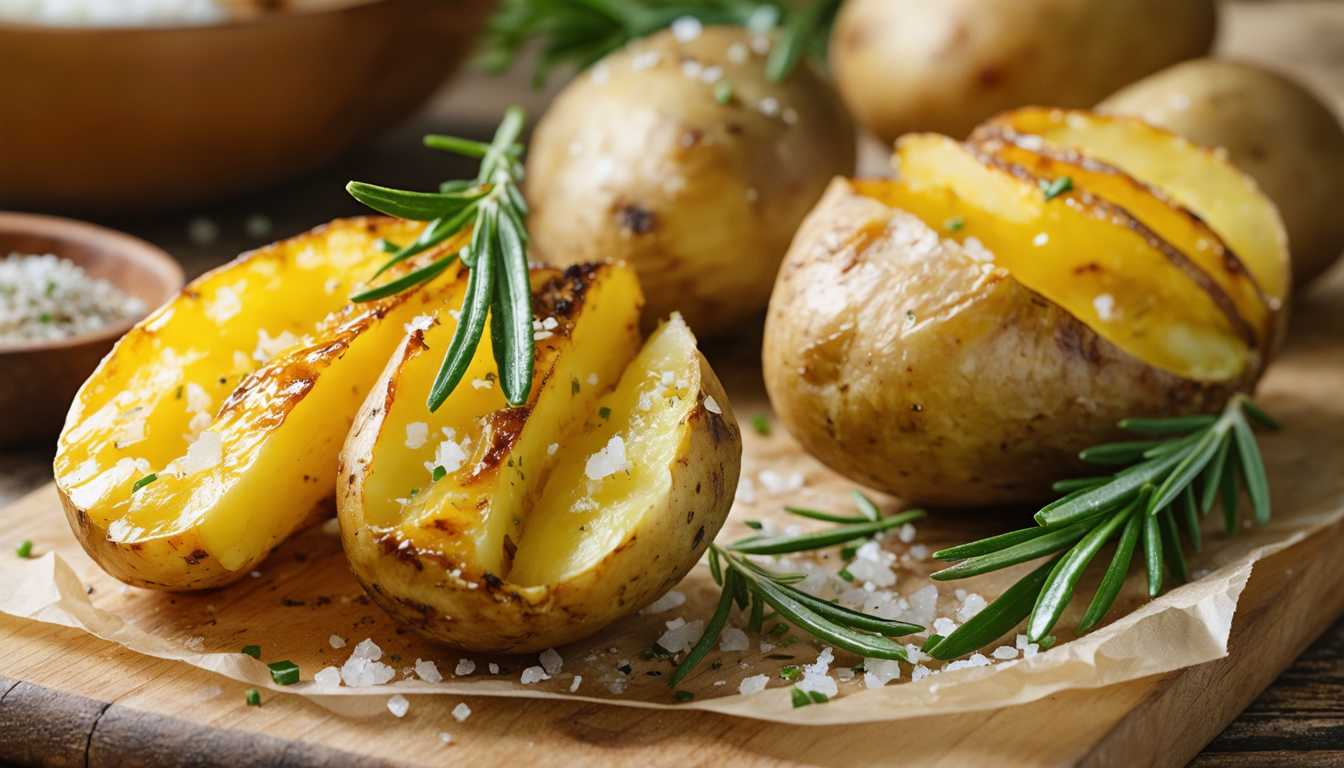
Nutritional benefits and history of baked potatoes, an essential and simple side dish
The potato, a tuber native to South America, has been part of European diets for centuries. Introduced in the 16th century, it quickly established itself as a staple thanks to its richness in complex carbohydrates and its versatility for multiple preparations, including baking, which developed especially in Northern Europe and France. In 2026, this simple and hearty cooking method continues to appeal due to its balance of flavor, simplicity, and lasting energy supply.
From a nutritional perspective, baked potatoes have several advantages over other cooking methods such as frying. They require little fat while offering an important source of vitamin C, potassium, and fibers when the skin is preserved. The skin improves intestinal transit and provides satiety. Compared to industrial fries, oven baking significantly reduces saturated fats and calories, delighting consumers concerned about their dietary balance without giving up pleasure.
In France, this simple and friendly recipe is emblematic of Sunday family meals, particularly in producing regions like the North, where firm-fleshed potato varieties are very popular. British “roast potatoes” have inspired numerous local variations where cooking quality and seasoning make a difference. The choice of fast and effective methods like the one detailed here fits within a 2026 trend where saving time in the kitchen without sacrificing quality is a priority.
The versatility of baked potatoes also allows them to accompany a wide range of dishes, from classic roasts to vegetarian recipes, while remaining accessible to all cooking skill levels. By adopting this quick and detailed method, you will benefit from a trusted ally for successful everyday side dishes.