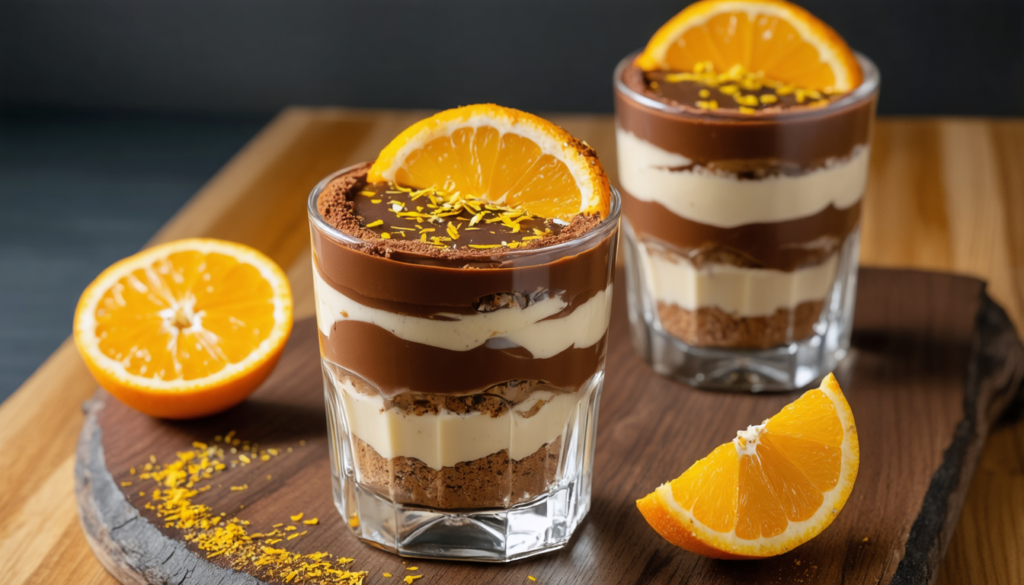
In the demanding world of French cuisine, where every detail matters, Cyril Lignac stands out for his ability to create recipes that are both accessible and highly refined. His chocolate-clementine mousse embodies this perfect balance between indulgence and lightness. The subtle marriage between the depth of dark chocolate and the tangy freshness of clementine offers a refined dessert, ideal for concluding a meal with elegance.
Presented on the show “Tous en cuisine,” this recipe highlights authentic flavors and simple preparation, perfectly suited for amateur cooks wanting to impress without constraints. The airy mousse, achieved through a mastered technique, is adorned here with homemade clementine syrup and a light whipped cream, all elements that enhance the chocolate-citrus duo.
Cyril Lignac, famous for his modern and accessible creations, demonstrates once again that haute French cuisine can be recreated at home with basic ingredients and well-explained technique. By playing with textures and flavor contrasts, he gives classic desserts a contemporary dimension, adapted to today’s palates eager for natural flavors and simplicity. The chocolate-clementine mousse perfectly embodies this taste vision, combining pleasure and sophistication.
- 1 The secrets of a successful chocolate-clementine mousse according to Cyril Lignac
- 2 The step-by-step preparation of chocolate-clementine mousse for an indulgent and light dessert
- 3 The role of clementines in the perfect balance of the chocolate dessert
- 4 Pairing chocolate-clementine mousse with drinks: tasting advice
The secrets of a successful chocolate-clementine mousse according to Cyril Lignac
Mastering an airy chocolate mousse is an art that relies on respecting precise steps, perfect temperature control, and careful selection of ingredients. Cyril Lignac emphasizes the importance of 70% dark pastry chocolate, a key element that brings intensity and depth to the dessert. Using professional quality chocolate, often called couverture chocolate, guarantees a unique melting texture thanks to its high cocoa butter content.
The preparation begins with melting the chocolate in a bain-marie. This gentle method is essential to avoid burning the chocolate, thus ensuring a smooth and glossy finish. Adding unsalted butter in small dices enriches the preparation with creaminess, enhancing the mouthfeel. It is crucial to let the mixture cool to room temperature before incorporating it with the eggs to avoid cooking the yolks, which would risk altering the final mousse texture.
Working with the eggs is equally decisive. Carefully separating the whites from the yolks is the basis of success. The whites must be whipped to stiff peaks with a pinch of salt, which stabilizes their structure and facilitates incorporation. Meanwhile, the yolks are vigorously whisked with sugar to obtain an airy and foamy mixture ready to receive the cooled chocolate.
The key lies in the delicate folding of the beaten egg whites into the chocolate-yolk mixture. This step, often feared by amateurs, is made easier by the “ribbon folding” technique, which consists of lifting the mixture with a silicone spatula while turning the bowl. This precise movement preserves the essential air bubbles for a light and melting texture. Small white streaks may remain but will disappear during refrigerated resting.
The addition of clementines enhances this chocolate base. The chef recommends using the zest and filtered juice of the clementines, gently cooked with icing sugar to create a simple syrup that will awaken the flavors. This syrup is delicately poured over the mousse before chilling, bringing a tangy note that perfectly balances the richness of the chocolate. A minimum resting time of three hours in the refrigerator is essential for the mousse to set and for the aromas to diffuse harmoniously.
Every detail counts, and with Cyril Lignac, nothing is left to chance: the ideal chocolate temperature, the perfect whites whipped, the sweetness of the clementine syrup, all these elements come together to give birth to a dessert that is indulgent, balanced, and refined. Contrary to what one might think, this recipe proves surprisingly accessible, even for beginners in pastry, thanks to simple and precise gestures.
The step-by-step preparation of chocolate-clementine mousse for an indulgent and light dessert
Following Cyril Lignac’s recipe means engaging in a clear method, presented as an accessible culinary journey that starts with basic yet noble ingredients. It is important to choose 200 grams of 70% cocoa pastry chocolate for richness, 4 fresh eggs, 50 grams of granulated sugar, 4 organic clementines, 200 milliliters of heavy cream at 30% fat, 30 grams of unsalted butter, a pinch of fine salt, and 20 grams of icing sugar.
This recipe breaks down as follows:
- Melt the chocolate and butter in a bain-marie, stirring gently. The temperature must be controlled carefully to avoid overheating the chocolate.
- Separate the eggs, whisk the yolks with half of the sugar until the mixture becomes pale and frothy.
- Gradually incorporate the cooled chocolate into the yolks, mixing delicately.
- Whip the egg whites to stiff peaks by adding a pinch of salt, then the remaining sugar to firm them.
- Gently fold the whites into the chocolate mixture using the ribbon technique.
- Prepare the clementine syrup by heating the juice and zest with the icing sugar for a few minutes.
- Whip the Chantilly cream by beating the cold cream with icing sugar until soft peaks form.
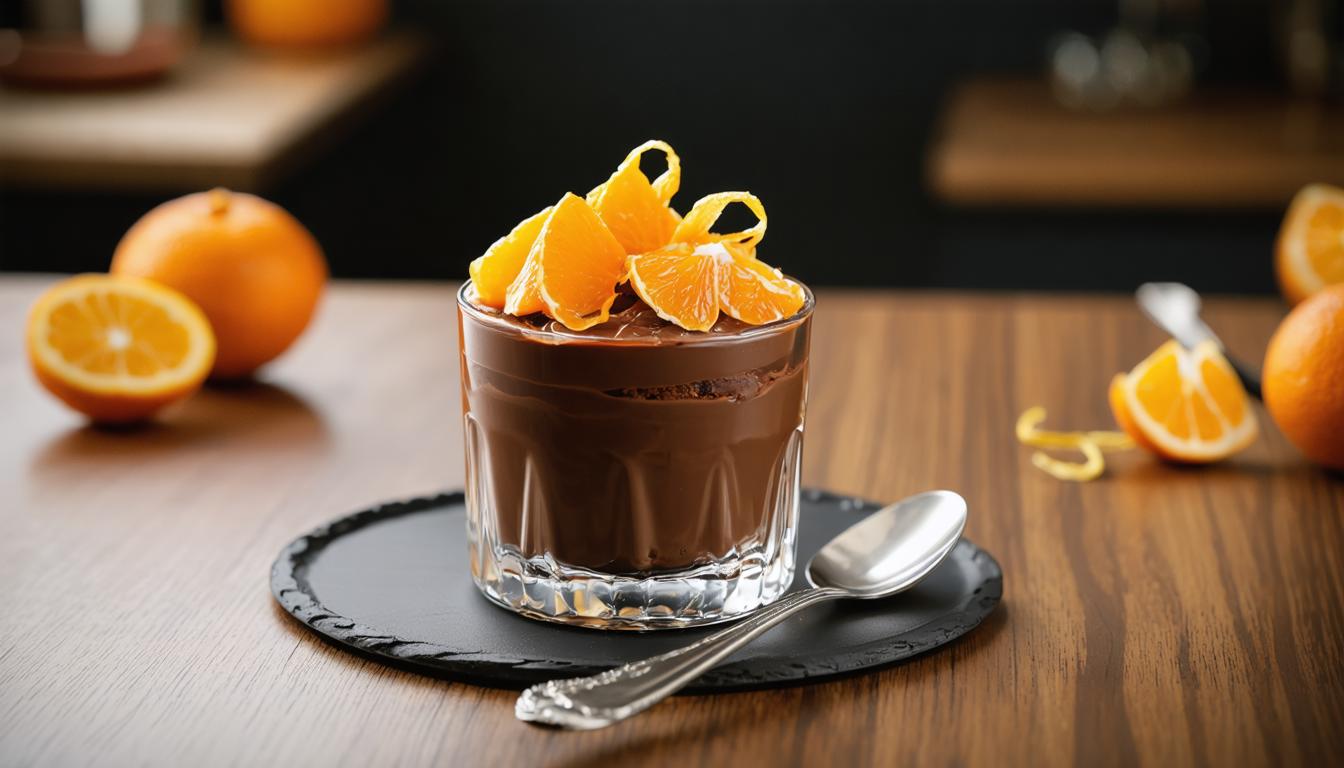
- Distribute the chocolate mousse into verrines, drizzle with clementine syrup, then refrigerate for at least 3 hours.
- Decorate before serving with a quenelle of whipped cream, a fresh clementine zest, and optionally a sprig of mint.
This structured method ensures a smooth preparation and a result that is both indulgent and light, ideal for finishing a meal on a sweet yet refreshing note.
A little personal tip: if you don’t have a thermometer, test the chocolate temperature with a drop on your lower lip; it should be warm to avoid cooking the eggs.
Essential utensils and recommendations to succeed in the recipe
Beyond the quality of ingredients, the right tools greatly facilitate the task.
- A bain-marie to gently melt the chocolate.
- An electric mixer to quickly whip egg whites and whipped cream.
- A flexible silicone spatula to mix without breaking the whites.
- A zester to collect the zest without the bitter part.
- A citrus juicer to efficiently extract clementine juice.
- Verrines or clear cups for a pretty presentation.
These tools, common in French pastry, contribute to simple preparation while ensuring a professional finish. They allow you to follow Cyril Lignac’s advice to the letter and reliably obtain an airy and delicate mousse.
The role of clementines in the perfect balance of the chocolate dessert
The clementine, the quintessential winter fruit, brings to this recipe a breath of freshness and acidity that compensates for the power of dark chocolate. Its delicate, fruity, and slightly sweet aroma is less sharp than that of a classic orange, making it ideal for a refined dessert like this one.
The choice of clementine is strategic: the chef favors organic fruits, juicy and harvested in season (from November to February). Their thin skin allows easy picking of zests without the bitter part, which are then gently cooked with juice to create a concentrated syrup rich in aromas. The preparation of this syrup is essential because it brings the citrus touch that “airs” the dessert and gives it its characteristic tangy note.
This recipe showcases a subtle alternation between the soft texture of the mousse, the velvety sweetness of the whipped cream, and the crunch of freshly grated zest sprinkled on top. Each bite unfolds a variety of sensations, making this dessert indulgent without being heavy.
In contemporary French cuisine, the trend of pairing chocolate and citrus has become a must for those seeking to revisit classics with simplicity and modernity. Cyril Lignac fits into this movement by offering an easy-to-make mousse that respects traditions but also plays with nuances.
| Ingredients | Quantity | Role in the recipe |
|---|---|---|
| 70% dark pastry chocolate | 200 g | Intense and velvety chocolate base of the mousse |
| Eggs | 4 pieces | Whipped for lightness and emulsification |
| Granulated sugar | 50 g | Sweetens and structures the mousse |
| Clementines | 4 pieces | Provides acidity and freshness in the syrup |
| Heavy cream 30% | 200 ml | Whipped into Chantilly for sweetness and creaminess |
| Unsalted butter | 30 g | Improves texture and richness of melted chocolate |
| Fine salt | A pinch | Stabilizes egg whites when whipped |
| Icing sugar | 20 g | Sweetens the whipped cream and syrup |
Pairing chocolate-clementine mousse with drinks: tasting advice
For the tasting of this refined dessert to become a complete experience, the choice of drink is crucial. The balance between intense chocolate and citrus freshness requires a beverage that respects these nuances without overpowering them.
Earl Grey tea, with its bergamot notes, pairs perfectly with clementine, echoing its citrus aromas without masking the sweetness of chocolate. Served hot, this tea provides subtle elegance and lightness that delicately accompany the airy mousse.
For coffee lovers, a lungo espresso, less strong, harmonizes with the cocoa, bringing a mild bitterness that highlights the chocolate flavor without dulling the dessert’s freshness. Young food lovers will appreciate fresh mandarin juice, which prolongs the fruity sensation with softness.
On festive occasions, choosing a demi-sec champagne or Clairette de Die offers a sparkling and joyful contrast that cleanses the palate between each bite. These light bubbles bring a touch of luxury to this simple recipe while emphasizing its refinement.
Finally, for a non-alcoholic yet sophisticated version, it is recommended to opt for a warm lemon verbena infusion. Its herbaceous freshness creates an interesting contrast with the chocolate richness, offering an original and balanced tasting experience.