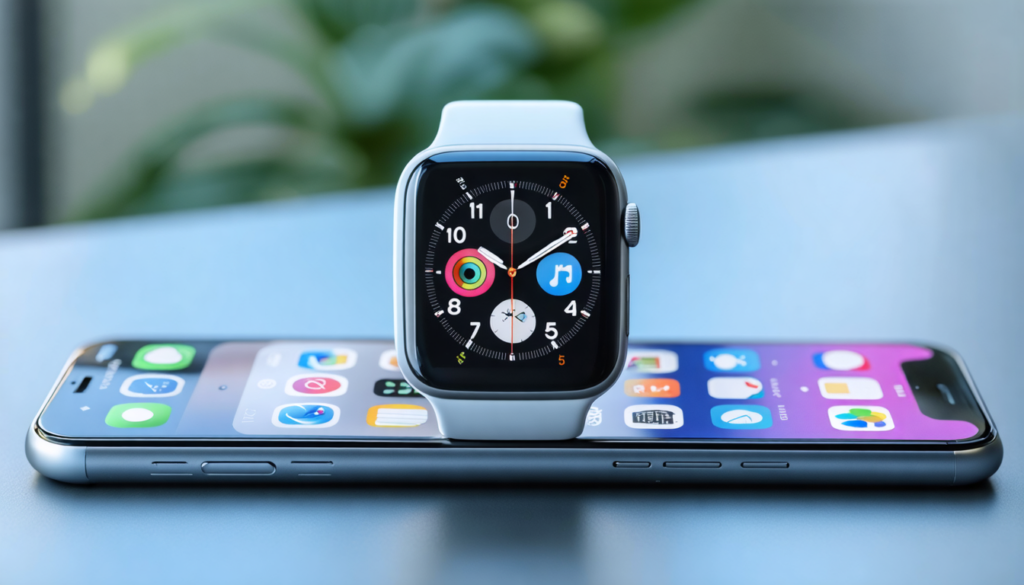
As the smartwatch market experiences exponential growth, a new technological battle is emerging to dominate your wrist. Apple has reigned supreme for years with its Apple Watch, known for its elegant design and performance in digital health. However, a new rising force, Meta, Mark Zuckerberg’s company, is preparing to disrupt the established order. With an ambitious project called Malibu 2, the company aims to launch a smart watch equipped with advanced artificial intelligence, designed to be not just a technological tool but a true proactive extension of the brain.
This AI watch aims to go beyond simple functionality to offer a smooth and intuitive interaction, integrating classic health tracking tools but above all a contextual artificial intelligence capable of anticipating the user’s needs. As competition in the connected devices sphere intensifies, Meta intends to strike hard with unprecedented interoperability between operating systems, breaking with the usual limitations of closed ecosystems. Facing the Apple Watch, a true benchmark in the segment, this watch of the future promises a major innovation: compatibility with both iOS and Android, a breakthrough that could attract consumers tired of current constraints.
- 1 Meta asserts itself with a smart watch centered on proactive artificial intelligence
- 2 A restarted project: from Malibu to Malibu 2, Meta’s smart watch makes its strategic return
- 3 How Meta’s smart watch envisions universal compatibility to appeal to a fragmented market
- 4 Health and well-being monitoring: how Meta’s watch will position itself against the Apple Watch and competitors
- 5 Synergies between Meta’s smart watch and Ray-Ban smart glasses: a winning duo for augmented reality
- 6 Major challenges for Meta facing Apple and the rise of competing connected devices
- 7 The potential impact of Meta’s smart watch on the future of connected devices and the wearable market
- 8 Marketing and commercial strategy around Meta’s smart watch: challenges and prospects
Meta asserts itself with a smart watch centered on proactive artificial intelligence
Meta’s renewed interest in the wearable technologies market comes at a time when artificial intelligence is becoming an essential driver of innovation. Unlike Apple, which designs its watch as a natural extension of the iPhone, Meta envisions its watch as an intelligent control center, capable of reacting autonomously via its integrated AI assistant. This positioning aims to transform the watch into a true daily companion, anticipating, for example, needs, reminders, or necessary adjustments to your connected environment.
This capability, complemented by real-time data collection and analysis, opens up new perspectives in personalizing user experiences. According to internal sources relayed by Investing.com, the Malibu 2 project would offer, in addition to classic digital health measurements — heart rate, sleep tracking, physical exercise — more contextual and adapted interactions. Imagine a scenario where the watch analyzes your schedule, habits, and health status to suggest an ideal time for a meditation session or warn of a biological anomaly. This level of intelligence transforms user engagement into a true continuous dialogue.
With such innovation, Meta seems to want to move from a simple gadget to a product that serves as a pivot for a complete ecosystem, including its Ray-Ban smart glasses allowing gesture-controlled interaction from the wrist. This hardware-software marriage promises a unified experience that could prove revolutionary in the daily use of connected devices, making technology less visible but constantly present.
A restarted project: from Malibu to Malibu 2, Meta’s smart watch makes its strategic return
Meta’s work on the connected watches segment is not new. In 2021, the company had already sketched a first foray with a connected bracelet, interrupted by budget constraints and a less assertive hardware strategy. The project was revived with a much more ambitious vision, driven by the rise of AI in consumer products and the need to stand out in a market dominated by Apple and a few other major brands.
Mark Zuckerberg himself took over to steer this project toward a proposal focusing on user experience and seamless integration into a smart, multi-device system. The device, presumably named Malibu 2, is expected to launch in 2026, according to leaks confirmed by several sources close to the file. The watch is intended to be a concentration of technological innovations but also a major strategic element to diversify Meta’s hardware revenues while strengthening the Meta AI intelligent software ecosystem.
This watch will not be just a mere improvement on the Apple Watch but a real new paradigm, where proactive AI will differentiate itself through features capable of acting autonomously, without requiring permanent instructions from the user. This intelligent control will be critical, not only to attract already equipped consumers but also to impose itself against the loyalty already firmly anchored toward the Apple ecosystem.
How Meta’s smart watch envisions universal compatibility to appeal to a fragmented market
One of the main challenges in the world of wearable technologies remains the fragmentation of operating systems. Apple has engaged in an effective closed-off strategy, where its Apple Watch only works fully with an iPhone, thus limiting consumer freedom. Android players such as Samsung or Google offer more openness but remain in proprietary ecosystems, restricting the end-user’s choices.
Meta is banking on a new approach opening its connected watch to full compatibility, both with iOS and Android. This inter-operational bridge is a major innovation that could disrupt purchasing habits, as it addresses a concrete problem: users frequently change phones but hesitate to invest in expensive wearable hardware that risks becoming incompatible. A single watch operating uncompromisingly on any operating system thus represents a strong value proposition.
In this context, the Malibu 2 AI Watch could unite several categories of users:
- Android consumers who want better integration of wearables with advanced AI.
- Apple users appreciating an alternative with more advanced machine learning features.
- People switching between different smartphones, freed from the constraints of closed digital habitats.
This strategic choice illustrates Meta’s desire to broaden its audience and put an end to the classic notion of a closed ecosystem. By making its watch more accessible, Meta could gather a larger community while offering intuitive and powerful wearable technology.
Health and well-being monitoring: how Meta’s watch will position itself against the Apple Watch and competitors
In terms of health monitoring, a key element in choosing a connected watch, Meta’s project aims for nothing less than excellence. The Malibu 2 will integrate sophisticated sensors to measure heart rate, oxygen saturation, physical activity, as well as sleep tracking. These features align with the high standards already set by the Apple Watch, Garmin, or Oura.
However, what will truly differentiate Meta’s smart watch is its ability to process this data through its integrated AI assistant. Rather than simply displaying statistics, the AI will continuously interpret biometric information to deliver personalized advice, contextualized with daily activities, weather, or user habits.
For example, if the watch detects increased stress or an abnormal heart rate during a work session, it might suggest a break or recommend a breathing exercise. Additionally, this device will judge the right moment to send health alerts or suggest medical appointments, thus creating a true intelligent health coach.
| Feature | Apple Watch Series 12 | Meta Malibu 2 Smart Watch | Other competitors (e.g. Garmin, Oura) |
|---|---|---|---|
| Heart rate monitoring | Yes | Yes | Yes |
| Oxygen saturation detection | Yes | Yes | Yes |
| Proactive AI analysis | In development | Integrated and advanced | Basic |
| Smart sleep tracking | Yes | Yes | Yes |
| Personalized health suggestions | Partial | Complete via AI | Limited |
By combining advanced sensor technology and proactive artificial intelligence, Meta’s smart watch could well redefine the standards of digital health monitoring while maintaining a subtle balance between innovation and privacy. The challenge remains to convince users of the reliability and security of this sensitive data.
Synergies between Meta’s smart watch and Ray-Ban smart glasses: a winning duo for augmented reality
Another major asset of Meta’s watch lies in its integration with its ecosystem of intelligent accessories, notably the Ray-Ban augmented reality glasses. Designed to serve as a gesture control center, the watch will extend the glasses’ functionalities, allowing, for example, navigation or interaction via natural wrist movements.
These unprecedented interactions could disrupt the use of connected devices, shifting from isolated devices to a harmonious and smooth experience. The Malibu 2, thanks to its sophisticated motion sensors, will trigger contextual commands that will multiply uses, whether for navigation, calls, or interaction with augmented reality applications.
This synergy between the two devices opens the door to innovative use scenarios:
- Hands-free navigation: operate virtual interfaces without touching the glasses.
- Discreet notifications: receive alerts and messages through vibrations or signals on the watch.
- Enhanced voice commands: pair the watch and glasses for more natural and fluid interaction.
- Contextual tracking: AI adapts displayed information according to your environment and routine.
In short, the watch is not limited to a health or communication gadget role but takes the place of a true technological bridge at the heart of an interoperable connected device system. This ambition takes into account the evolution of digital habits, where more and more tools coexist to create enriched and personalized user experiences.
Major challenges for Meta facing Apple and the rise of competing connected devices
The launch of a smart watch within a market dominated by the Apple Watch will not be without obstacles. Apple holds a significant lead thanks to perfect mastery of the integration between hardware and software. Moreover, the Apple brand continuously pursues the refinement of its products, with increasingly impressive embedded AI features announced for its next series.
For Meta, one of the major challenges will be to achieve a comparable level of excellence in terms of manufacturing quality, design, autonomy, and above all user experience. The previous failure of devices like the Fire Phone remains in memory, calling for a cautious yet ambitious approach. It will be necessary to offer a solid product capable of convincing consumers of the essential added value of integrated artificial intelligence.
The competition is not limited to Apple. Several players such as Samsung, Garmin, or Oura also innovate, with the upcoming introduction of connected rings and other wearables, some aiming to supplement or complement the smart watch. In this context, Malibu 2 must impose itself through its advanced AI integration and its ability to federate an interoperable ecosystem.
Here are some specific challenges Meta will have to overcome:
- Manufacturing quality: reach Cupertino’s remarkable finish.
- Autonomy and energy efficiency: ensure a smooth experience without frequent charging interruptions.
- Security and privacy: guarantee responsible management of data collected by the AI.
- Marketing strategy: convince a market already loyal to established references.
The success of the bet will thus depend on Meta’s ability to overcome these obstacles by relying on the strengths of its smart watch and the power of its artificial intelligence, to offer an unprecedented and disruptive experience.
The potential impact of Meta’s smart watch on the future of connected devices and the wearable market
If Meta manages to impose its Malibu 2 AI watch as a standard, it could profoundly change the dynamics of the connected devices market in 2026 and beyond. By offering universal compatibility and proactive intelligence, this watch could recalibrate consumer expectations and push competing giants to revise their strategies.
A massive adoption would trigger a more intense race for innovation around embedded artificial intelligence on wearables, changing the perception of these tools from gadgets motivated by simple communication or health tracking to indispensable digital assistants for daily life.
The convergence between watch, AR glasses, and other connected devices would then become a new horizon, with increasingly immersive, natural, and integrated user experiences. This could also accelerate the arrival of new engagement and monetization models, notably through intelligent services offered by these embedded AI platforms.
However, this evolution also raises major ethical and technical questions:
- Respect for privacy: the management of sensitive data must be flawless.
- Real interoperability: compatibility must go beyond marketing promises.
- Financial accessibility: a reasonable cost will be essential for broad deployment.
The Malibu 2 watch therefore potentially marks a key step in the evolution of wearable technology, promising not only a major technical innovation but also to disrupt usage and competition.

Marketing and commercial strategy around Meta’s smart watch: challenges and prospects
The success of Meta’s smart watch will not depend solely on the embedded technology but also on how it is positioned commercially. The wearables market has become ultra-competitive, with an increasingly informed and demanding audience. Meta will have to build a clear message to highlight the specificities of its AI watch and differentiate it clearly from existing products, notably the Apple Watch.
For this, several axes can be exploited:
- Universal interoperability: highlight the absence of barriers between Android and iOS systems.
- Intelligent proactivity: promote the AI assistant capable of acting beyond simple commands.
- Integrated ecosystem: emphasize the synergy with AR glasses and other Meta connected devices.
- Personalized health commitment: highlight intelligent health support via the watch.
- Data privacy: reassure on the securing of personal information.
The marketing challenge will also be to penetrate different segments, from tech-savvy early adopters to more traditional users, while offering a competitive price range. If Meta manages to combine this strategy with convincing technical innovation, the Malibu 2 watch could become a flagship product in the wearables universe.