
Apple, an iconic figure of technological innovation, is about to redefine our relationship with connected gadgets through a series of revolutionary new products focused around artificial intelligence. This trend is notably illustrated by the imminent launch of screenless smart glasses, a discreet AI pendant, and AirPods equipped with sophisticated cameras. These innovations go beyond mere accessories: they represent a major strategic turning point, where the iPhone becomes the central brain of a wearable ecosystem capable of seeing, hearing, and analyzing its environment in real time. In a context where the demand for intelligent wearable devices is exploding, Apple is tackling a major challenge by combining performance, discretion, and daily utility. Far more than a simple update to Siri, these objects open the way to a new era of accessible ambient intelligence, where technology blends into our lives without ever weighing it down.
The launch of this hardware offensive comes at a pivotal moment in the wearables market, as competitors like Meta and Google multiply initiatives in extended reality and AI assistance. Yet, Apple opts for a more subtle approach, favoring elegant designs and natural use to ensure mass adoption. The planned launch of connected glasses in 2027, the AI pendant from next year, and AirPods equipped with advanced sensors show that Apple’s connected future does not rely on a standalone gadget but on a synergy of smart devices serving the user. Discover in this comprehensive dossier all facets of these new products, which promise to be an unmissable new chapter in the history of consumer technology.
- 1 Apple Smart Glasses: a bold bet on screenless visual intelligence
- 2 The AI pendant: the discreet accessory that gives the iPhone an intelligent gaze
- 3 AirPods with cameras: the silent revolution of auditory artificial intelligence
- 4 Artificial intelligence at the heart of Apple’s new strategy: more than just Siri
- 5 A precise schedule for new Apple wearables: from production to commercialization
- 6 Privacy and security challenges in these new Apple connected gadgets
- 7 Perspectives and potential impact of Apple’s novelties on the wearables market and artificial intelligence
- 8 How Apple prepares a coherent revolution with an integrated wearable ecosystem
Apple Smart Glasses: a bold bet on screenless visual intelligence
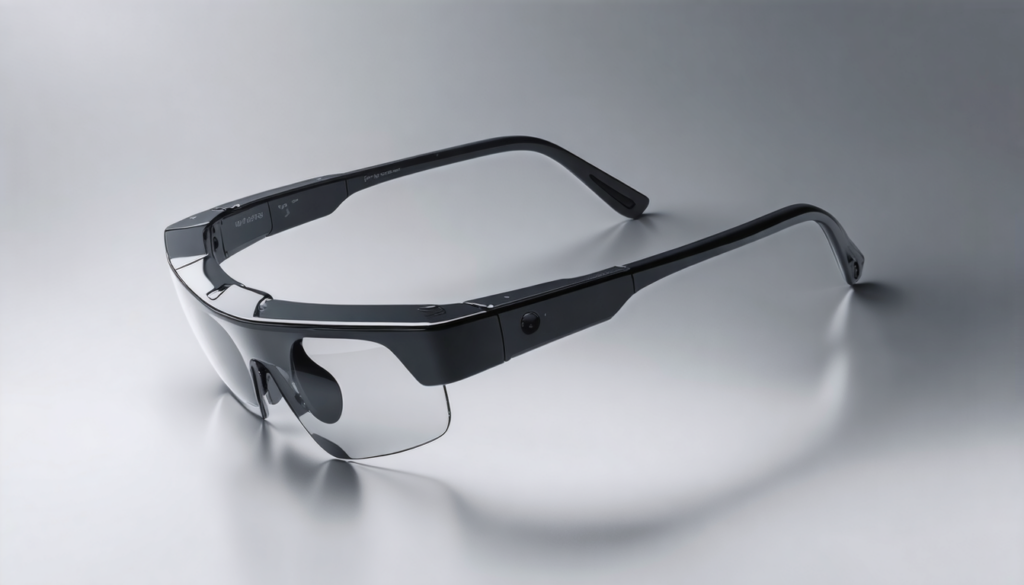
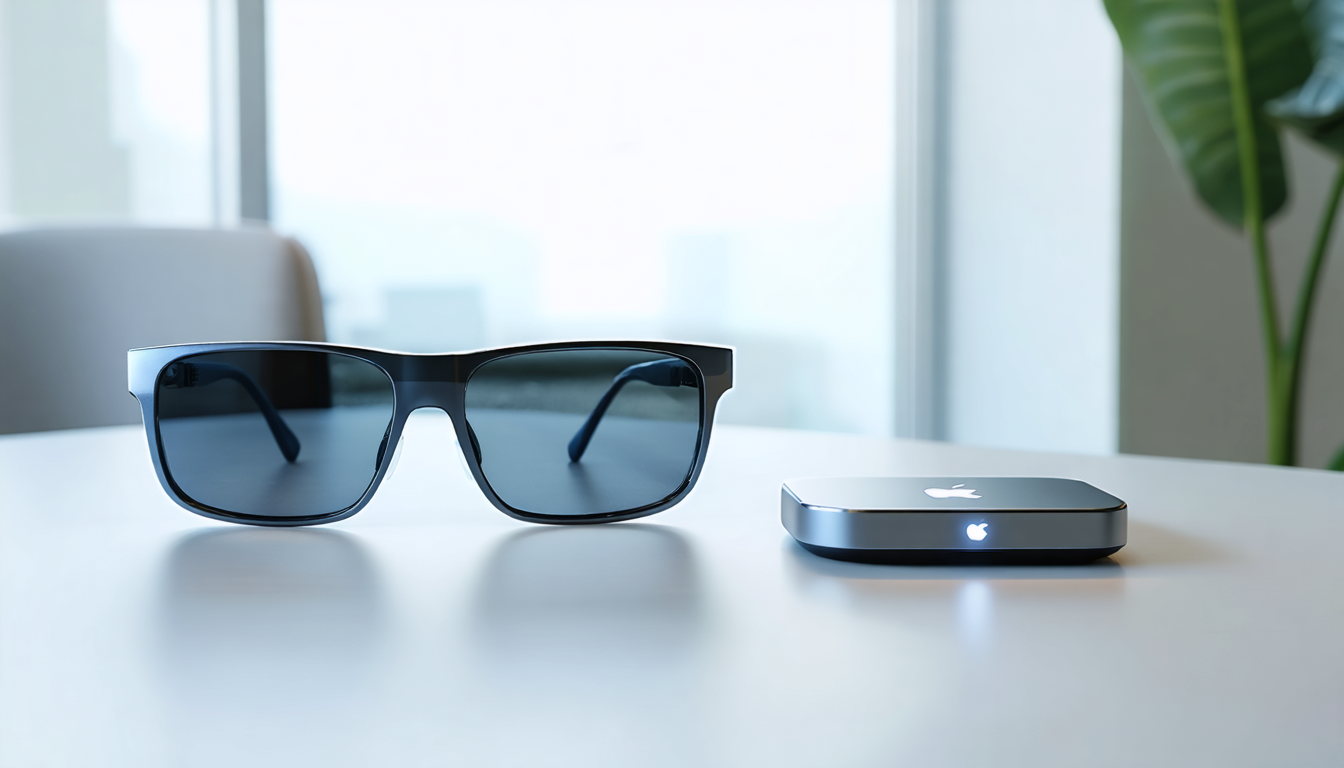
Finally, after years of waiting and rumors, Apple is about to launch its smart glasses. At first glance, these glasses do not look like the classic augmented reality headsets seen from other players. The main peculiarity? No screen integration for a classic visual experience, which is a notable break from models like Ray-Ban Meta or Android XR projects. The goal is clear: simplify the technology while relying on an artificial intelligence system capable of visually understanding the world around the user.
These smart glasses will incorporate several cameras, including a high-resolution camera for taking photos and videos, as well as a camera specialized in real-time analysis of surrounding objects and visual information. Paired with an array of microphones and built-in speakers, they will allow calls, music listening, or even conversations with Siri in a completely hands-free and contextual setting.
Contrasting with intrusive or cumbersome augmented reality, this model will prioritize lightness and discretion, so the device becomes as natural an accessory to wear as a pair of classic glasses. Apple is also working on several styles and sizes to meet varied tastes, recalling the marketing effort behind Ray-Ban Meta, while strongly emphasizing aesthetics.
This absence of a tangible screen does not mean a limitation of functionalities. On the contrary, assisted navigation, instant translation, and reading of signs or contextual information will be at the heart of a visual intelligence deeply integrated with the iPhone. All captured data will be processed by the latter, which now plays the role of the device’s central brain.
Beyond simple personal uses, this design choice opens the door to professional applications, notably in logistics, real-time translation, or assisting visually impaired or specially-abled people. Apple thus wants to ensure that this first generation of connected glasses is not just another gadget but a significant evolution in the ability to interact with the world via wearable technology.
The AI pendant: the discreet accessory that gives the iPhone an intelligent gaze
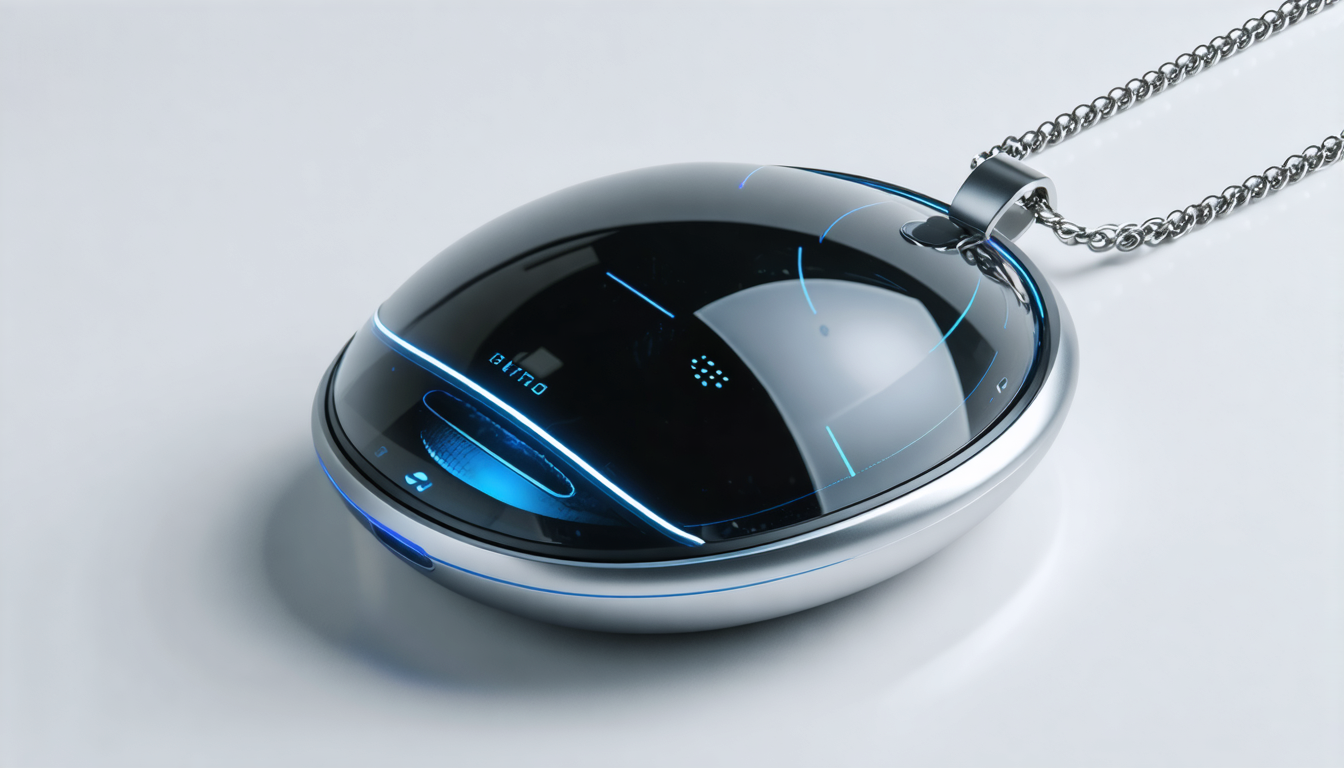
Alongside the glasses, Apple innovates with a revolutionary AI pendant, a particularly discreet and compact device expected soon. Unlike the very visible Humane AI Pin project, this pendant takes the form of a small flat disc made of aluminum and glass, roughly the size of a recent AirTag. Its design is intended to be elegant, able to clip onto clothing or be worn gracefully around the neck.
This pendant is not just a simple connected jewel. It integrates a specialized chip, two cameras, several microphones, a mini speaker, and a physical button for commands. The idea is to make it an intelligent sensor, a true ambient assistant acting as the iPhone’s “eyes and ears,” continuously capturing data so that Siri can better understand and assist its user in their immediate environment.
To illustrate its function, imagine a user entering an unfamiliar meeting room. The pendant analyzes the text on posters in real time, identifies interlocutors and objects present, then can automatically suggest contextual information about topics discussed. On the street, it could instantly translate a foreign language sign or detect an obstacle if you are moving.
The infrared sensors associated with the cameras should enable gesture recognition, thus adding a gestural dimension to interactions with Siri. This multimodal approach, combining voice, gesture, and visual recognition, offers an unprecedented level of assistance, creating a natural dialogue between the user and their devices.
However, such a device undoubtedly raises crucial privacy and security concerns. Wearing a permanent recording device requires total transparency from Apple, not only regarding how data is collected but also its use and protection. Trust will be a determining factor in the adoption of this type of technology, especially in a context where ambient surveillance might be poorly perceived.
In terms of pricing and commercial strategy, Apple seems to want to offer this AI pendant at a more accessible price than some comparable competitors, which could make it a must-have mass market accessory, a natural complement to the iPhone and other wearables in the range.
AirPods with cameras: the silent revolution of auditory artificial intelligence
Another bold innovation takes the form of a generation of AirPods equipped with integrated cameras, designed to enrich the user’s auditory and sensory experience. Although less advanced in development than the AI pendant, this project illustrates Apple’s coherent approach to multiplying intelligent sensors as close as possible to our senses.
Rather than being simple earphones, these next-generation AirPods will act as spatial sensors, capable of understanding gestures thanks to infrared cameras and better grasping the sound and visual context around the user. This ability goes far beyond current simple voice commands: it will be possible to interact intuitively with the environment, for example through hand movements or discreet facial expressions recognized by the sensors.
The importance of such technology also lies in the continuity it ensures with the connected glasses and the AI pendant. Together, these three items form a coherent set of smart wearables, where each device collects specific and complementary data, allowing the iPhone to process a comprehensive and precise vision of the world.
This permanent dialogue between connected objects promises a new era of “ambient computing,” where digital assistance is omnipresent without ever becoming intrusive. Imagine receiving contextual information just when you need it or being able to control your devices by simple spontaneous gestures, all with an almost invisible interface.
Apple’s strategy clearly aims to position its wearables as indispensable everyday tools, offering a tangible added value that far exceeds the current uses of wireless earphones. If it succeeds in demonstrating this practical utility, this segment could greatly contribute to reshaping personal device usage in the coming years.
Artificial intelligence at the heart of Apple’s new strategy: more than just Siri
When we talk about artificial intelligence at Apple, Siri has long been the showcase for this technology. However, Cupertino now pursues a much more ambitious and structured goal that goes beyond simply improving this voice assistant. AI is now at the center of a hardware strategy where each connected object acts as a sensor that sees, hears, and analyzes.
This new approach, focused on hardware as much as software, relies on a close interconnection between wearables and the iPhone. The latter transforms into a true brain centralizing and exploiting all collected data. The aim is to offer a smooth, contextual, and personalized experience that fully exploits the latest computing and machine learning capabilities.
For example, when a user simultaneously wears the connected glasses, AI pendant, and AirPods, all visual, auditory, and gestural information is combined to enrich interactions with Siri. The assistant becomes capable of anticipating needs, interpreting complex situations, and offering relevant support almost in real time.
Moreover, this strategy fits into a dynamic ecosystem perspective, where devices are no longer isolated but cooperate to create truly immersive ambient intelligence. It is a profound transformation aiming to make the human-machine interface as natural as possible and corresponds to a long-term vision of connected computing.
In summary, Apple’s massive investment in these new products reveals a clear intention to dominate the next wave of technological innovation: AI appearing not only as software but as an experience integrated into daily life through wearables.
A precise schedule for new Apple wearables: from production to commercialization
The timing chosen by Apple for deploying this new wave of products is particularly strategic. Production of the connected glasses should start as early as December 2026, with market launch planned for 2027. This schedule will strengthen the brand’s position against competitors already active in the smart glasses segment such as Meta.
The AI pendant could appear as early as next year, thus adding a new discreet and powerful device to Apple’s offering. This acceleration reflects Apple’s confidence in the deployed technology and consumers’ appetite for increasingly integrated smart devices.
AirPods equipped with cameras, even if less advanced in development, could be marketed in the near future, thus confirming the vision of a complete and coherent wearable ecosystem.
This fast and coordinated offensive relies on years of internal experimentation and advanced supply chain mastery. Apple seems determined not to let its delay in embedded artificial intelligence slip away, especially against technological giants multiplying XR and AI innovations.
A summary table of the schedule provides better visibility on this deployment:
| Device | Start of Production | Planned Commercial Launch | Key Features |
|---|---|---|---|
| Smart Glasses | December 2026 | 2027 | High-resolution cameras, visual analysis, voice commands, integrated audio |
| AI Pendant | 2027 (probably first half) | 2027 (end-first half) | Continuous environmental analysis, gesture recognition, Siri interaction |
| AirPods with Cameras | Advanced development (not yet confirmed) | 2027-2028 | Infrared sensors, gesture recognition, dynamic spatial audio |
Privacy and security challenges in these new Apple connected gadgets
With the increasing integration of cameras and microphones in portable objects as discreet as glasses, the AI pendant, or AirPods, privacy issues become central. Apple, as a recognized leader in data protection, must address this challenge rigorously.
The continuous collection of visual and audio data may raise concerns or even reluctance, possibly slowing adoption if consumers feel monitored or poorly informed. Therefore, the Californian firm aims to integrate technical and regulatory devices to guarantee confidentiality. This includes local data processing on the iPhone, strict encryption, and absolute transparency on data use.
Moreover, Apple will have to convince through educational campaigns clearly explaining the benefits brought, while illustrating the strong guarantees put in place. This communication will need to reassure that these wearables do not record continuously for third-party uses, but are designed with a respectful assistance perspective.
Another issue is usage contexts. For example, in sensitive public or professional places, specific restrictions could be discussed to limit the use of visual and audio capture. Apple might also include “private” modes or visible indicators to signal when sensors are activated.
Finally, protection against hacking is crucial, with the challenge being to safeguard users from any malicious exploitation of this personal and contextual data. Thus, these innovations come with a double promise: offer a rich technological experience while placing user protection as a priority.
Perspectives and potential impact of Apple’s novelties on the wearables market and artificial intelligence
At a time when the wearables market is experiencing exponential growth, Apple’s offensive with these AI-integrated connected gadgets could redefine the sector’s standards. These innovations are not mere gadgets but could become indispensable tools in daily, professional, and social life.
The ability to combine vision, hearing, and analysis in a tightly networked array of interconnected devices transforms the very perception of wearables, which shift from simple auditory or visual comfort to a fully proactive assistant. This opens strategic perspectives, from accessibility improvements to the transformation of remote work or fieldwork practices.
The economic impact of this new generation of products could also be significant, boosting not only demand for Apple devices but also the emergence of third-party applications exploiting these complementary technologies. Meanwhile, as users get used to this form of ambient intelligence, new social and cultural uses could emerge, notably in communication and human interaction.
Finally, this Apple initiative could inspire competition and accelerate the democratization of artificial intelligence in wearable objects, making these technologies more accessible and varied. The question remains open: how to balance innovation, utility, and respect for privacy to ensure massive adoption? Apple faces a real challenge in the coming years.
How Apple prepares a coherent revolution with an integrated wearable ecosystem
The originality and strength of Apple’s strategy lie in its ability to build an ecosystem of intelligent portable objects designed to harmonize around the iPhone. This approach goes beyond a mere addition of connected gadgets, tending towards a symbiosis where each device brings a specific sensory dimension.
The smart glasses offer contextual visual perception, providing augmented vision without a cumbersome screen. The AI pendant acts as a permanent ambient sensor, capable of proactively assisting Siri. AirPods equipped with cameras enrich interaction through fine tracking of gestures and surrounding sound. Together, these products form a coherent data collection platform that enables a comprehensive and precise understanding of the user’s context.
This orchestration is made possible thanks to advanced software integration based on embedded artificial intelligence and nearby machine learning. The iPhone, as the “brain,” analyzes multidimensional data in real time to offer a smooth and intuitive user experience, with unprecedented recognition and anticipation of needs.
A concrete example would be a user’s day: walking on the street with the glasses, they receive punctual information about shops, while the pendant analyzes sounds and conversations, and the AirPods capture gestures to adjust audio playback or make a call without interruption. This device collaboration sketches a natural interaction that totally rethinks the human-machine relationship.
This coherence between form, function, and intelligence placed in a compact, yet preserved whole is the foundation of Apple’s proposition, which thus fits into a pragmatic innovation approach aimed at real and massive adoption, more than a mere technological demonstration.




