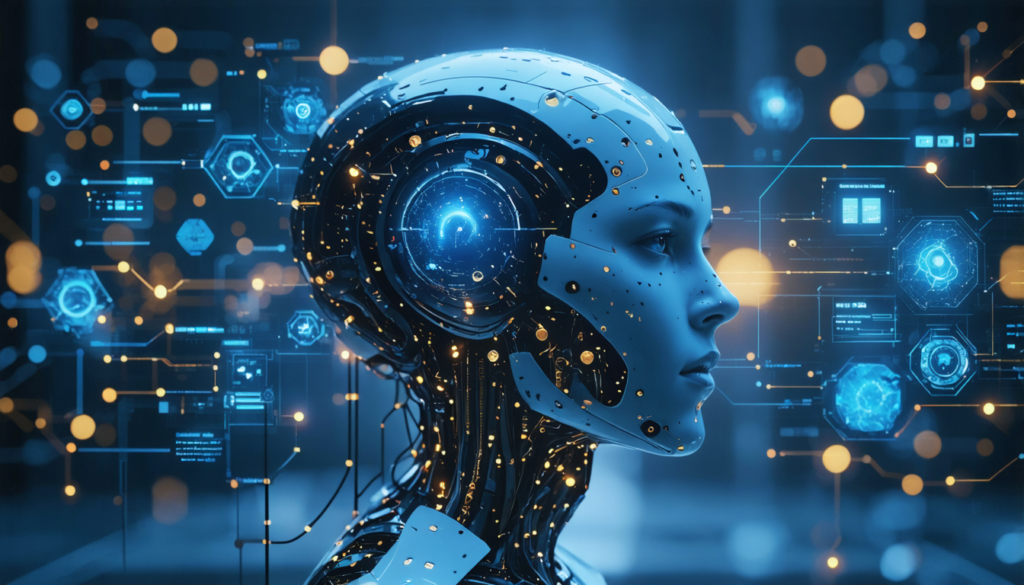
In the contemporary era where digital transformation disrupts lifestyles and business operations, Tekactiv establishes itself as an essential source of cutting-edge news and in-depth analyses on the rapidly growing sectors of Artificial Intelligence, Cloud Computing, Cybersecurity, and Big Data. These fields, both technical and strategic, shape the technological evolution of our society and influence economic practices on a global scale. From major innovations in machine learning to the ever-growing challenges of IT security, Tekactiv continuously explores these complex worlds through detailed and accessible articles.
The cloud, for example, is transforming the landscape of IT infrastructures by offering unprecedented flexibility. The rise of Big Data gives companies the ability to exploit massive volumes of data, thus turning data science into a true key discipline. Furthermore, cybersecurity holds a central place, facing the constant sophistication of cyberattacks, and plays a decisive role in protecting digital assets and safeguarding user privacy. Artificial intelligence, for its part, continually redefines the limits of automation and intelligent decision-making, impacting all sectors of activity with impressive speed.
- 1 Understanding Major Advances in Artificial Intelligence: Engine of Technological Innovation
- 2 Cloud Computing: Essential Pillar for Business Flexibility and Efficiency
- 3 Cybersecurity: Crucial Challenges to Protect Data in a Hyperconnected World
- 4 Big Data and Data Science: Harnessing the Power of Large-Scale Data
- 5 The Societal Impact of Digital Transformation Driven by Technological Innovation
- 6 Technological Trends to Watch in 2026: Artificial Intelligence, Cloud, and Security
- 7 Best Practices for Integrating Artificial Intelligence and Big Data into Business Strategies
- 8 The Future of Cybersecurity Facing Digital Challenges: Anticipation and Resilience
Understanding Major Advances in Artificial Intelligence: Engine of Technological Innovation
Over the last decade, Artificial Intelligence (AI) has evolved at a breathtaking pace, becoming the backbone of many technological innovations. This scientific discipline, which allows simulating human intelligence through sophisticated algorithms, opens up a world of unprecedented opportunities in various sectors such as health, finance, and transport.
Advances in machine learning represent the pillar of this evolution. Thanks to techniques like deep neural networks and reinforcement learning, systems today are capable of learning from their mistakes, optimizing their performance, and processing data en masse with increased efficiency. For example, in the medical field, algorithms designed for early diagnosis exploit gigantic databases to identify anomalies invisible to the human eye. This type of application is revolutionizing clinical practices by enabling faster and more personalized patient care.
Another concrete example is that of intelligent virtual assistants capable of understanding and interpreting users’ natural requests. These systems, combining voice recognition and natural language processing, facilitate human-machine interactions and significantly improve daily productivity. Some companies even deploy them to automate customer support, thus optimizing the user experience while reducing operational costs.
In short, Artificial Intelligence is now the main lever of innovation in contemporary technology, driving digital transformation through applications that are both pragmatic and visionary.

Cloud Computing: Essential Pillar for Business Flexibility and Efficiency
Cloud Computing has become an essential catalyst for the digital transformation of modern businesses. This technology provides access to IT resources – storage, computing power, applications – via the internet, without requiring the purchase or direct management of physical infrastructures.
One of the most remarkable benefits of the cloud lies in its flexibility. Organizations can adjust their resources based on actual demand, thereby optimizing their costs. For example, during peak activity periods, such as marketing campaigns or seasonal periods, server capacities can be quickly increased to ensure maximum availability. Once the demand decreases, they are just as easily reduced, avoiding resource wastage.
Moreover, the Cloud promotes collaboration and mobility, two major challenges in the contemporary professional world. Geographically dispersed teams can simultaneously access the same data and tools, accelerating decision-making and project management. Teleworking, now entrenched in many businesses, directly benefits from this universal accessibility.
Different Cloud Computing Models Adapted to Needs
It is important to distinguish several deployment models: public cloud, private cloud, and hybrid cloud.
- Public cloud: accessible to everyone, it is managed by external providers like Amazon Web Services, Microsoft Azure, or Google Cloud. It is especially suitable for start-ups and SMEs looking for an agile and economical solution.
- Private cloud: dedicated to a single company, it offers enhanced control and security. This option is preferred by actors in the financial or governmental sectors, for whom data confidentiality is crucial.
- Hybrid cloud: a combination of the two previous ones, it allows organizations to keep certain sensitive data internally while benefiting from the flexibility of the public cloud for other operations.
In short, Cloud Computing is a major driver of technological modernity that meets the demands of digital transformation. Its growing adoption deeply impacts the management of information systems and companies’ innovation strategies.
Cybersecurity: Crucial Challenges to Protect Data in a Hyperconnected World
As digitalization accelerates, IT security becomes an absolute priority. The multiplication of increasingly sophisticated cyberattacks forces organizations to maintain constant vigilance and to continuously review protection measures. Cybersecurity no longer concerns only IT departments but involves the entire company and even the users.
The consequences of a security breach can be devastating: leaks of sensitive data, business interruption, damage to reputation, or even regulatory penalties. Sectors such as health, finance, or energy are particularly exposed, requiring considerable means to guarantee security up to the level of critical infrastructures.
Technologies and Strategies to Strengthen IT Security
Several innovations in IT security have emerged in recent years. Among them, the use of artificial intelligence plays a major role. AI makes it possible to automatically detect abnormal behaviors, anticipate potential attacks, and react in real-time. This proactive approach is gradually replacing traditional solutions based solely on static rules.
Companies also adopt multi-layered defense strategies, combining firewalls, encryption, strong authentication, and behavioral analysis. At the same time, raising employee awareness of security has become a crucial strategic axis. Regular training campaigns help reduce risks related to human error, often a major weak point in the protection chain.
| Type of Attack | Mode of Operation | Prevention Methods |
|---|---|---|
| Phishing | Deception via fraudulent emails to recover credentials | User training, anti-spam filters, multi-factor authentication |
| Ransomware | Infection by malware encrypting data | Regular backups, updates, AI detection solutions |
| DDoS Attack | Server overload by multiplying requests | Specialized firewalls, traffic filtering, network optimization |
Ultimately, cybersecurity positions itself as more than indispensable in this context where data protection becomes a matter of trust and regulatory compliance. Every link in the technological chain must be robust to meet the growing demands of IT security.
Big Data and Data Science: Harnessing the Power of Large-Scale Data
If the growing volume of data is viewed with fascination, it is primarily their effective exploitation that radically transforms businesses. Big Data refers to this set of massive data generated daily by millions of interactions, sensors, or applications. Their processing and analysis now fall within data science.
Data science, a hybrid discipline between statistics, computer science, and artificial intelligence, makes it possible to extract actionable knowledge from raw data. For example, in retail, this science allows analyzing purchasing behavior and personalizing offers in real-time according to the customer profile. This marketing precision increases conversion rates and builds customer loyalty.
Moreover, in the industrial sector, predictive analysis from Big Data optimizes equipment maintenance, thus reducing costs and improving machine availability. Integrating these technologies into management processes leads to continuous optimization and better decision-making.
Main Stages of Big Data Processing
- Collection: gathering data from various sources (IoT sensors, social networks, transactional databases).
- Storage: use of specific architectures like Hadoop or NoSQL databases adapted to volume and variety.
- Cleaning: elimination of erroneous or redundant data to ensure quality.
- Analysis: application of statistical algorithms and machine learning.
- Visualization: synthesis of results in the form of interactive dashboards to facilitate decision-making.
It is evident that Big Data, coupled with data science and artificial intelligence, is a powerful lever of innovation in organizations’ digital transformation. Companies that can effectively exploit these resources will have an undeniable competitive advantage.

The Societal Impact of Digital Transformation Driven by Technological Innovation
Technological changes are not limited to the economy or industry; they also disrupt society as a whole. AI and the Cloud, for example, promote accessibility of services and reduction of inequalities, but also raise important ethical and legal questions.
The widespread adoption of digital technologies profoundly changes everyday work. Automation and machine learning replace some repetitive tasks, while jobs evolve towards more analytical and creative skills. This evolution requires continuous adaptation of workers through professional training, a major challenge for educational systems and companies.
Moreover, the protection of personal data is becoming a fundamental issue to preserve privacy in the Big Data era. Legislation such as the GDPR in Europe strictly regulates data use, but surveillance and regulation remain sensitive topics in the face of rapid innovation.
Concrete Examples of Societal Impacts
- Education: massive dissemination of online courses and personalization of learning methods thanks to AI.
- Public health: accelerated processing of epidemiological data to improve response to health crises.
- Digital inclusion: development of cloud infrastructures in rural areas to reduce the digital divide.
- Citizen participation: analysis of big data to better understand social expectations and concerns.
The dynamics induced by this digital transformation, while bringing innovation and performance, invite deep reflection on societal values and frameworks to ensure balanced and inclusive progress.
Technological Trends to Watch in 2026: Artificial Intelligence, Cloud, and Security
The year 2026 promises to be rich in innovations on the fronts of AI, Cloud Computing, cybersecurity, and Big Data. Recent advances result in increasingly integrated and intelligent applications despite the growing complexity of digital environments.
In Artificial Intelligence, the rise of generative models enables automatic creation of unprecedented content, revolutionizing the fields of communication and entertainment. The democratization of machine learning tools also favors the automation of business processes in various sectors. This evolution raises the bar ever higher in terms of performance and adaptability.
In the Cloud, architectures are evolving towards distributed cloud solutions, combining decentralized computing power and compliance with local data regulations. Hybrid cloud offerings are maturing, offering unmatched management flexibility. In parallel, cybersecurity challenges encourage strengthening AI integration in protection systems, notably through proactive artificial intelligence.
Also to watch is the rapid evolution of quantum technologies, which promise to multiply processing and optimization capacities. This revolution could fundamentally transform data science and IT security, notably through the creation of unprecedented and highly efficient algorithms.
Finally, the convergence of these technologies consolidates a perfectly integrated and agile ecosystem that supports sustainable digital transformation of businesses while offering new perspectives on innovation.
Best Practices for Integrating Artificial Intelligence and Big Data into Business Strategies
To fully benefit from the opportunities offered by Artificial Intelligence and Big Data, it is crucial to adopt an appropriate strategic approach. Many companies still struggle to effectively leverage their data or to deploy relevant AI solutions in their operations.
A successful approach relies on several fundamental pillars:
- Clear identification of use cases: prioritize applications where AI brings measurable value, such as optimizing supply chains or customer personalization.
- Data quality and governance: ensuring clean, reliable, and secure data is essential for building performant models.
- Alignment with overall digital transformation: AI and Big Data must fit into a coherent vision integrating Cloud and IT strategies.
- Training and support for teams: spreading digital culture among employees facilitates adoption and innovation.
- Technological partnerships and open ecosystems: evolving in symbiosis with a digital ecosystem promotes access to innovations and expertise.
Moreover, continuous evaluation of results and impacts is necessary to adjust strategy and optimize return on investment. This iterative method perfectly adapts to the rapid changes in the technology sector.
The Future of Cybersecurity Facing Digital Challenges: Anticipation and Resilience
IT security evolves alongside increasingly sophisticated threats. Cybercriminals cleverly exploit system vulnerabilities, notably using Artificial Intelligence to bypass classical defense mechanisms.
To face these risks, cybersecurity solutions now integrate the concept of resilience, that is, the ability to anticipate, detect, contain, and quickly recover following an incident. This comprehensive approach includes advanced techniques such as machine learning for proactive threat detection, automated response systems, and in-depth behavioral analyses.
Governments and companies collaborate closely to develop robust regulatory frameworks and international standards, ensuring the security of critical infrastructures and protection of personal data. At the same time, cybersecurity awareness has become a civic issue, strengthening the role of users in the security chain.
Finally, quantum cryptography raises great hope for advanced protection, with protocols capable of making communications inviolable. This widely anticipated technology could revolutionize how confidentiality and data integrity are ensured on a global scale.
Ultimately, the future of IT security rests on a synergy between technological innovations, adaptive strategies, and cooperation, thus offering a solid foundation for digital trust in an increasingly connected world.
To stay informed about news and analyses on these topics, visit Tekactiv, your tech magazine dedicated to Artificial Intelligence, Cloud, Cybersecurity, and Big Data.