As the European digital landscape seeks to assert its independence from American and Asian giants, a major collaboration between Mistral AI and EcoDataCenter opens a new chapter. Together, these two players, one a specialist in artificial intelligence based in France, the other an expert in sustainable infrastructures in Sweden, have announced an ambitious project: the construction of an innovative data center in Borlänge. This data center will not only be a technological feat but also an illustration of the integration of renewable energy in the digital era.
This partnership illustrates Europe’s renewed desire to no longer be entirely dependent on external suppliers for its critical infrastructures. With offices already established in several global capitals, Mistral AI is broadening its horizons while following a meticulous strategy to strengthen its digital sovereignty. The choice of Borlänge, in Sweden, is no coincidence: the country offers a sustainable energy mix and competitive electricity costs, two essential criteria for a data center dedicated to artificial intelligence, which requires colossal computing power.
- 1 Mistral AI’s international expansion strategy towards a sustainable data center in Europe
- 2 The challenges of digital sovereignty and renewable energy for the European data center
- 3 Colossal investment: a masterstroke for Europe in artificial intelligence
- 4 EcoDataCenter: a model of sustainable infrastructure allied with the power of Mistral AI
- 5 The strategic timing for the construction of the Mistral AI data center
- 6 The technological and environmental challenges of the Mistral AI & EcoDataCenter data center
- 7 What impacts for the European artificial intelligence ecosystem?
- 8 Future prospects: Mistral AI in the global technological landscape
Mistral AI’s international expansion strategy towards a sustainable data center in Europe
Mistral AI, a French start-up specialized in language models and artificial intelligence, made a strategic choice by partnering with the Swedish company EcoDataCenter to build a major infrastructure in Europe, in Borlänge. This project allows Mistral AI to surpass national borders while creating a cutting-edge innovation hub capable of competing with American infrastructures.
Until now, Mistral AI was present in several global technological metropolises, notably Palo Alto, London, and Singapore, but this initiative in Sweden represents its largest investment abroad, with a planned budget of 1.2 billion euros. This record sum illustrates both the strategic importance and the considerable ambition carried by this data center.
The built center will serve to host Mistral AI’s advanced algorithms, while ensuring that data is processed locally in Europe, thus guaranteeing compliance with European regulations regarding data sovereignty.
EcoDataCenter, recognized for its green infrastructures, provides the infrastructure and operational expertise based on renewable energy sources. This partnership thus combines French software know-how with Swedish skills in digital ecology.
This cooperation marks an important step for Mistral AI, which is turning its vision into reality at a time when many voices in Europe are calling for better local technological mastery, especially in fields as sensitive as artificial intelligence.
The challenges of digital sovereignty and renewable energy for the European data center
The Mistral AI & EcoDataCenter project is not limited to a simple capacity expansion: it fits into a broader dynamic of European digital sovereignty. While the GPU market is dominated by more than 90% by the American Nvidia, this collaboration highlights the current limits of technological autonomy on the continent.
However, the decision to locate the data center in Sweden meets two essential objectives: keeping all data under European jurisdiction and exploiting an ecological infrastructure. The choice of the Swedish site is particularly wise, as the country offers electricity that is both competitively priced and exceeds 80% from renewable sources, thus ensuring a significantly reduced carbon footprint.
This approach meets a dual requirement: on the one hand, protecting sensitive European information against extraterritorial laws like the American Cloud Act; on the other hand, fully integrating green technology into the digital revolution. The growing pressure on energy resources in the data center sector today demands responsible thinking, placing sustainability at the very heart of infrastructures.
We are thus witnessing the birth of a new wave of innovations where AI and ecology converge to balance performance and environmental respect. This model could serve as an example for other initiatives in Europe and beyond.
Colossal investment: a masterstroke for Europe in artificial intelligence
The scale of the investment committed by Mistral AI is unprecedented for a French company outside its borders. With 1.2 billion euros, the start-up demonstrates a solid ambition to build an ultra-modern data center dedicated to the massive loads generated by generative AI and next-generation language models.
Such a sum makes it possible not only to build a robust infrastructure but also to develop a fully European technology stack. This includes computing centers equipped with the latest generation Vera Rubin GPUs supplied by Nvidia, despite challenges linked to technological dependency on non-European actors.
This budget covers a wide range of investments: design, construction, installation of renewable energy, innovative cooling solutions, and enhanced system security. The integration of advanced technologies ensures optimal energy efficiency while maintaining high computing performance.
This financial injection also signals the seriousness with which Europe is approaching competition in the global digital economy. While giants like Meta or Anthropic expand their computing centers, Mistral AI places Europe at the heart of the game by combining technological innovation and sustainability.
EcoDataCenter: a model of sustainable infrastructure allied with the power of Mistral AI
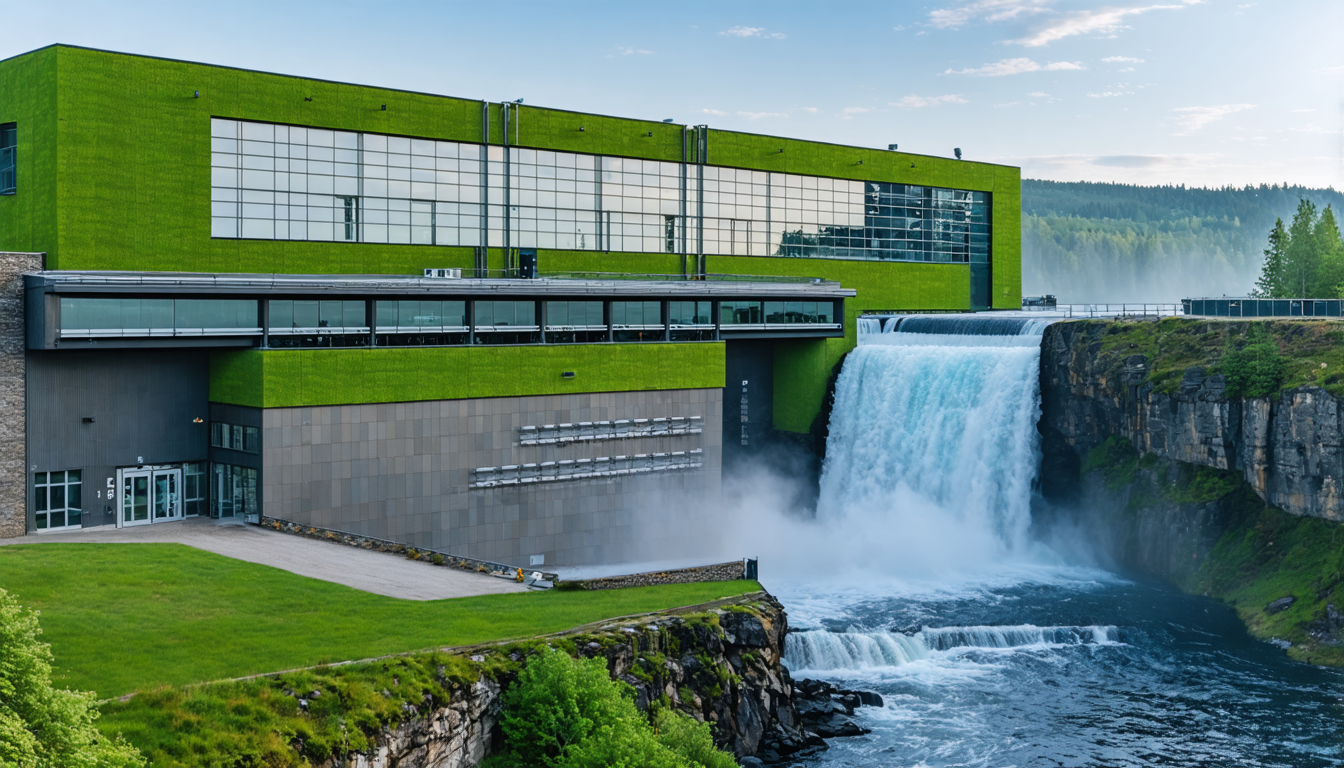
EcoDataCenter has established itself in the European data center sector as a pioneer of ecological infrastructures. Its specialty is building and operating facilities powered solely by renewable energy, often derived from local hydroelectricity, an abundant resource in Sweden.
This approach significantly reduces the carbon footprint of operations, a crucial factor at a time when data storage and processing are becoming major consumers of electricity worldwide. For example, EcoDataCenter uses advanced natural cooling techniques, thereby avoiding excessive reliance on energy-intensive air conditioning systems.
By partnering with Mistral AI, the Swedish company leverages its expertise to create a data center that will become a powerful symbol of green technology serving artificial intelligence.
Thus, the collaboration is not limited to a simple commercial synergy: it shapes a new industrial standard where sustainable infrastructure and advanced artificial intelligence perfectly combine to offer a competitive, ecological, and sovereign solution.
The strategic timing for the construction of the Mistral AI data center
Several factors converge to make this period an ideal moment to launch a project of this scope. First of all, the growing demand in Europe for infrastructures dedicated to AI has become a powerful economic driver. Computing needs are exploding with diverse uses, ranging from intelligent assistants to predictive analytics and cybersecurity.
Then, far from being a constraint, the geopolitical and economic context encourages a shift towards digital sovereignty. Europe faces challenges linked to dependence on American and Chinese technologies, which fuels a collective dynamic to develop its own technological capacities.
Finally, the rise of technologies related to decarbonized energy makes it possible to build large-scale infrastructures without compromises on the environment or operational costs. This favorable scenario encourages players like Mistral AI to invest massively, anticipating the rise of a competitive European industry.
This context is further strengthened by recent announcements from American and Asian competitors who multiply their own computing centers, making every European advance essential to maintaining balance in the sector.
The technological and environmental challenges of the Mistral AI & EcoDataCenter data center
Despite all the strengths, the construction of the data center in this alliance faces significant technical challenges. For example, although the use of Nvidia GPUs remains essential for performance, this dependency limits the total sovereignty of the project, exposing a critical “chip layer” to foreign suppliers.
Simultaneously, the exploitation of renewable energies in an environment subject to climatic variations requires fine and sophisticated resource management. The data center must ensure 24/7 availability, which requires combining multiple energy sources and innovative storage systems to offset fluctuations.
Moreover, data protection requires strict security protocols adapted to the increasing complexity of cyber threats, especially when hosting sensitive AI models for public or private clients.
These constraints stimulate innovation in several areas, notably cooling, energy redundancy, and cybersecurity, placing this data center at the forefront of tomorrow’s technologies while respecting green and sovereign ambitions.
What impacts for the European artificial intelligence ecosystem?
The partnership between Mistral AI and EcoDataCenter has a much broader scope than a simple infrastructure project. By laying a solid foundation in Scandinavia, this data center paves the way for a ripple effect likely to stimulate many other initiatives across the continent.
European companies and administrations will benefit from secure localized computing power, promoting better adoption of AI technologies while preserving data confidentiality. This progress is crucial for sensitive sectors such as healthcare, defense, and finance, which require complete mastery of information flows.
The massive investment in Europe is also a strong political signal that could encourage public-private partnerships and attract more capital to support the emergence of a robust and innovative local ecosystem.
This project can thus become a catalyst for highly qualified jobs, specialized expertise, and industrial competitiveness, contributing to strengthening Europe’s position in the crucial field of artificial intelligence on a global scale.
| Element | Contributions | Expected impacts |
|---|---|---|
| Mistral AI | Expertise in AI and language models, financial investment | Technical and economic leadership in AI in Europe |
| EcoDataCenter | Sustainable infrastructures based on renewable energies | Reduction of the carbon footprint of data centers |
| Data center in Borlänge | High computing capacity, compliance with European standards | Digital sovereignty and sustainable development |
Future prospects: Mistral AI in the global technological landscape
With this first large-scale implantation outside France, Mistral AI could sustainably change the game for Europe in artificial intelligence. Owning a local and energy virtuous infrastructure offers a significant competitive advantage against American and Asian giants.
The increased capacity will allow the start-up to rapidly develop new specialized versions of its AI models, adapted to the needs of European companies and sectors requiring high standards in confidentiality and sovereignty.
By thus claiming a strategic position, Mistral AI establishes a virtuous circle promoting local innovation while preserving values specific to Europe in terms of green technology and responsible data management.
Finally, this cooperation could inspire other companies to engage in similar projects, consolidating a collective dynamic capable of competing on the global stage while guaranteeing sustainability and technological autonomy sought by the Old Continent.