
Meta, an iconic figure of American tech, is about to reach a new major milestone in the field of artificial intelligence (AI). In 2024, the company plans to invest a historic amount between 115 and 135 billion dollars to accelerate its transformation in this key sector. This colossal decision, which roughly doubles the investments of the previous year, illustrates the group’s unprecedented determination to become an undisputed leader of the technological revolution. At the heart of this strategy are the construction of gigantic digital infrastructures and the intensive recruitment of the best talents in research and development.
Meta’s rise is based on a robust financial foundation, supported by a flourishing advertising business. In the last quarter, the revenue approached 60 billion dollars, and profits followed the same upward trajectory. This economic base provides comfortable room to maneuver for betting on futuristic ambitions such as the creation of a “personal superintelligence.” Yet, behind this dynamic, the firm also acknowledges having fallen behind its direct competitors, notably Google and OpenAI, which explains a major restructuring and a notable acceleration in innovation.
This debate on the scale of this investment effort reveals several crucial issues: how does Meta concretely intend to deploy this financial windfall? Which technologies and projects will drive growth in the coming years? And above all, what impacts could this AI revolution have on the global digital ecosystem? So many questions that call for an in-depth analysis of this ongoing transformation.
- 1 Meta’s massive investment for a revolution in artificial intelligence
- 2 How Meta’s advertising activity fuels the technological revolution
- 3 Energy and environmental challenges linked to massive data centers
- 4 The restructuring of the AI division: welcoming new governance and talents
- 5 The race to superintelligence: ambitions, challenges, and rivalries
- 6 Strategic acquisitions as a lever for accelerated innovation
- 7 The key role of Meta Compute infrastructures in supporting tomorrow’s AI capacity
Meta’s massive investment for a revolution in artificial intelligence
Meta is crossing a historic threshold with a dramatically increased investment budget dedicated to AI. For 2024, the projected range of between 115 and 135 billion dollars reflects the desire to drastically accelerate technological progress.
This spending inflation comes after a 2023 marked by a doubling of its investments, mainly focused on data centers and the infrastructures necessary for massive AI data processing. By doubling these costs in 2024, Meta is now going all in, partially abandoning other sectors like virtual reality, which has seen its workforce decrease by 10%.
The investments mainly concern:
- The construction of ultra-high-performance and energy-consuming data centers
- The acquisition and construction of servers specifically equipped for deep learning
- A massive recruitment effort to attract researchers, engineers, and artificial intelligence experts
- The development of laboratories dedicated to advanced AI research, such as the TBD Lab
- The strategic acquisition of specialized start-ups, like the Singaporean company Manus for 2 billion dollars
This spending package is not limited to a simple gross increase in resources: it reflects a profound strategic change and an adaptation to the breakneck speed required by global competition. The bet is to create a superintelligence capable of competing with, or even surpassing, current market models.
Moreover, infrastructure is a key component. Meta envisions data centers so powerful that in the coming years they could reach an energy consumption of tens, even hundreds, of gigawatts. This energy rise reflects the need for extraordinary computing power to develop and operate these gigantic AI models.

How Meta’s advertising activity fuels the technological revolution
Meta’s economic engine relies on online advertising, the group’s real financial lung. This stable and growing source of income allows the company to have a solid base to finance its technological ambitions. In 2023, Meta generated nearly 60 billion dollars in revenue, growing 24% compared to the previous year.
This growth is explained by the efficiency of the advertising engine, a sophisticated algorithmic system that uses artificial intelligence to analyze billions of user data to better target audiences. The quality of online advertising thus improves, which reinforces advertisers’ trust and generates ever-increasing revenues.
The advertising activity also plays a role in R&D. Indeed, Meta uses its advertising data to strengthen its AI capabilities, notably by refining its predictive models. The virtuous circle thus created strengthens the company’s economic robustness and offers a unique lever to accelerate innovations in other fields.
This advertising success nevertheless has its limits, especially in a global context where personal data and privacy regulations are becoming stricter. Meta must therefore reconcile its core business with these constraints while continuing to innovate rapidly.
| Year | Revenue (billion $) | Total expenses (billion $) | AI expenses (billion $) |
|---|---|---|---|
| 2023 | 49 | 72 | 72 (mainly AI) |
| 2024 (forecast) | 60 (estimated Q4) | 115-135 | 115-135 |
Energy and environmental challenges linked to massive data centers
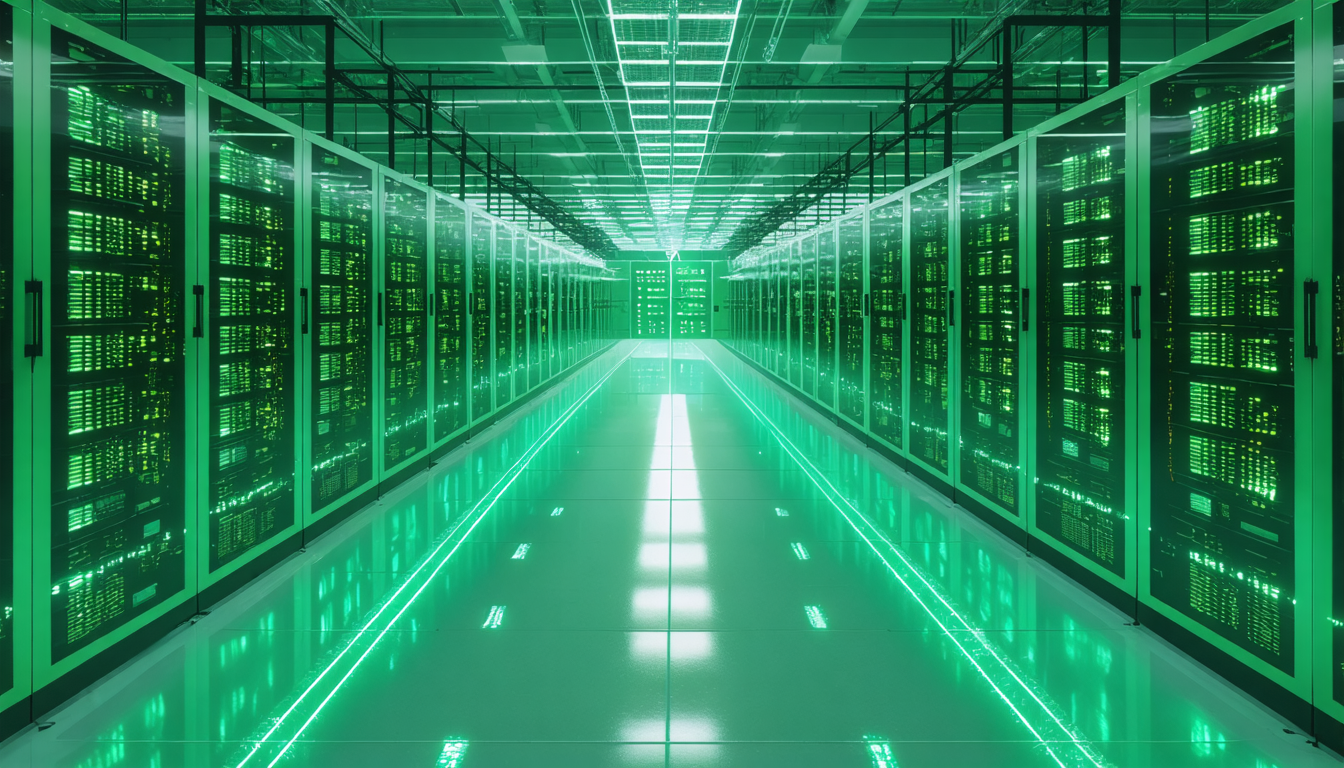
The vertiginous growth in computing needs to operate artificial intelligence demands ever more powerful data centers. Meta is preparing to deploy a new generation of infrastructures, whose energy impact will be colossal.
Building data centers capable of supporting future superintelligence requires not only colossal investments but also very fine management of energy consumption. Producing several tens, even hundreds, of gigawatts of electricity represents a major technical and environmental challenge.
Environmental issues are now at the heart of concerns, and many voices are worried about the carbon footprint of these server farms. Meta has thus developed several strategies to reduce its impact, notably:
- The use of renewable energy sources to power its data centers
- The construction of facilities in favorable geographic areas, such as cold places to reduce air conditioning
- The development of advanced cooling technologies to improve energy efficiency
- The integration of heat recovery and recycling systems
These technical measures aim to reconcile technological evolution and environmental responsibility in a context where societal pressure is intensifying.
The restructuring of the AI division: welcoming new governance and talents
The announcement of titanic investments is accompanied by a profound transformation of AI-dedicated governance at Meta. Aware of its delay compared to sector leaders, the company undertook a major restructuring last spring.
This reorganization targets several axes:
- The recruitment of globally recognized experts able to lead advanced research programs.
- The simplification of governance around key figures, including Alexandr Wang, CEO of Scale AI, now strategic head of AI at Meta.
- The creation of an internal laboratory, TBD Lab, tasked with designing ambitious projects like the Avocado model, expected in the first semester.
- Strategic investment in specialized start-ups, enhancing the diversity of approaches and technologies.
This dynamic aims to accelerate innovation cycles and position Meta as an essential player in the “race to superintelligence.” These developments are also a means to attract and retain the best talents in an extremely competitive environment.
The race to superintelligence: ambitions, challenges, and rivalries
Meta’s dream is clear: to build a superintelligence accessible to the general public, capable of performing complex tasks with autonomy and power never seen before. This puts Meta at the forefront of a global race where competition with Google, OpenAI, and other giants is intense.
The Avocado model, presented as a flagship project, will be one of the first public tests of this massive investment. Its evaluation will be closely watched by the entire sector, which expects a qualitative leap in AI performance.
However, the challenges are multiple. The goal of creating generalized intelligence raises complex technical, ethical, and societal questions. Meta faces:
- The difficulty of managing colossal amounts of data within a privacy-respecting framework.
- The current limits of algorithms in understanding and creativity.
- The need to establish ethical safeguards to govern the use of these superintelligences.
- The competitive pressure that demands speed and efficiency without compromise.
The outcome of this competition could disrupt digital uses, redefine human-machine relationships, and sustainably impact the global digital economy.
Strategic acquisitions as a lever for accelerated innovation
To support this frantic race toward cutting-edge artificial intelligence, Meta multiplies targeted acquisitions. The most recent example is the purchase of Manus, a Singaporean AI-specialized start-up, for 2 billion dollars. This operation illustrates the desire to integrate sharp skills and innovative technologies from the start-up world.
Beyond technological reinforcement, these acquisitions provide a regulatory and strategic advantage. Meta has recently benefited from a more favorable legal context, with a recent court decision validating past acquisitions of Instagram and WhatsApp, opening the way for new operations.
This acquisition strategy is part of a broader plan: in addition to having its own laboratories and teams, Meta aggregates external expertise to accelerate its roadmap.
- Increasing technological diversity
- Reducing development time for new products
- Strengthening competitiveness against international rivals
- Optimizing internal synergies
With these combined levers, Meta intends to maximize its chances to dominate the future of artificial intelligence.
The key role of Meta Compute infrastructures in supporting tomorrow’s AI capacity
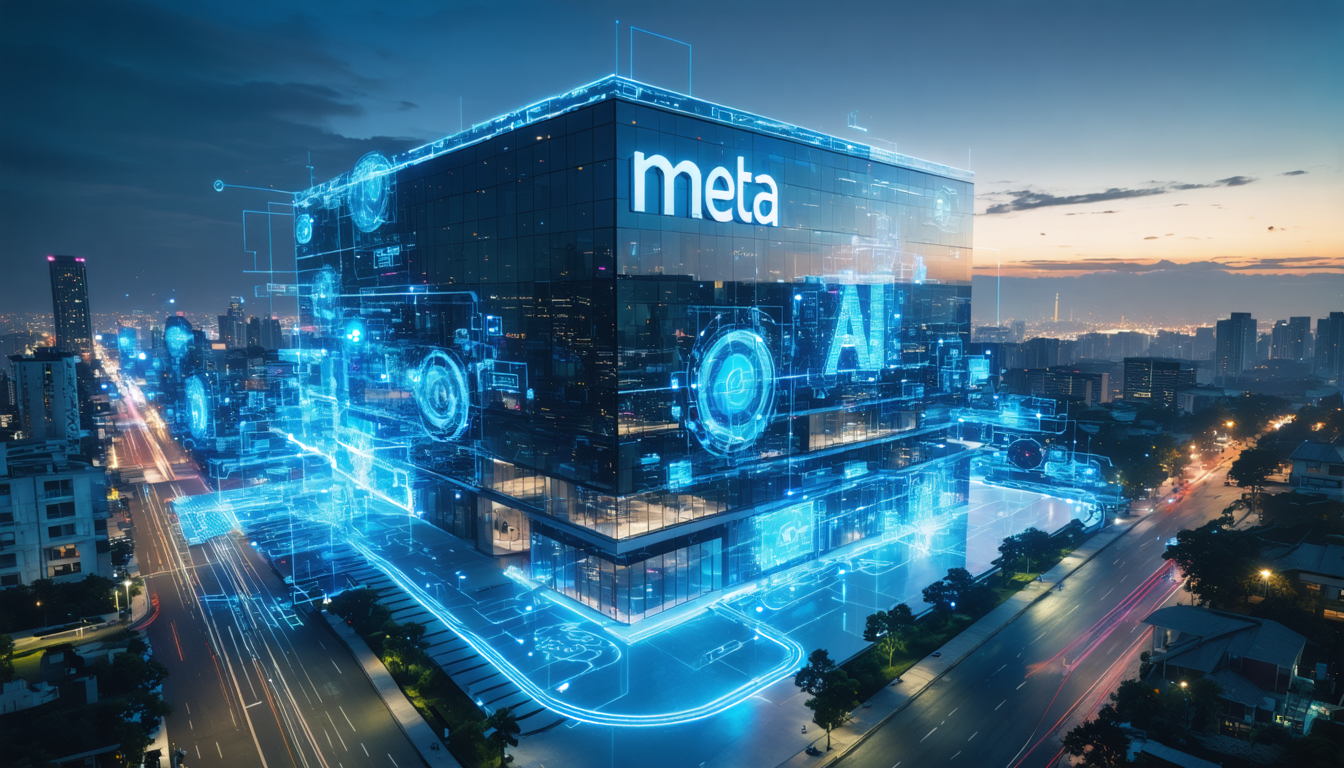
At the heart of investments, the Meta Compute program is the engine that will support the computing power necessary for the envisioned superintelligence. It aims to create data centers capable of providing unprecedented energy and technical capacity.
This challenge involves:
- The deployment of ultra-optimized servers for deep learning
- The deployment of very high-capacity networks to ensure rapid data processing
- The implementation of innovative architectures for progressive scalability
- The management of financial operations around infrastructures thanks to recognized experts, such as Dina Powell McCormick
The goal is clear: to support the development of increasingly complex AI models without encountering hardware limits. It is a long-distance race where technology and financial management closely intersect.